
Algae Diversity
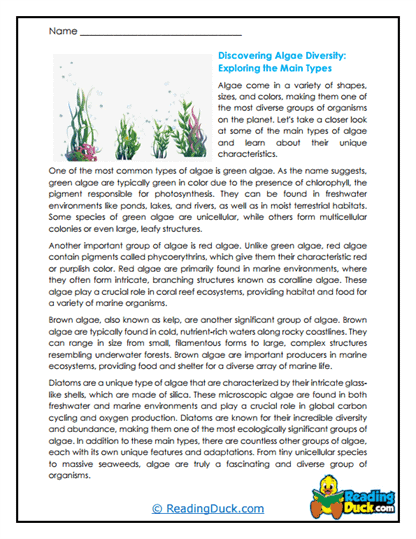
This passage outlines the diversity of algae, focusing on four main types: green, red, brown, and diatoms. Each type has distinct characteristics, such as chlorophyll in green algae, and special pigments in red algae that allow them to thrive in deeper marine environments. Brown algae, like kelp, are common in colder oceans, while diatoms have intricate silica cell walls and play a critical role in global carbon cycling. The passage emphasizes the variety and ecological importance of these different algae types.
Reading this passage enhances students’ ability to categorize and understand classification systems, an important critical thinking skill in biology. Exposure to terms like diatoms and chlorophyll expands students’ scientific vocabulary, while the text’s organization supports the development of reading comprehension through structured comparison. It also boosts grammar skills by presenting complex sentences that explain distinct species and their characteristics. Furthermore, the text promotes analytical thinking as students are asked to think about how algae impact different parts of the ecosystem.
Questions:
Answer Keys: