
Breath of Life Open Response
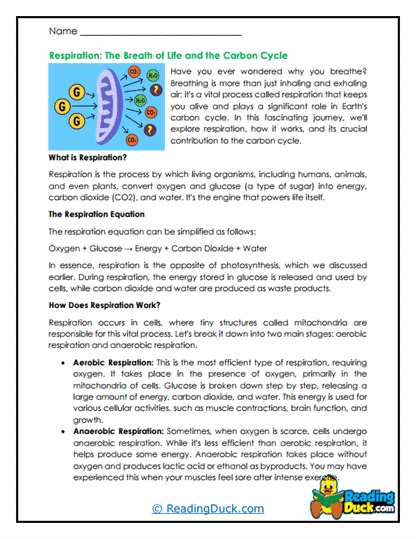
This passage delves into the respiration process, explaining how living organisms convert oxygen and glucose into energy. It breaks down both aerobic and anaerobic respiration, detailing how cells function to produce energy and carbon dioxide as byproducts. Respiration is a key part of the carbon cycle, linking life processes to the planet’s carbon balance. Understanding respiration helps us see the vital connection between breathing and the environment.
By reading about complex biological processes, students can improve their vocabulary and grasp important scientific terminology like “aerobic” and “anaerobic.” Analyzing such texts sharpens comprehension skills, especially when interpreting detailed, multi-step processes. The passage encourages critical thinking, as students must understand how respiration fits into larger systems. Furthermore, it helps students recognize the structure of informational writing, enhancing their grammar proficiency.