
Heat vs. Cool Multiple Choices
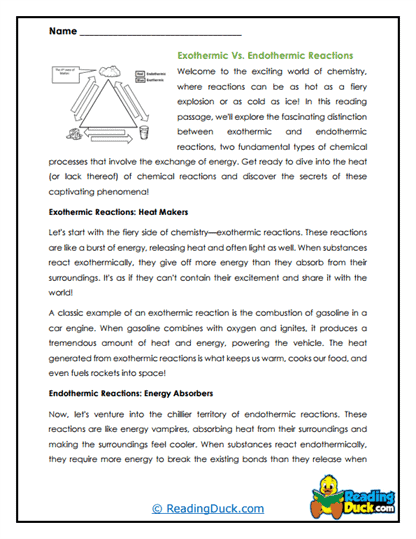
This passage discusses the difference between exothermic and endothermic reactions. Exothermic reactions release energy in the form of heat, making the surroundings warmer, while endothermic reactions absorb energy, cooling their environment. The text provides examples such as the combustion of gasoline for exothermic reactions and certain cooling processes for endothermic ones. It focuses on the energy exchange that occurs during these reactions.
This passage strengthens reading comprehension as students follow the comparison between two types of reactions. It introduces vocabulary like “exothermic” and “endothermic,” which builds scientific knowledge. Students also enhance their analytical skills by contrasting how different reactions affect their surroundings. Additionally, the use of real-world examples improves critical thinking and the ability to relate abstract concepts to practical situations.