Fungi Explorers Short Answer
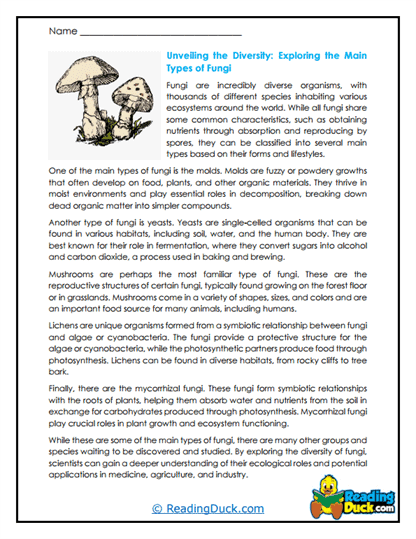
This passage introduces the incredible diversity of fungi, explaining how they are essential to ecosystems worldwide. It describes different types of fungi like molds, yeasts, and mushrooms, highlighting their roles in decomposition, fermentation, and symbiotic relationships. The passage also touches on the importance of lichens and mycorrhizal fungi in plant growth and nutrient cycles. It ends by emphasizing the potential applications of fungi in medicine, agriculture, and industry.
Reading this passage enhances vocabulary through terms like “symbiotic,” “decomposition,” and “fermentation.” It improves comprehension by explaining the different types of fungi and their ecological roles. Additionally, it promotes critical thinking by exploring how fungi impact various ecosystems and human industries. By reading detailed informational texts, students can also strengthen their grammar and sentence structure awareness.