
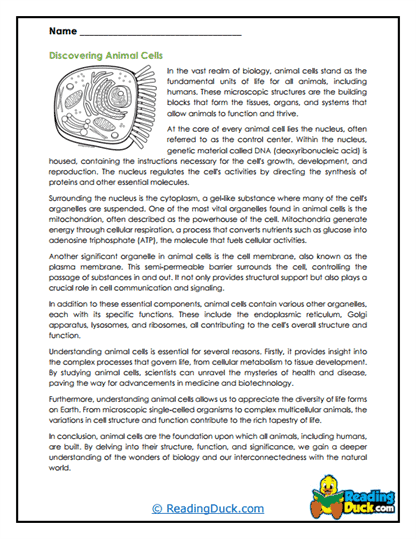
Animal Cells
This passage explores the structure and function of animal cells, focusing on their key organelles, such as the nucleus, mitochondria, and plasma membrane. It highlights the role of the nucleus in controlling cell activities and housing genetic material. The passage also explains how mitochondria produce energy through cellular respiration and how the plasma membrane regulates the passage of substances. Understanding animal cells is essential for studying the diversity of life forms and how organisms function at the cellular level.
Learning about animal cells supports vocabulary growth through scientific terms like “cellular respiration” and “plasma membrane.” The detailed exploration of cell structure improves comprehension skills, helping students grasp how cells function. Analyzing the role of different organelles enhances critical thinking, as students see how cellular processes contribute to overall health. Exposure to these scientific concepts also helps students refine their grammar proficiency as they interpret complex information.
Questions:
Answer Keys: