
Chromosome Science Open Response
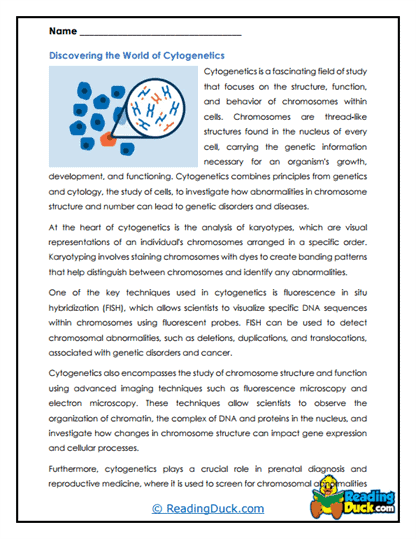
This passage focuses on cytogenetics, the study of the structure and function of chromosomes, which carry the genetic information necessary for an organism’s growth and development. It explains how scientists use techniques like karyotyping and fluorescence in situ hybridization (FISH) to study chromosomes and detect genetic abnormalities, such as those related to cancer or developmental disorders. The passage also highlights the importance of cytogenetics in prenatal diagnosis and reproductive medicine, where it is used to screen for chromosomal conditions in embryos. Cytogenetics combines principles from both genetics and cell biology to improve our understanding of human health.
Reading passages about cytogenetics exposes students to a rich vocabulary of scientific terms, from “chromosomes” to “karyotyping,” helping them deepen their knowledge of biology. This type of text enhances comprehension skills by presenting a complex field in an approachable way, allowing students to grasp both the techniques and their real-world applications. It also stimulates critical thinking by encouraging students to consider the medical implications of chromosomal studies, such as detecting genetic disorders. Furthermore, reading scientific texts like this one helps students improve their ability to follow detailed expository writing, which is valuable for their academic growth.