
DNA’s Mirror Short Answer
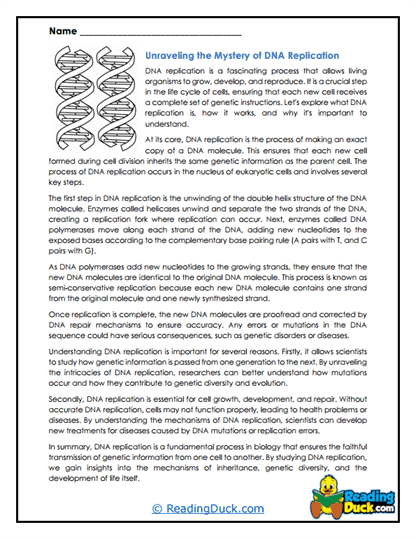
This passage delves into DNA replication, the process by which living organisms copy their genetic material to grow, develop, and reproduce. It explains how DNA unwinds into two strands, each serving as a template for creating a new complementary strand. The passage describes the role of enzymes like DNA polymerase in ensuring that the genetic code is copied accurately, highlighting the importance of this process for cell division and the prevention of mutations. DNA replication is presented as a critical process for life, allowing for the faithful transmission of genetic information from one generation to the next.
Passages on DNA replication improve students’ comprehension skills by explaining a fundamental biological process in a step-by-step manner. This type of material also introduces them to important vocabulary, such as “DNA polymerase” and “complementary strands,” which expands their scientific lexicon. The complexity of the topic encourages critical thinking, prompting students to reflect on how errors in DNA replication can lead to mutations and diseases. Additionally, this passage helps students observe how scientific texts are structured to present technical information, aiding their development in technical writing.