
Aristotle’s Ethics
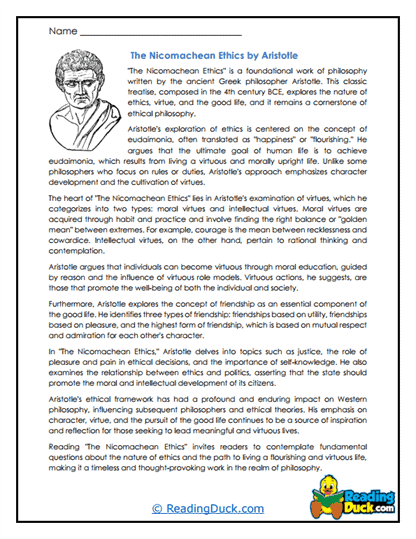
This passage explores Aristotle’s “Nicomachean Ethics,” which examines the nature of virtue and the pursuit of the good life. Aristotle introduces the concept of eudaimonia (flourishing), which is achieved through the cultivation of virtues like courage, justice, and wisdom. He distinguishes between moral virtues (related to actions) and intellectual virtues (related to reasoning). Aristotle argues that happiness comes from living a balanced life, guided by both practical wisdom and moral virtue.
This passage strengthens students’ analytical skills as they explore Aristotle’s detailed examination of virtue and ethics. It introduces vocabulary related to philosophy, ethics, and human flourishing, enriching academic language. By analyzing the distinction between moral and intellectual virtues, students improve their comprehension of complex philosophical concepts. Engaging with Aristotle’s ideas promotes critical thinking, encouraging reflection on the nature of happiness and ethical living.
Questions:
Answer Keys: