
Flight Science
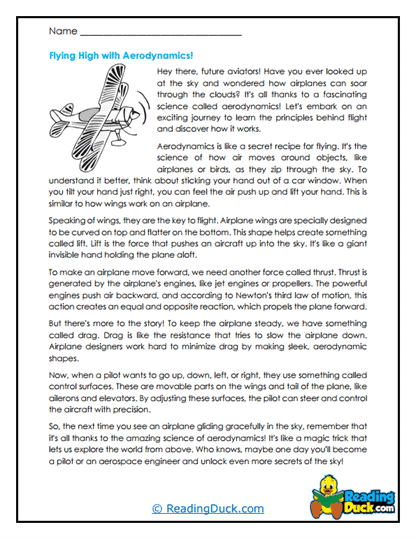
This passage explores the principles of aerodynamics and how they help planes and other objects fly. It explains the forces of lift and thrust that allow airplanes to stay in the air and move forward. The passage also discusses drag, the resistance that airplanes face, and how wing shapes are specially designed to reduce it. Finally, it touches on how pilots use controls like rudders and elevators to steer planes in the sky.
Learning about aerodynamics helps students expand their scientific vocabulary with terms like “lift,” “thrust,” and “drag.” The passage improves comprehension by explaining how airplanes stay in the air and what makes flight possible. It fosters critical thinking as students consider how different forces work together to enable flight. Additionally, students develop descriptive writing skills by reading about the precise roles of airplane parts and how they affect flight dynamics.
Questions:
Answer Keys: