About Our EA Vowel Team Reading Comprehension Worksheets
The EA Vowel Team-the letters e‑a together-can represent different sounds in English. Most commonly, it produces the long "e" sound as in "eat" or the short "e" sound as in "head." This makes it a versatile and important phonics pattern for early readers to learn because it appears in many frequently used words and varies in pronunciation depending on context.
Our EA Vowel Team Reading Comprehension worksheets provide short, engaging passages paired with colorful visuals and followed by multiple-choice questions-designed to help students notice and understand the EA pattern. Each worksheet delivers focused exposure to both pronounced variations of "ea," embedding the pattern in contextually rich passages. Downloadable answer keys and easy-to-print PDF formatting make these tools practical for both educators and families.
By reading passages filled with "ea" words-and engaging with comprehension questions-students strengthen their decoding, reading fluency, and understanding of vowel team behaviors. Repeated exposure to both the long and short "ea" sounds promotes familiarity, helping children spell, pronounce, and comprehend "ea" words more confidently.
Looking At Each Worksheet
Beach Bash
This story likely features fun at the beach-building a sandcastle, splashing waves, and sunny weather. Expect "ea" words such as beach, sea, or peach to appear naturally. Comprehension may involve recalling activities or describing the setting. The EA vowel team appears in key vocabulary associated with seaside fun. Students will enjoy the colorful and familiar context while practicing decoding "ea" words. This combination of imagery and phonics makes learning both meaningful and engaging.
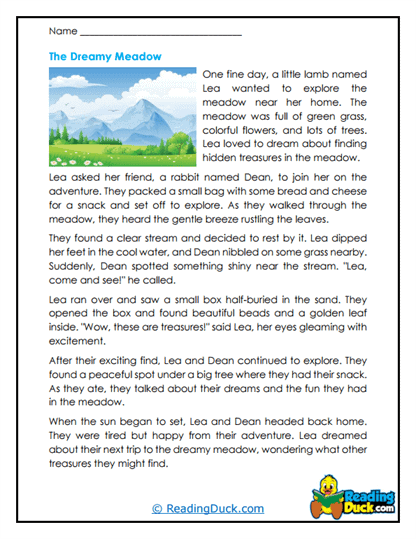
Dreamy Meadow
This passage might depict a tranquil meadow scene, perhaps with wildflowers or dreaming characters. "Ea" words like meadow, dreamy, or peace may feature. Comprehension may focus on setting description or sensory details. The EA team appears in gentle, evocative words that enhance the imagery. Students develop phonics awareness through descriptive language paired with visual beauty.
Forest Feast
A likely tale of animals gathering for a feast in the forest-maybe sharing berries or mushrooms. "Ea" words such as feast, leaf, or peace could appear. Comprehension tasks might include identifying characters or ordering events. The EA pattern appears in central words that enrich the storyline. Students can decode while immersing themselves in a cozy forest narrative.
Leafy Forest
This passage centers around a forest full of leaves, perhaps describing their shapes and colors. Words like leafy, leaf, or breathe may include the EA team. Comprehension questions may ask about description or sequence. The EA team appears in vocabulary that paints vivid nature imagery. This supports both phonics pattern recognition and reading engagement.
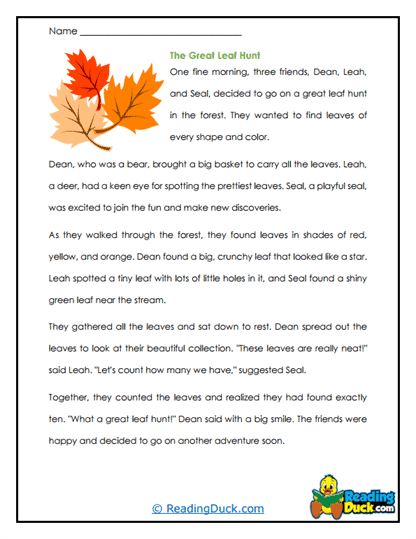
Leafy Hunt
A story likely about hunting for special leaves or items in a leafy setting-maybe a scavenger hunt. Expect "ea" words like leaf, hunt, or creative, depending on context. Comprehension may involve following clues or describing discoveries. The EA pattern appears in key descriptive terms. Students connect phonics practice with a playful reading activity.
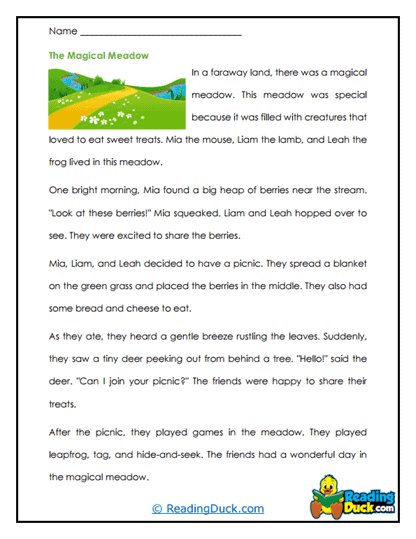
Magical Meadow
This story may describe an enchanted meadow filled with mysterious plants and creatures. EA words such as meadow, magical, or bean might appear. The comprehension focus may include describing magical elements or retelling the sequence. The EA vowel team appears in terms that add enchantment to the passage. This encourages decoding in a dreamy, imaginative setting.
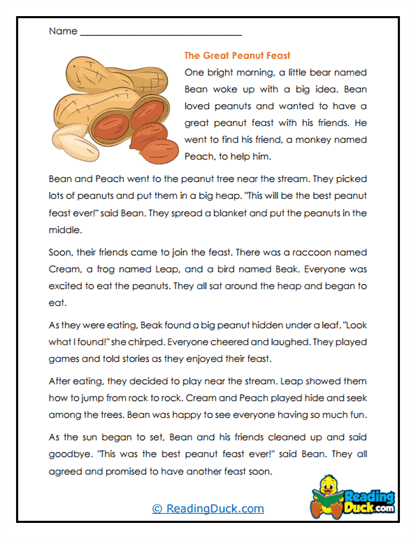
Peanut Picnic
A likely tale of maybe animals or friends having a picnic centered around peanuts or snacks. Look for "ea" words like peanut, meal, or feast in the text. Comprehension may involve recalling items, describing setting, or sequencing the picnic. The EA pattern appears in vocabulary tied to food and gathering. Children connect phonics decoding with a relatable, everyday scenario.
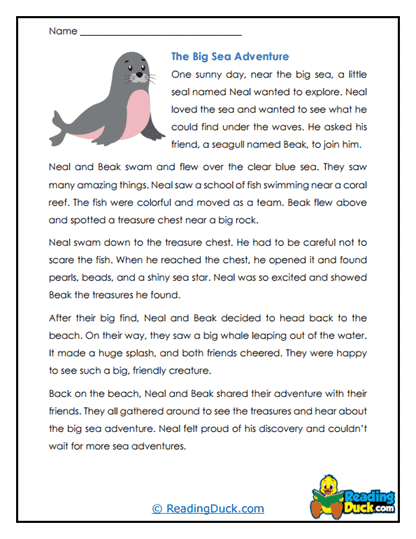
Sea Adventure
This passage probably follows an adventure at sea-boating, diving, or treasure-hunting. "Ea" words like sea, boat, or treasure may feature prominently. Comprehension tasks may involve recalling events or identifying sequence. The EA team appears in vocabulary central to exciting maritime imagery. This enhances engagement and reinforces phonics through adventure.
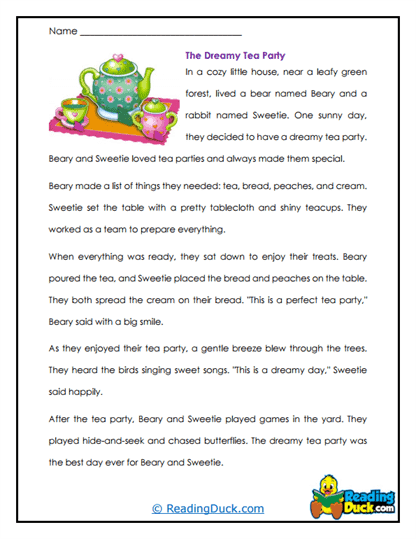
Tea Party Delight
This story likely revolves around a delightful tea party-cakes, tea cups, and guests. EA words such as tea, treat, or meal may appear. Comprehension may include describing attendees or actions. The EA vowel team shows up in smooth, pleasant words that fit the scene. This appeals to sensory context while reinforcing phonics learning.
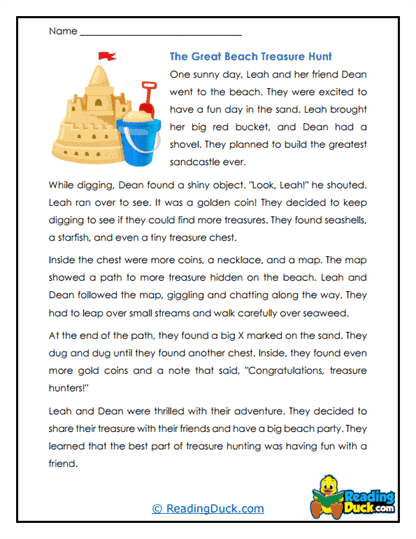
Treasure Hunt
A story probably about characters following clues on a treasure hunt-maybe across forest or beach landscapes. Expect "ea" words like treasure, lead, or team in the narrative. Comprehension tasks might ask for directions followed or items found. The EA pattern appears in key terms central to the hunt. This blends phonics practice with suspenseful storytelling to boost engagement.
An Example EA Vowel Team Reading Passage
Here's a short, original passage using the EA Vowel Team clearly and meaningfully:
Ella and Bea set out on a sea journey under a clear blue sky. They hoped to reach a secret island where treasure lay hidden in a hollow beach cave. As they steered their boat, they could hear sweet bird calls over the gentle waves. At last, they walked across warm, wheat fields shimmering like gold on the shore.
Where Is The EA Vowel Team?
You can spot the EA pattern in these two words: sea, reach. Both feature the "ea" vowel team and demonstrate different pronunciations-the long "e" sound in sea and the same long "e" in reach-within a story that's both vivid and purposeful.
Make sure to bookmark our website now.
Enjoy all our free reading worksheets.
Our materials adhere to the principles of the Science of Reading.