Learning how objects relate to one another in space-whether something is above, below, beside, or in front-might sound simple, but it builds the foundation for clear communication, storytelling, and spatial reasoning. These words help students describe the world, like identifying that the book is next to the lamp or the toy is behind the couch. Gaining fluency with object location vocabulary also supports following spatial directions, helping students give and understand instructions with greater accuracy.
Mastering left and right boosts both communication and problem-solving. When kids learn that "the red ball is on the left side of the box" or "you turn right at the corner," they can follow instructions and tell stories more clearly. This precision in language gives them confidence and independence in their day-to-day activities-whether it's setting the table, playing a board game, or participating in group learning. Teachers and parents often reinforce the concept through fun, repeated examples and physical demonstrations.
Our Left or Right worksheets bring these lessons to life through engaging visuals, animals, arrows, and playful scenes. Each page begins with straightforward identification tasks-like circling objects on the left or right-and gradually introduces activities like sorting, matching, and drawing to deepen understanding. They're thoughtfully designed as printable PDFs, and include answer keys to make teaching, learning, and reviewing smooth and stress-free. These versatile tools help make spatial vocabulary feel like a game, not a chore, building skills that stick.
Looking At Each Worksheet
Animal Colors
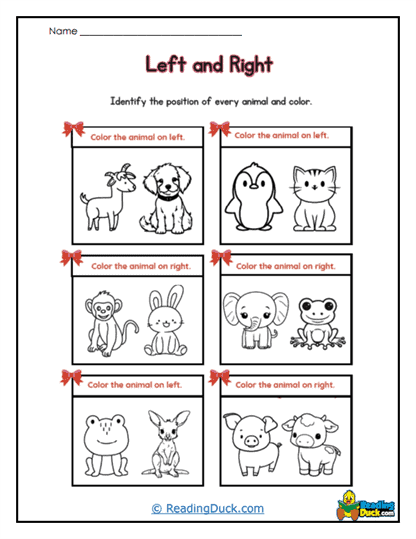
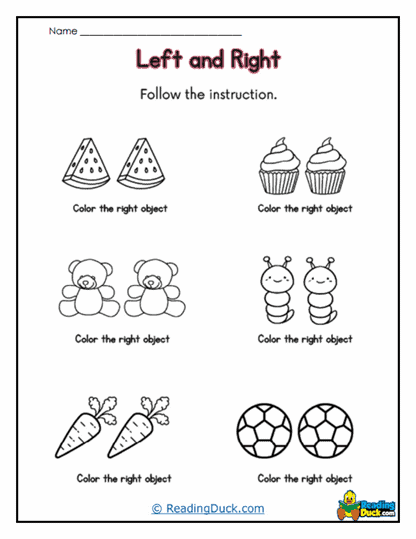
Kids identify animals colored on the left or right side of a split view, developing spatial vocab with charming creatures. The playful animal theme helps students connect with the concept instantly. It encourages observation and vocabulary pairing in a lighthearted way. Works well for small groups or independent warm-ups. Bonus: have students color their own animal pairs-one inside on the left and one on the right.
Animal Directions
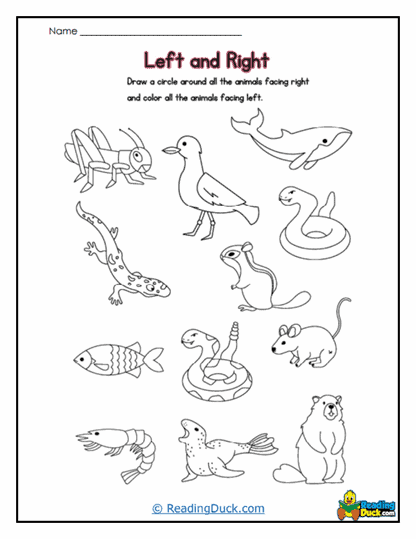
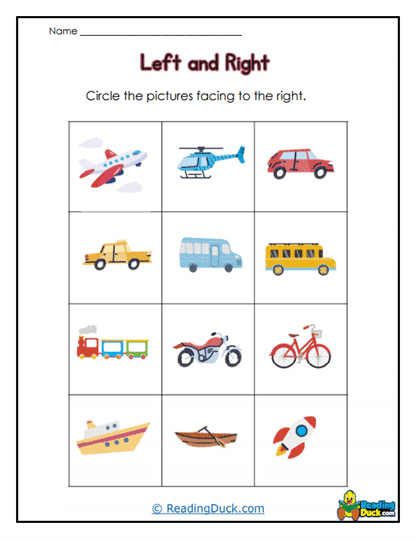
Students spot animals facing left or right and indicate the correct direction with arrows or labels. This worksheet brings directionality to life using familiar animal faces. Great for building early map-reading and directional skills. Perfect for literacy centers or quick review. Bonus: let kids mimic the animals themselves, facing left or right as they call out the direction.
Animal Position
Positioned in a row or grid, animals help students practice identifying what lies left or right of them. Adds a mix of sequencing and direction word usage. Engages both logic and vocabulary in a simple format. Ideal for small group challenges or pair conversations. Bonus: turn it into a memory match-cover the page, then ask who was left of the lion or right of the bear.
Arrow Sort
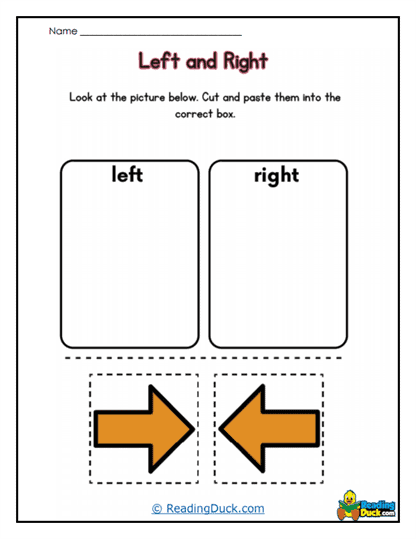
This worksheet features arrows pointing left or right-students sort or label them correctly. It's a clear and focused activity to reinforce directional recognition. Great for visual learners or early detection of directionality confusion. Excellent as a morning warm-up in routine-based classrooms. Bonus: make a life-size game-draw arrows on the floor and ask learners to step left or right as they follow prompts.
Car Directions
Cars drive in different directions-students determine whether they're turning or heading left or right. It combines fun themes of vehicles with practical direction words. Helps apply spatial vocabulary in a "real-world" context. Works well in transportation themes or literacy crossovers. Bonus: let kids use toy cars to act out directions-"Drive the car right, then left!"
Color Directions
Students use colors as codes-like "move left when you see blue, right for red"-to follow or identify positions. It merges color recognition with direction practice, building multi-sensory learning. Encourages thinking through rules and sequences. Great for early finishers or small-group games. Bonus: turn it into a classroom relay-teams follow color-direction cards to the finish.
Color Duo
In pairs of colors, students decide which color is placed on the left side and which on the right. It's simple but sharpens directional vocabulary and comparison skills. Perfect for pairing with naming skills: "Blue is to the left of red." Great for position-oriented discussions. Bonus: let students create their own duo pairs with colored paper and quiz partners.
Dino Cross
Dinosaurs appear with markers-students mark whether features are on the left or right of the dinosaur. Combines directional words with fun dinosaur illustrations. Encourages detailed observation and language use. Works as a fun art-lab switch or thematic unit. Bonus: kids can trace their own dino and label left or right spots like "spikes on the right."
Dino Directions
Dinosaurs move on paths turning left or right-students determine the direction of each move. It's like a directional story with prehistoric pals. Helps visualize sequences and movement language. Ideal for mixed-ability groups or enrichment tasks. Bonus: ask kids to stand and turn left or right like a walking dino as they narrate the path.
Duck Colors
Clearly colored ducks appear either to the left or right-students identify which side using color clues. The cheerful ducks help make direction memorable. Supports early vocabulary through visual cues. Great for circle time introductions or coloring station. Bonus: have students align toy ducks in a row and call out their positions relative to each other.
Fruit Colors
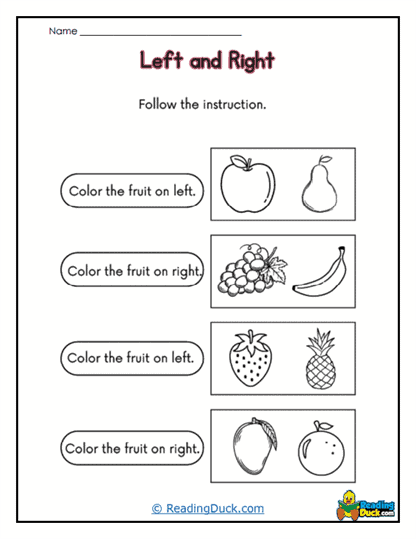
Fruits of different colors are shown left or right relative to a basket or each other-kids identify positions. Combines healthy food themes with positional learning. Encourages healthy-food vocabulary too. Great for snack time tie-ins or thematic units. Bonus: students can bring real fruit and sort them left or right on the table while labeling.
Insect Directions
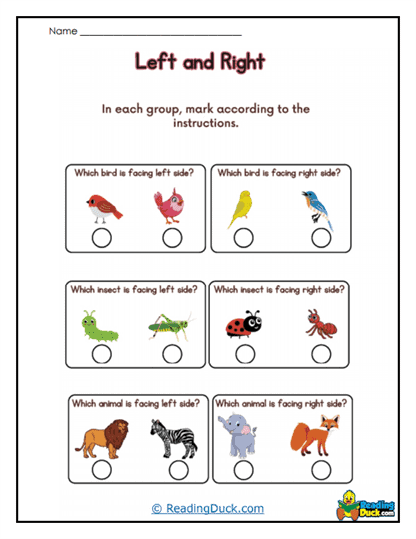
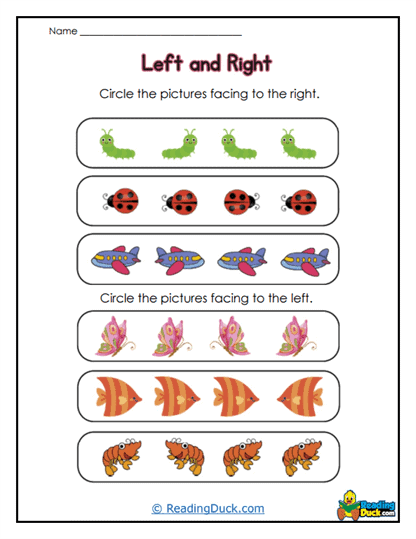
Insects crawl toward left or right on pages-students mark the correct direction using arrows or words. It turns spatial vocabulary into a tiny insect adventure. Works wonders for detail-focused learners. Excellent in insect or nature-themed lesson plans. Bonus: let kids create bug puppets and move them left or right along drawn paths.
Object Focus
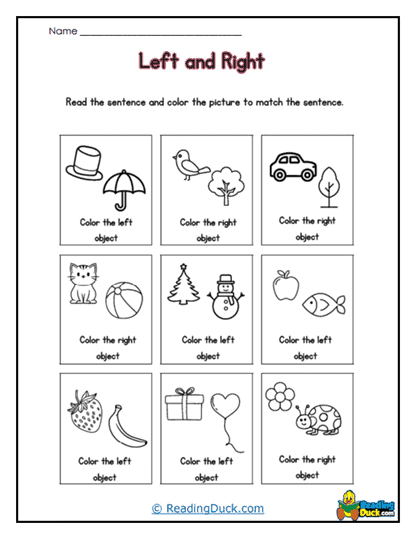
Everyday objects appear slightly left or right of a central point-students identify the direction. It grounds learning in things they see daily. Helps transfer learning to their home or classroom environment. Good for independent practice or pair sharing. Bonus: ask them to describe where objects are in the room: "The clock is left of the window."
Right Pick
Students choose objects that correctly match the "right" side-isolating correct examples. It's focused practice on one directional word. Useful for quick checks or targeted support. Perfect for differentiation or review. Bonus: turn it into a "right-only race" to see who can spot the right items fastest.
Right Sight
Visual scenes with multiple items-students mark or point out which items are on the right side. It builds awareness of side-ordering in complex layouts. Great for visual search and attention-building. Ideal for early finisher activities. Bonus: challenge learners to describe everything they see on the right side of a grouped picture in full sentences.
Tortoise Trail
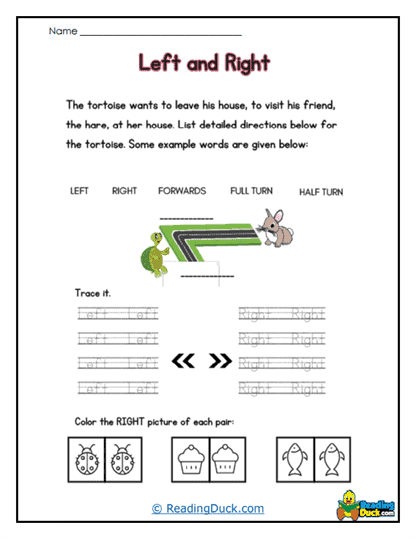
A tortoise follows a trail that veers left or right-students identify each turn. Brings gentle narrative and pacing into direction learning. Helps kids connect movement with term usage. Works well in story- or animal-themed days. Bonus: let kids draw their own tortoise trails and narrate the left/right decisions.
Make sure to bookmark our website now.
Enjoy all our free reading worksheets.
Our materials adhere to the principles of the Science of Reading.