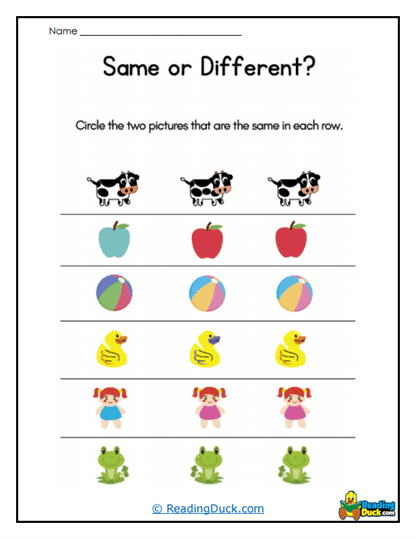
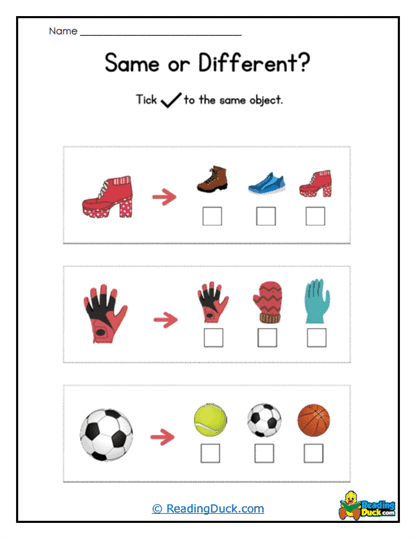
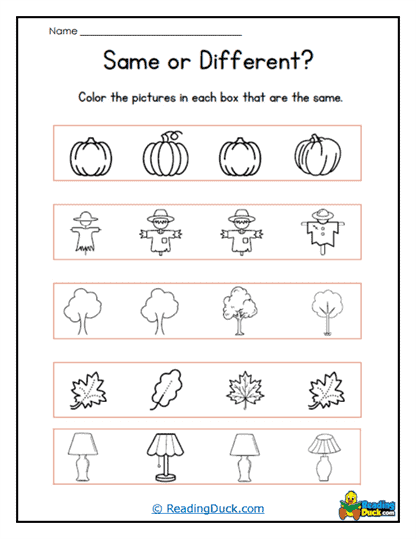
"Same vs. Different" might seem like a simple idea, but it's actually one of the most exciting skills kids can learn! At its heart, it's all about spotting similarities and differences-whether two things match perfectly or stand apart. This comparison skill shows up in everyday life, from recognizing matching socks to noticing when two toys don't quite look alike. By practicing these ideas, children sharpen their eyes, strengthen their vocabulary, and build confidence in describing the world around them.
Why does learning "same vs. different" matter so much? Because it helps kids develop essential communication and comprehension skills. When students can point out what's the same and what's different, they're learning to classify, compare, and explain clearly. These are the same skills they'll use later in reading (spotting letters that look similar), math (seeing patterns in numbers), and even science (observing details about plants, animals, or weather). In other words, this concept is a building block that powers many other areas of learning.
Our collection of worksheets makes mastering "same vs. different" a playful adventure. Children start with simple recognition tasks-like circling identical objects-and move step by step into trickier activities such as finding the odd one out or matching pairs across a page. The gradual structure means they build confidence at every stage while practicing focus, memory, and attention to detail. By the end, they'll be little detectives, excited to find every "match" and every "mismatch" in the world around them.
Looking At Each Worksheet In The Series
Animal Amigos
Students look at pairs (or groups) of animals to decide whether they're the same or different-it's like making new friends in the classroom zoo! It sparks giggles as kids compare, say, two identical puppies or a cat vs. a duck. This makes vocabulary and visual discrimination feel playful and accessible. Great for circle time or themed units. Bonus: have kids imitate each animal while declaring "same" or "different!"
Bag and Bike
Compare a bag and a bike-are they the same or different? It's everyday objects turned into a mystery game. It encourages kids to explain why they match or don't-like "both can carry things" or "only one has wheels." Perfect for everyday vocabulary lessons. Bonus: ask students to bring their own pair of items from home to compare in class!
Buzzing Bees
Students compare flying bees-some might be twins, others entirely different insects. A bee-themed way to make visual memory buzz! Ideal for spring lessons or pollination units. Builds focus and discrimination with delightful hive imagery. Bonus: kids can draw a brand-new bee and decide if it's same or different from the others.
Double Trouble
Two items side by side-students compare them and find if they're identical or mismatched. A tidy, focused activity that practices concentration. Great for morning routines or quick transitions. Doubles as both a pairing game and an observation boost. Bonus: have them say one thing that's the same and one that's different about each pair!
Food Finder
Here, students find similar or matching foods-like two strawberries or an apple and a banana. A tasty way to increase recognition and vocabulary. Perfect for snack time learning or nutrition themes. Builds classification through food imagery. Bonus: ask each student to name their favorite food and find its matching pair on the page!
Grape Match
Match grapes that are the same-then separate grapes that are different. It's a vineyard of visual comparisons! A great fit for fruit or grape-themed lessons. Builds early pattern spotting and fine motor skills. Sweet, simple, and satisfying. Bonus: let kids count how many matching grape clusters they find!
Kitchen Chaos
A kitchen-themed mix-up-students decide which utensils or foods are the same, and which are different. It's like a mini cooking show in worksheet form. Works well for home or cooking units. Teaches vocabulary and categorization with a dash of whimsy. Bonus: turn it into a role-play-students are "kitchen organizers" sorting tools!
Match Maker
Pair items that are the same-maybe shapes, toys, or animals. A classic matching task that nurtures memory and focus. Great for cooperative play or silent reading corners. Helps students build mental mapping between visuals. Bonus: encourage children to write the matching pairs in their own words!
Matching Madness
A more challenging version of matching: multiple items, multiple pairs, more fun. Picture a puzzle that calls for patience and detective eyes. Excellent for early finishers or challenge stations. Builds deeper concentration and visual memory. Bonus: let kids create a "matching madness" page for friends to solve!
Odd One Out
From a group of similar items, students spot the one that's different-like picking the zebra among horses. A bold twist that gets minds thinking critically. Fantastic for observation drills or warm-up activities. Helps students describe differences clearly. Bonus: ask them to invent their own "odd one out" and explain why it stands out!
Make sure to bookmark our website now.
Enjoy all our free reading worksheets.
Our materials adhere to the principles of the Science of Reading.