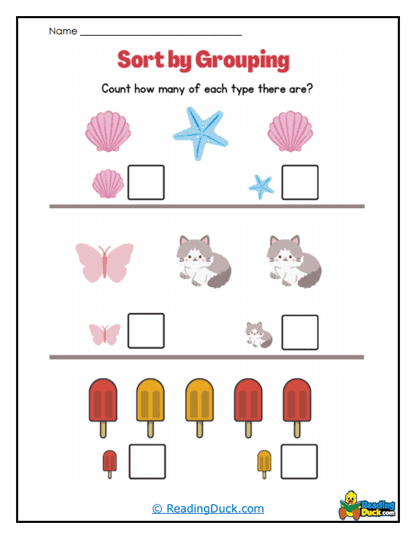
"Sort By Grouping" activities bring order to chaos-and curiosity to learning! At their heart, these worksheets encourage children to categorize items into groups based on shared characteristics like animals, food, shapes, or environments. This might seem simple, but when kids learn to spot what ties things together-or sets them apart-they're building powerful mental connections. These sorting skills help organize thoughts, sharpen vocabulary, and boost comprehension, making everyday observations feel like exciting detective work.
Why is sorting and grouping such a big deal for growing minds? Because it lays the foundation for critical thinking and communication skills. When a child identifies that apples, carrots, and broccoli all belong in one group while dinosaurs, ducks, and dogs belong in another, they're practicing classification-a core part of how we understand language, math, science, and the world. Grouping helps children explain themselves: "These are fruits because they grow on trees," or "These are insects because they have six legs." It strengthens both how they see and how they talk about patterns and categories.
Our "Sort By Grouping" worksheets take that essential skill and make it playful and accessible. Each activity is thoughtfully organized-starting with simple visuals like "Animal Sort" or "Fruit and Veggie Sort," and gradually introducing more complex challenges like mixed themes or themed tallies (like "Insect Tally" or "Seaside Sort"). Kids can work independently or collaborate, matching, counting, and sorting while building confidence in observation and reasoning. With every worksheet, learners become more skilled at recognizing similarities, differences, and logical categories-and that's a toolkit that helps in every corner of the classroom and beyond!
Looking At Each Worksheet In The Series
Animal Sort
Students categorize various animal images-sorting pets from wild, land creatures from flying ones, or more creative systems. It's like curating their own mini-zoo! Helps with observation, categorization, and vocabulary. Flexible for discussion or solo work. Bonus: let students group by their favorite criteria and explain why!
Cube Count
Children count cubes and group them based on attributes, like color or size-a tactile counting and categorizing exercise. It blends math and sorting in a fun way. Great for early number sense and visual discrimination. Works well as a station activity with real cubes. Bonus: invite students to stack cubes in new groupings and challenge peers to sort them!
Duck Detectives
Little sleuths sort images of ducks-maybe by color, size, or type-transforming grouping into a quacky investigation. It's a delightful way to practice visual memory and attention to detail. Perfect for morning routines or themed weeks. Encourages descriptive talk and classification. Bonus: have students imitate quacks for each duck group!
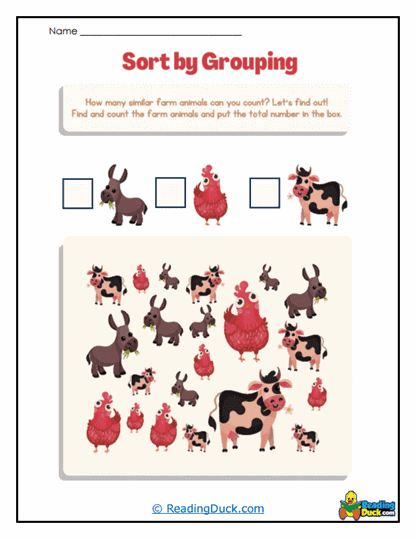
Farm Friends
Students group farm-themed items-like animals, tools, or crops-into categories. It's like setting up a mini farm market in their minds. Helps build vocabulary related to farms and classification skills. Ideal for farm or seasons units. Bonus: kids can draw their own farm object and decide where it belongs.
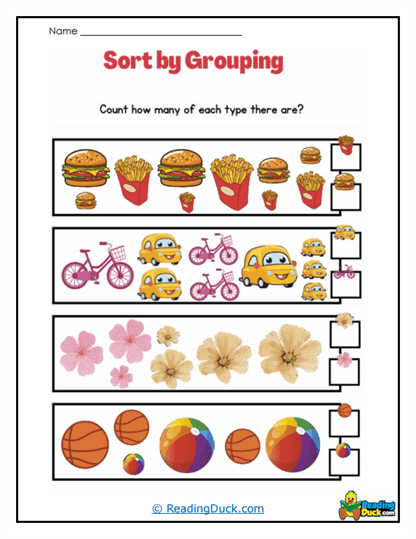
Food and Fun
A playful mash-up of food items, toys, or playful icons-asks kids to sort by category or theme while giggling. Combines categorization with imaginative contexts. Fantastic for snack-time comparisons or story-based sorting. Encourages flexibility in thinking. Bonus: let students invent their own silly category (like "silly snacks") and add drawings!
Fruit and Veggie Sort
Students distinguish fruits and veggies-maybe by color, shape, or edible parts-in bright, healthy visuals. It reinforces healthy vocabulary and classification. Great for nutrition units. Helps kids notice subtle differences in familiar items. Bonus: have learners sort real fruit or vegetables afterward using their worksheets.
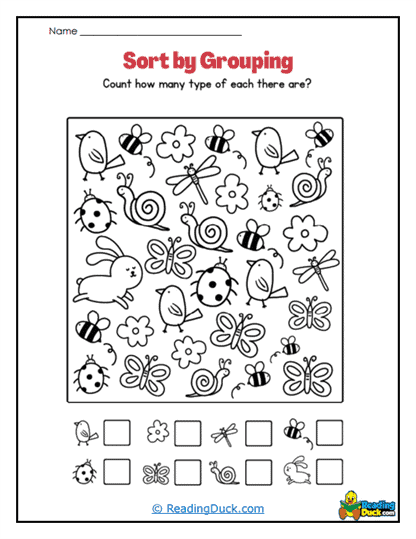
Insect Tally
Count insects and then group them by type-like bugs with wings versus without-or by number. It blends tallying and categorization, building both math and classification skills. Ideal for science themed lessons. Encourages tally making and organization. Bonus: create a class "bug chart" showing insect groups found outdoors.
Ladybug Count
Kids count and group ladybugs-perhaps by spots or color-using tally or sorting style. It's counting with a dotty twist. Engaging for nature lovers and helps visual attention. Great for counting lessons or dot patterns. Bonus: invite students to design their own ladybug group and count the spots to sort.
Monkey Count
Count monkeys and sort by fun criteria like number of bananas they hold or their posture-creative grouping meets counting. Encourages playful thinking alongside comparison. Perfect for storybook or jungle-themed units. Builds counting fluency and categorization. Bonus: have students invent monkey groups based on mood or color!
Seaside Sort
Group beach-themed items-like shells, fish, or umbrellas-into categories. A breezy mix of theme and classification. Great for sensory or summer themes. Enhances vocabulary around sea life and beach scenes. Bonus: have kids bring a small beach item to class and decide where it fits.
Snack or Toy
Students decide if each image is a snack or a toy-simple imagery that practices category boundaries. Engaging and relatable for kids. Works well for quick sessions or reward time. Reinforces concept grouping and labeling. Bonus: learners bring their own snack or toy and describe why it fits one group.
Snail and Leaf Count
Count snails and leaves and group them-perhaps by number or size. A nature-based sorting challenge that combines counting and classification. Excellent for nature units or quiet reflection tasks. Improves concentration and categorization. Bonus: kids can collect leaves and small objects to recreate the groups in person.
Spring Tally
Use cheerful spring imagery-like flowers, raindrops, or chicks-for tally counting and grouping. It's seasonal learning with sorting built-in. Ideal for springtime exploration or journal prompts. Blends thematic content with skill-building. Bonus: have students draw their favorite spring items and tally them by group.
Triangle Tally
Students tally triangles based on number of sides shown, orientation, or size-teaches sorting with a geometric twist. Great for early shape and math concepts. Builds spatial awareness and categorization. Useful for math centers or geometry lessons. Bonus: challenge learners to find triangles around the room and group them.
Veggie Count
Count and group different veggies-carrots, peas, corn-in fun visual arrays. Encourages both nutrition vocabulary and sorting skills. Perfect for snack-time learning or healthy eating discussions. Builds counting fluency and observation. Bonus: let students draw their own veggie group and label it.
Make sure to bookmark our website now.
Enjoy all our free reading worksheets.
Our materials adhere to the principles of the Science of Reading.