Video games aren't just a pastime anymore-they're sprawling worlds, intricate puzzles, and shared adventures that connect millions of players. From pixel-perfect classics like Super Mario Bros. to sprawling sandboxes like Minecraft, these titles offer stories, challenges, and emotional beats every bit as rich as books or films. The beauty is that you don't just watch them unfold-you live them, and every button press shapes your own unique narrative.
What makes video games so compelling is their ability to mix skill, imagination, and discovery. Racing around Mario Kart tracks demands quick reflexes and sharp strategic thinking. Diving into The Witcher 3 means juggling plotlines, moral choices, and complex characters that could rival any epic fantasy novel. Even minimalist hits like Tetris tap into pattern recognition and problem-solving instincts in ways that keep players hooked for decades.
And while the fun is obvious, the learning is sneaky. You're reading maps, decoding dialogue, understanding lore, and predicting outcomes-all skills that cross over into everyday literacy and critical thinking. Whether you're building a fortress in Minecraft, navigating the wilds of Skyrim, or teaming up for survival in PUBG, video games are living proof that play can be a gateway to both adventure and growth.
A Look At Each Worksheet
Atari Adventure
This worksheet likely whisks students back to the dawn of video gaming, exploring the early arcade era through reading. It probably invites learners to reflect on how simple graphics sparked monumental cultural shifts. Expect a fun blend of nostalgia and comprehension prompts that give context to gaming's humble beginnings.
COD Chronicles
Battle through the reading world with this entry, which likely uses military-style storytelling to explore action games. Students might encounter questions that help them dissect narrative, motive, and historical context in blockbuster-style game narratives. It'll engage readers with a dramatic flair while sharpening their critical thinking under the guise of a tactical mission.
Fortnite Frenzy
This worksheet likely taps into battle-royale madness, inviting students to reflect on Fortnite's popularity and its storytelling elements. The reading might involve themes of strategy, community, and digital culture, packaged with humorous hooks. Purposeful questions probably encourage analysis of media impact and game mechanics-all wrapped in that familiar "last-one-standing" energy.
Mario Madness
A wild ride through the Mushroom Kingdom, this one probably uses the beloved plumber's adventures to teach sequencing and cause-and-effect relationships. Expect charming descriptions of platform challenges that students can relate to, paired with comprehension tasks that feel as fun as stomping Goombas. It's a classic hero's journey-only with more mushrooms and warp pipes.
Minecraft Magic
This worksheet likely invites students to read about creativity, sandbox design, and learning through building. Comprehension questions might include connecting narrative to world-building and inferring why exploration fuels imagination. It's a great way to foster creative thinking through literacy and digital contexts.
Nintendo Nostalgia
This reading likely explores the origins of iconic Nintendo franchises and their evolution over time. Students may learn about storytelling, character development, and the emotional pull of classic games. The worksheet probably asks them to compare eras, analyze shifts in design, and appreciate gaming history with an affectionate nod.
PlayStation Power
This one probably examines the technological leaps fueled by Sony's gaming console, with reading passages focused on design, innovation, and immersive storytelling. Expect students to engage with descriptions of hardware and game culture, then answer questions linking tech advances with social and creative impact. It's tech history made digestible-and fun.
Pokémon Parade
Packed with charm, this worksheet likely celebrates one of gaming's biggest cultural juggernauts. It probably asks students to explore themes of friendship, growth, and strategy, while reading about the Pokémon phenomenon. Questions may lead them to infer character traits and narrative arcs in a way that's both cute and cognitively engaging.
Roblox Realm
This reading likely delves into user-generated worlds and the social aspects of modern gaming platforms. Students might reflect on creativity, collaboration, and digital citizenship within the gaming sphere. Expect reading prompts that encourage exploring how platforms like Roblox empower storytelling and community.
Sega Saga
A blast from the '80s and '90s, this worksheet probably takes students on a journey through Sega's legacy-from consoles to iconic characters like Sonic. They might analyze how brand identity and cultural trends evolved through gaming eras. The worksheet likely blends history and narrative analysis with retro flair.
Tetris Triumph
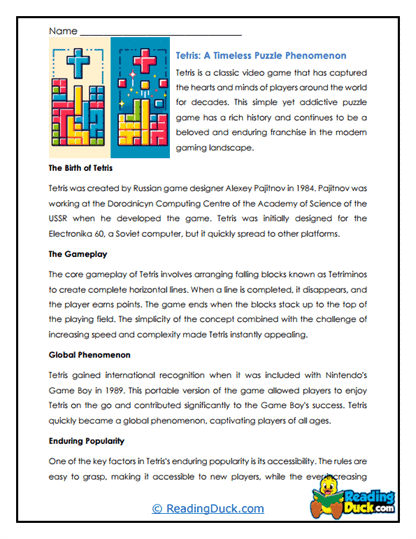
This one likely explores the simple-yet-addictive logic of Tetris, using reading to examine pattern recognition, design elegance, and cognitive skills. Students may answer questions that connect gameplay mechanics to problem-solving strategies in reading. It's purity of gameplay meeting purity of prose-cheap soundtrack optional.
Xbox Xperience
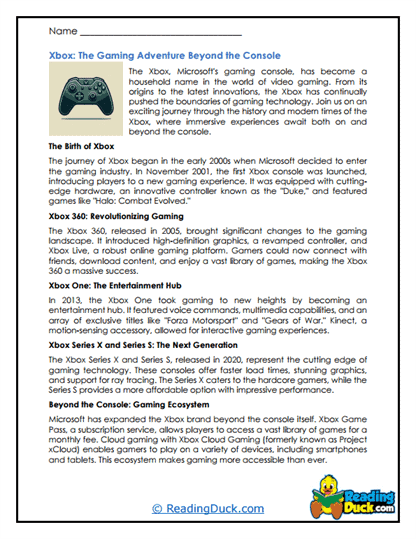
This worksheet probably introduces students to Xbox's role in modern gaming culture, from achievements to immersive storytelling. Reading passages might highlight the sociability of online play and the platform's influence on game genres. Comprehension tasks could ask students to consider how narrative and technology intersect to shape gaming experiences.
What Are The Most Popular Video Games?
Minecraft
A voxel-powered odyssey that's sold hundreds of millions of copies, making it the best-selling game ever-a sandbox of stories where creativity becomes comprehension. This is literacy disguised as block-building, offering readers the chance to construct narrative, infer intentions, and imagine worlds that read like playgrounds. It's where reading meets crafting-and kids click "read" like they click "build."
Grand Theft Auto V
Rockstar's open-world extravaganza is one of the most financially successful entertainment products in history. With sprawling storytelling, layered characters, and interweaving missions, it teaches narrative complexity in the most explosive, morally puzzling ways. Reading this game is like decoding a crime novel with a hyperactive city as your detective partner.
Wii Sports
The pack-in wonder that turned living rooms into literal playing fields with its easy-to-read motion-based fun. Even without words, it communicates gameplay intuitively-think of it as visual literacy for sports, with narrative arcs built around each swing and serve. It's reading bodies, reading movement, and enjoying literacy that leaps off the page and into the living room.
Ark: Survival Evolved
This dinosaur-laden sandbox survival sim teaches kids to read ecosystems as much as instructions. It's punctuation in pixel form-danger, resource, triumph-and every hunt or harvest is like decoding a nature essay with teeth and T-Rexes. Reading comprehension gets primal here: can you survive by reading the land?
Mario Kart 8/Deluxe
This rainbow-road racer combines charm and competition in a way that feels like reading a fast-paced, joyous comic strip. You eyeball items, plot strategy, and anticipate opponents-reading cues and practicing prediction in a blur of color and chaos. It teaches timing, sequencing, and friendly rivalry, one banana peel at a time.
PUBG (PlayerUnknown's Battlegrounds)
Battle-royale pioneer PUBG turns survival into a reading lesson about game theory-and about understanding opponents. Students literally learn to scan the map, infer threats, and plot safe zones through comprehension-rich gameplay. These skills are essential for the modern literacy challenges found in 8th grade, where reading between the lines of digital communication is just as important as understanding the plot.
Super Mario Bros.
The iconic '80s plumber's debut laid foundational narrative bricks that every reader-gamer or not-knows. This game communicates with stomps and power-ups in primitive yet profound literacy icons, making story structure intuitive. It's storytelling via Goombas and green pipes, teaching plot and progress through jumps and adventures.
The Witcher 3: Wild Hunt
Geralt's gritty, monster-hungry saga weaves morally complex tales that demand deep reading. Its narratives challenge readers to infer character motives, weigh consequences, and understand folklore-making it a fantasy novel in gaming form. Literacy gets a monster makeover: read hearts, not just words.
The Elder Scrolls V: Skyrim
Skyrim invites readers into vast, snowy realms where every book, corridor, and dragon roar is a sentence in a living story. It teaches environmental literacy-how surroundings whisper plot and backstory-and encourages reading curiosity in every hidden shrine or dusty tome. It's open-world reading at its most majestic.
Pokémon (franchise)
Though no single game dominates, Pokémon has embedded itself in pop culture and literacy alike. Talking monsters, evolving stories, and strategy-filled encounters teach students to read relationships, patterns, and growth arcs with an adorable twist. It's reading friendship-and evolution-one Poké Ball at a time.
Make sure to bookmark our website now.
Enjoy all our free reading worksheets.
Our materials adhere to the principles of the Science of Reading.