About Our Grade 8 Reading Comprehension Worksheets
Reading comprehension at the eighth-grade level is no longer just about finding out what happened to the main character or circling the correct synonym. It's a full-on expedition into nuance, inference, and textual analysis-with occasional detours into emoji drama and pixelated warfare. In this collection of original Grade 8 Reading Comprehension Worksheets, students don't just read-they navigate dilemmas, decode digital mishaps, and debate the fate of influencers and avatars alike. Worksheets like Autocorrect Mishap, Vanishing Emojis, and Instagram Intrigue offer cleverly modern takes on inferencing, helping students read between the lines-and, occasionally, between garbled texts-to discern what's really going on. These passages reward curious minds with surprises, misunderstandings, and digital nuance that spark laughter and critical thinking.
Then there's the realm of author's purpose and tone-a favorite haunt for adolescent readers ready to graduate from "what is the text about?" to "why did the author write this, and how does it feel?" Worksheets like Drama Wars, YouTube Stardom, and Influencer Faceoff invite students to grapple with layered voices, unreliable narrators, and winks of satire. Through snappy dialogue and media-savvy setups, readers begin to identify tone like pros, catching sarcasm, sincerity, and everything in between. It's not just comprehension-it's reading with emotional radar fully engaged.
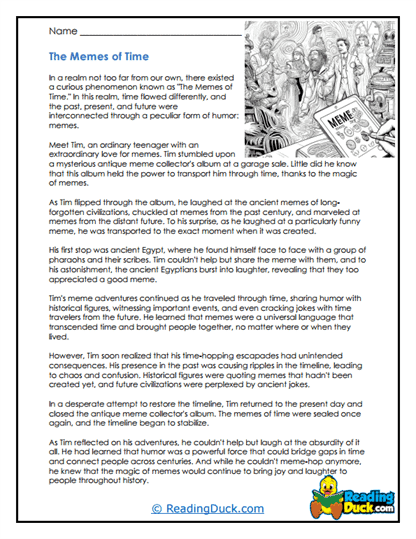
If vocabulary is the clay of comprehension, then our worksheets are the sculptor's wheel. Lessons like Meme Magic, Couture Quest, and Trendy Memories craft passages rich in context clues and new terminology, seamlessly embedded in pop culture references and quirky storylines. Students learn to decipher meaning without a dictionary, sharpening their word-smithing instincts while absorbing fresh, real-world language that isn't trapped in outdated textbooks. It's contextual learning at its finest-words become tools, not obstacles.
When it comes to identifying main ideas and supporting details, this collection doesn't do boring. Worksheets like Comic Con Chronicles, Gadget Trade, and Melody Miracles elevate central idea exploration through vivid, detailed worlds. Whether it's the inner workings of a sci-fi fan fest or the ethical dilemmas of trading tech, students are guided to distinguish the forest from the trees, recognizing key ideas amid a cascade of entertaining details. The structure is sound, the content is cool, and the comprehension? Deep as ever.
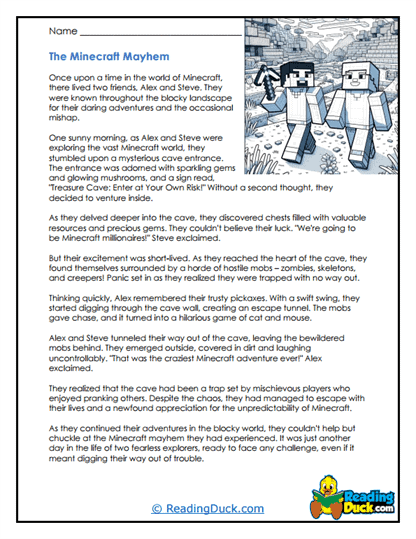
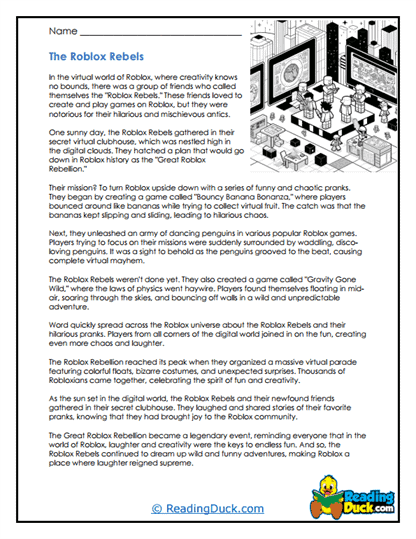
Text structure and genre variety also take center stage. Whether tackling a mystery menu in Hidden Menu, puzzling through narrative twists in Puzzle Challenge, or navigating choice-based gameplay in Roblox Rebels and Minecraft Mayhem, students experience a range of narrative forms and organizational styles. These lessons don't just teach structure-they immerse students in it. From problem-solution setups to chronological quests, readers engage with how a story is told just as much as what it tells.
Critical thinking and higher-order reasoning rise to the surface in titles like Future Advice, Ultimate Victory, Gamer Glory, and Digital Escape. Here, students must go beyond surface-level recall to analyze motivations, predict outcomes, and assess consequences. These aren't passive reads-they're cerebral obstacle courses that challenge students to make judgments, consider alternatives, and support their ideas with text evidence. Every worksheet becomes a mental gym-minus the sweaty gym clothes-providing the strength training needed to tackle our advanced 9th grade literacy units where motives get murkier and the stakes get higher.
At the heart of it all is a firm alignment with the academic demands of Grade 8 reading instruction. At this level, students are expected to interpret complex literary and informational texts, analyze themes, evaluate arguments, and support claims with clear textual evidence-all key tenets of the Common Core State Standards (CCSS.ELA-LITERACY.RI.8.1 through RI.8.10 and RL.8.1 through RL.8.10). This collection doesn't just tick those boxes-it brings them to life through modern contexts and engaging narratives. Fluency, comprehension, and critical literacy are woven throughout, preparing students for high school rigor while honoring their current realities. In short: it's thoughtful reading wrapped in fun-and every worksheet earns its place in a curriculum that values both skill and spark.
What Is The Typical Reading Curriculum For 8th Grade?
By eighth grade, reading instruction becomes a multidimensional experience, designed not only to expand students' comprehension but also to sharpen their analytical thinking and deepen their empathy. At this stage, students encounter texts that are richer in complexity-both structurally and thematically. The curriculum typically includes a blend of fiction, nonfiction, poetry, and multimedia, each chosen to challenge students' ability to navigate layered meanings, subtle inferences, and diverse perspectives. Reading is no longer about simply understanding what a text says; it's about exploring how and why it says it. Through guided discussions, close reading strategies, and independent analysis, students learn to identify the underlying arguments, rhetorical choices, and stylistic nuances that shape a text's impact.
The curriculum often weaves in literature that stretches across time periods, cultures, and genres-from classic novels and historical speeches to contemporary essays and digital media. Students are encouraged to make intertextual connections, draw conclusions from evidence, and articulate original interpretations. Vocabulary instruction becomes more refined, with a strong emphasis on academic and domain-specific language, while reading fluency is supported through sustained engagement with longer and more challenging texts. Teachers emphasize annotation, questioning, and synthesis as core habits of a literate mind, training students to think deeply and reflect critically on both what they read and the world around them.
Most importantly, the 8th grade reading curriculum fosters independence. Students are expected to take ownership of their reading lives-choosing books that interest and challenge them, engaging in self-directed inquiry, and using reading as a tool for personal and intellectual growth. Literature becomes a mirror and a window: a mirror that helps them understand their evolving identities, and a window that reveals the broader human experience. By year's end, eighth graders are not just preparing for high school-they're reading with intention, curiosity, and the confidence that their ideas matter in the larger conversation.
Make sure to bookmark our website now.
Enjoy all our free reading worksheets.
Our materials adhere to the principles of the Science of Reading.