
Sphinx Secrets Open Response
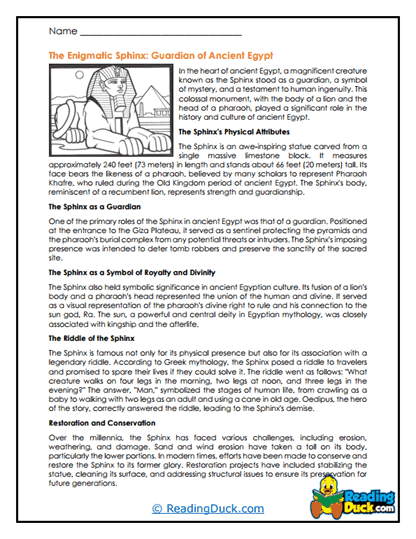
This passage explores the history and significance of the Great Sphinx of Giza, focusing on its symbolic role in Egyptian mythology. The Sphinx, a massive limestone monument with the body of a lion and the head of a pharaoh, served as a guardian of the pyramids. Scholars debate its origins, though many attribute it to Pharaoh Khafre of the Old Kingdom. The passage also mentions the Sphinx’s enduring cultural relevance and the efforts made to preserve it from natural and man-made damage.
Passages like this enhance descriptive language skills as students are exposed to detailed descriptions of monuments. They also help with reading comprehension through explanations of symbolic meanings and historical debates. By engaging with information about preservation efforts, students improve their ability to think critically about conservation and historical legacy. Additionally, it strengthens contextual understanding of how ancient societies used symbols to express their beliefs.