
Nile Lifeline Open Response
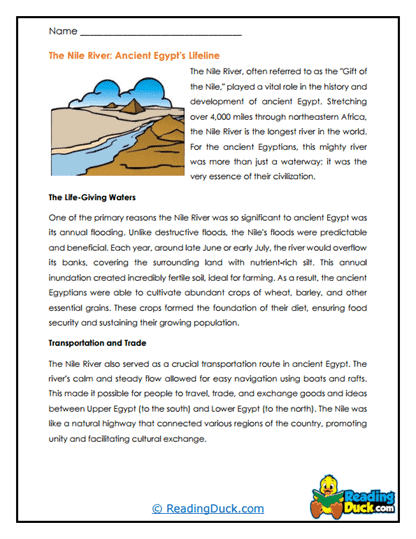
This passage highlights the significance of the Nile River to the development and sustainability of ancient Egyptian civilization. It explains how the Nile’s annual floods deposited nutrient-rich silt, creating fertile soil that allowed the Egyptians to grow essential crops. Additionally, the Nile served as a major transportation route, enabling trade and communication between Upper and Lower Egypt. The river’s role in agriculture, transportation, and cultural exchange made it central to the survival and growth of Egypt.
This passage enhances comprehension skills by explaining cause and effect, such as how the Nile’s flooding led to fertile land and abundant crops. It introduces key geographical terms and concepts, helping students improve their vocabulary. The passage promotes critical thinking, encouraging students to reflect on how geography influences a civilization’s economy and culture. Furthermore, it develops reading fluency as students encounter well-organized ideas about nature’s role in shaping human societies.