These finely tuned passages clock in at about 350 words, offering a richer and more immersive text experience that still maintains readability for young learners. Perfectly targeted for Grades 5-7 (ages approximately 10-13), they strike an ideal balance between narrative depth and approachable length. Typical completion time lands right around 25-30 minutes-a solid chunk of reading practice that boosts fluency and comprehension without feeling like a marathon.
These worksheets are the next level of reading stamina training-like moving from a fun run to a steady 5K. Longer sentences, deeper vocabulary, and more layered storytelling give students a space to stretch reading muscles and dig into meaning. The passages come with vibrant images and a mix of multiple‑choice, short‑answer, and open‑ended questions to elevate comprehension and critical thinking. Everything arrives as a printable PDF complete with answer keys-ready for easy classroom or home use.
A Look At Each Worksheet
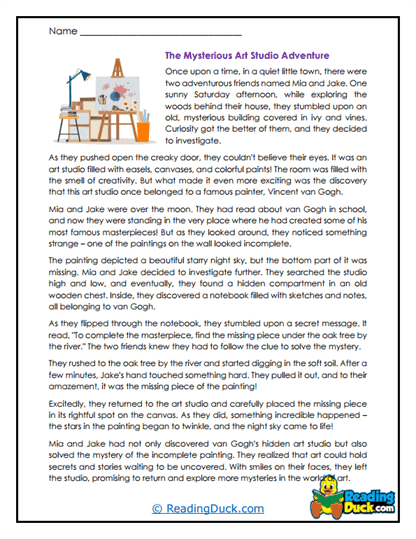
Art Mystery
A sneaky swirl of paint and missing masterpieces-this 350-word caper unravels like a fine art detective novel. Students explore visual clues and hidden motives while practicing inference and detail recall. It's like reading a gallery tour with a twist of intrigue. The passage builds suspense and vocabulary around colors, textures, and suspicion. The questions then roll out compositional comprehension: motives, alibis, and artistic secrets.
Bubblegum Adventure
Chewy, stretchy, and surprisingly daring-this passage blows up into a bubblegum caper that's full of flavor and fun. Readers stretch patience, vocabulary, and imagination all in one bite. It's like flavor-packed reading that's sticky in the best way. Students practice sequencing, descriptive language, and cause-and-effect-one chew at a time. The questions pop useful comprehension: events, emotions, and sticky situations.
Chocolate Mystery
Sweet clues melt into an intriguing whodunit dripping with cocoa and curiosity. In 350 words, readers retrace chocolate-crumb trails to solve a confection-themed crime. It's chocolate meets Sherlock-deliciously mysterious and vocabulary rich. Students infer motive, setting, and sensory detail like tasting every page. Then the questions prompt them to piece together suspects, clues, and chocolate motives.
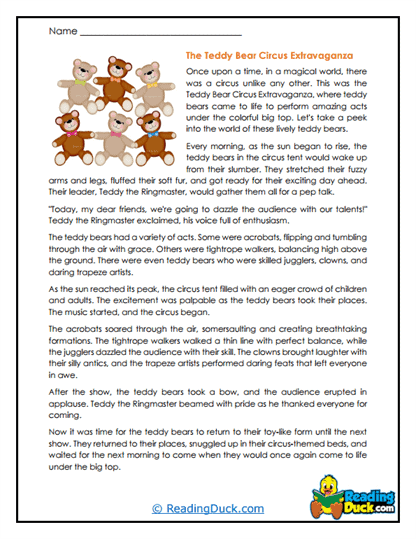
Circus Bears
Welcome to the bear-centered circus of balancing acts, honey-sweet jokes, and unexpected circus magic. This passage invites readers to juggle narrative flow and character quirks with comedic grace. It's like reading a circus scene with furry ringmasters and playful tension. Students practice visualization, character voice, and humorous tone. The questions invite them to examine roles, motives, and narrative punchlines.
Hero's Lessons
Brace for bravery and life lessons as young heroes discover courage through 350 engaging words. This isn't just a tale-it's a small-scale adventure in moral growth wrapped in exciting plot. Think comic book meets classroom lesson, all in one tale. Students practice characterization, moral inference, and personal growth dynamics. The questions explore motivations, lessons learned, and the evolution of heroism.
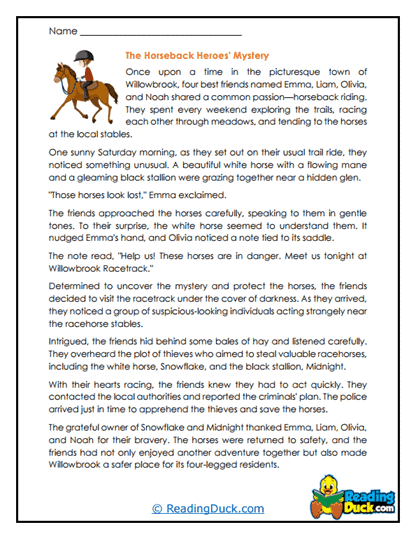
Horseback Heroes
Saddle up! A breezy, horseback-blazing journey unfolds with wind-in-the-mane details and equine camaraderie. This passage trots through friendship, perseverance, and thrilling rides. It's like galloping through a story that builds fluency with each hoofbeat. Readers practice main idea, setting, and figurative language through rhythmic prose. Then the questions ask them to describe scenes, emotions, and motivations-with the grace of a trained steed.
Magic Laces
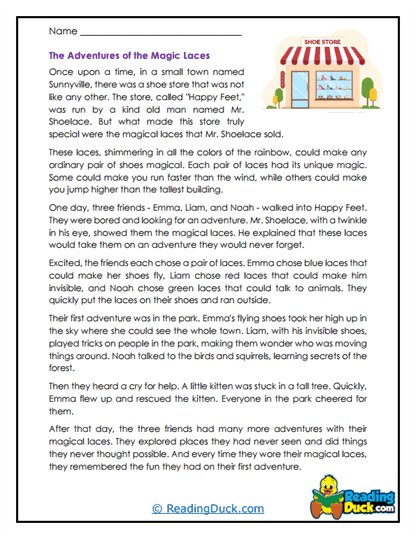
Lace-up shoes that transport you to other worlds? This 350-word fantastical tale walks-or flies-along magical paths and curious journeys. It's a playful blend of Fantasy 101 and everyday school vibes. Students stretch imagination, visualization, and metaphor understanding. The follow-up questions tie together inference, sequencing, and magical logic-perfect for readers lacing up comprehension.
Magic Melody
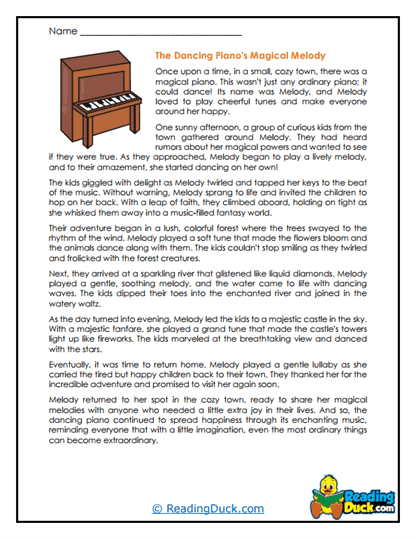
When notes can change reality, this passage becomes a harmonious journey of lyric and imagination. 350 words of musical enchantment test emotional tone and sensory description. It's reading you can hear in your head, rhythmic and full of feeling. Students practice analyzing imagery, structure, and mood. The questions then call for interpretations on melody, meaning, and magical resonance.
Magic Racket
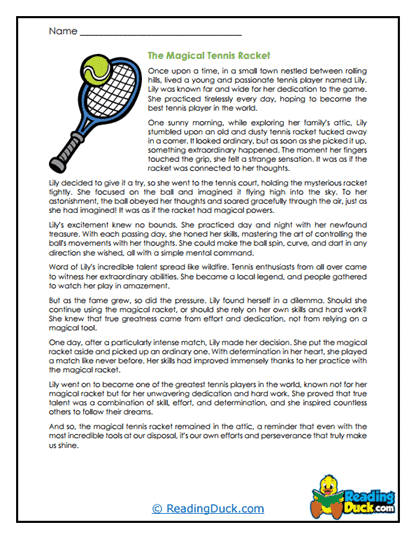
Is it sports or sorcery? In this 350-word tale, a sport racquet becomes an enchanted tool that scores points in magical ways. Think Wimbledon meets wizardry-a net of narrative wonder. Readers practice blending literal and figurative language in a dynamic, energetic context. The questions explore cause and effect, character reaction, and the logic of magical rules-point by magical point.
Magical Mailbox
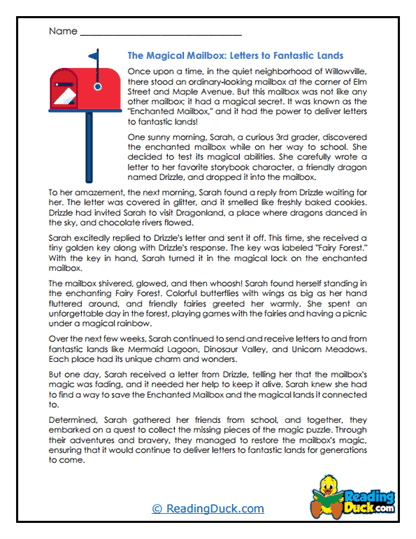
What if mail could deliver more than letters? This passage transforms a mailbox into a portal of surprises and possibilities in whimsical 350 words. It's letter-writing meets wonder on every page. Students practice setting, mood, and imagining beyond the ordinary. The questions ask them to unpack symbolism, emotional tone, and magical realism-all delivered by post.
Monster Friend
A monster that's actually your best friend-this passage flips fears into friendships with gentle humor. 350 words of unexpected empathy and imagination help students question assumptions. It's like reading fairy-tale therapy with quirky charm. Students practice character traits, motivational inference, and empathy. The questions nudge them to analyze change, feelings, and interpersonal understanding.
Museum Mystery
Quiet halls, ancient artifacts, and a hint of the unexplained-this 350-word visit to a museum hides secrets in plain sight. It's a mystery wrapped in history and curiosity. Students practice observation, inference, and pacing-and feel like junior curators. The questions prompt them to explore motive, setting cues, and timeline clues with detective rigor.
Olympic Dreamers
From starting blocks to finish lines, this passage races through aspirations, training, and the spirit of competition. It's a sprint of imagery, goal-focused narrative, and motivational themes. Students practice tone, main idea, and figurative language under inspirational pace. The questions push them to analyze perseverance, character goals, and emotional arcs-like champions of comprehension.
Pizza Planet
Pizzas, planets, and beyond-this savory sci-fi tale serves up a cosmic pizza delivery that's out of this world. It's flavor and imagination topping every scene. Readers infer setting, humor, and plot with a pepperoni planet in mind. The questions ask them to sequence events, identify tone, and imagine delightfully weird worlds-slice by cosmic slice.
Snack Heroes
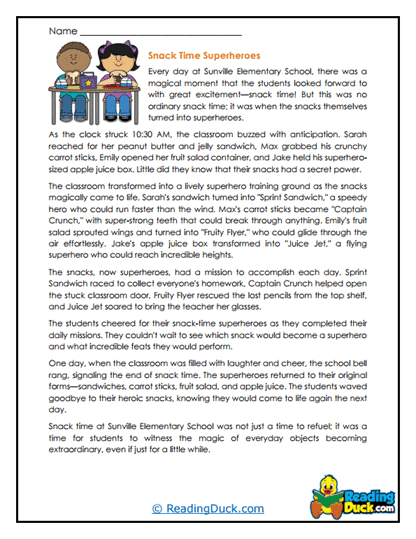
Snack-time saves the day in this quirky 350-word tale where food becomes heroic sidekick. Think cereal capes and cracker courage fueling breezy adventure. Students practice vocabulary related to everyday items made heroic. The story builds energy with every crunchy metaphor. The questions ask comprehension of plot, character role, and whimsical logic-snack-shaped, of course.
Song Quest
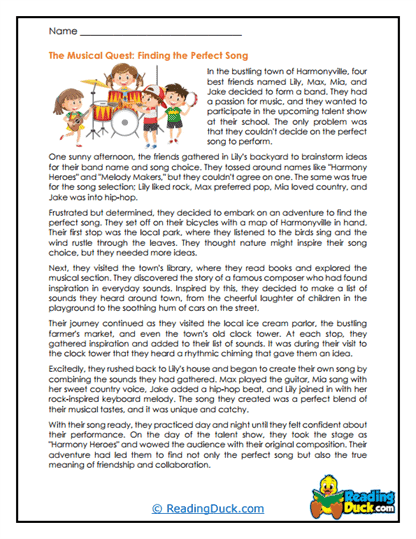
A melody quest awaits-this rhythmic adventure unfolds in exactly 350 words of lyrical discovery and musical treasure hunting. It reads like a fantasy playlist with each line a new track of intrigue. Students practice tone, structure, and imaginative sequencing. The follow-ups explore symbolism, emotional tone, and narrative harmony-understanding the power of song.
Sparkling Skates
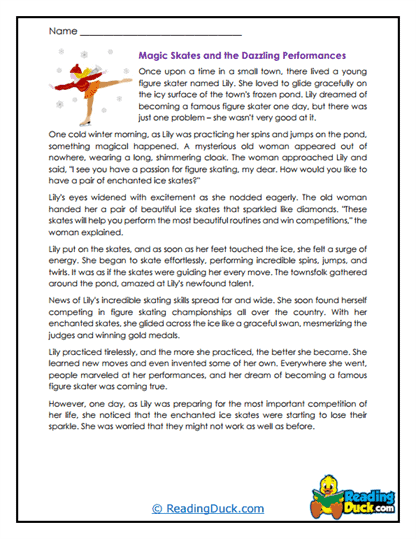
Ice, speed, and sparkle combine in this crisp, shimmering tale of skating dreams. It twirls with vivid description and fluid pacing-perfect practice for visualization and fluency. Students practice imagery, character passion, and descriptive structure. Questions guide them through theme analysis, tone, and motivation-like tracing ice patterns in comprehension.
Time Traveler
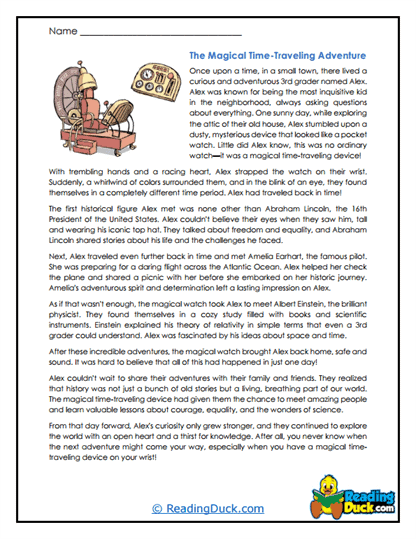
Buckle the seatbelt-this 350-word journey zips readers through eras with curiosity and wonder. It's compact science-fiction that builds time, setting, and cause-effect awareness. Students practice sequencing, historical inference, and narrative structure with every shift. The questions then guide them to map timelines, character intent, and plot logic-with time-travel precision.
Make sure to bookmark our website now.
Enjoy all our free reading worksheets.
Our materials adhere to the principles of the Science of Reading.