Fifty-word passages are the sweet spot between "blink-and-you're-done" and "whoa, that's long." They're long enough to carry a tiny plot or idea, yet short enough to keep emerging readers focused and confident. This length is perfect for building fluency, tracking simple sequences, and dipping a toe into inference without overwhelming anyone. Think of them as story tapas-small, flavorful, and surprisingly satisfying.
Because the word count is consistent, teachers can dial in practice precisely-great for warm‑ups, small groups, centers, or take‑home reinforcement. The steady length helps readers practice pacing and expression while noticing how pictures support meaning. Over time, students learn to anticipate structure: a quick setup, a simple shift, a satisfying finish. It's the literacy version of training wheels-secure enough to ride, exciting enough to keep going.
Each worksheet includes engaging visuals and a mix of question types-multiple choice, short answer, and open‑ended prompts-to check understanding from facts to ideas. Everything comes as printable PDFs with answer keys for speedy feedback. Whether you're teaching in a classroom or around a kitchen table, these 50‑word passages make confident readers out of cautious ones. And yes, they're fun-because reading practice works better when it smiles back.
A Look At Each Worksheet
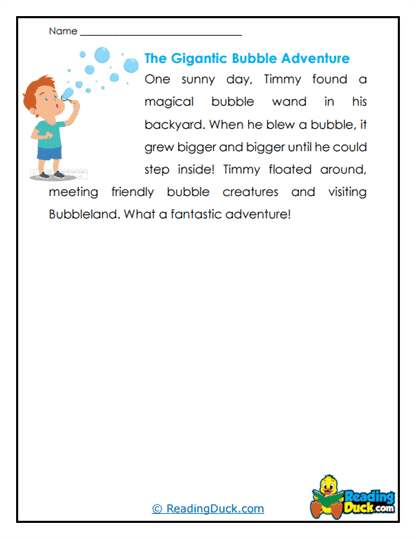
Bubble Land
Welcome to a world where bubbles are basically celebrities and the air is a backstage pass. The scene swirls with floating spheres that bounce, shimmer, and pop like tiny moons. Readers practice noticing details as bubbles drift near characters and places. The picture clues help them infer what's just off the page. It's fizzy, floaty comprehension with a satisfying pop.
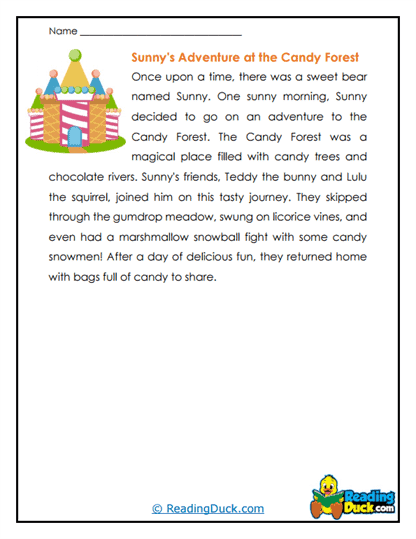
Candy Quest
A treasure map, but sweeter: the X might be a jellybean, and the trail tastes like peppermint. This mini‑adventure invites predictions about who's searching and what the prize is. Kids track sequence-clue, clue, jackpot-like pros. The art practically rustles with wrappers and sparkle. It's a sugar‑spark story without the sticky fingers.
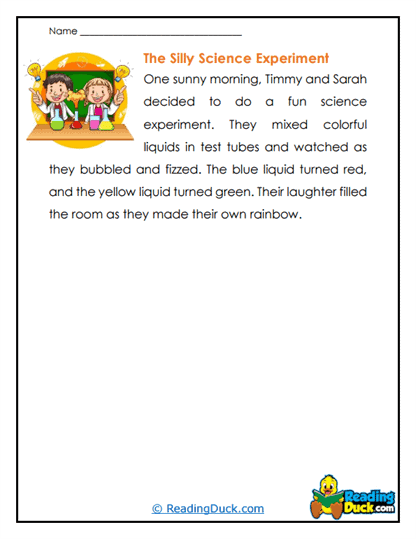
Colorful Science
Mix a dab of red with a splash of blue and-pow!-something new appears. The text nudges readers to connect steps like little lab scientists. Visual cues show beakers, splashes, or paint trays to anchor vocabulary. Questions push cause and effect: what mixed to make that color? It's STEM with a smile and zero spills.
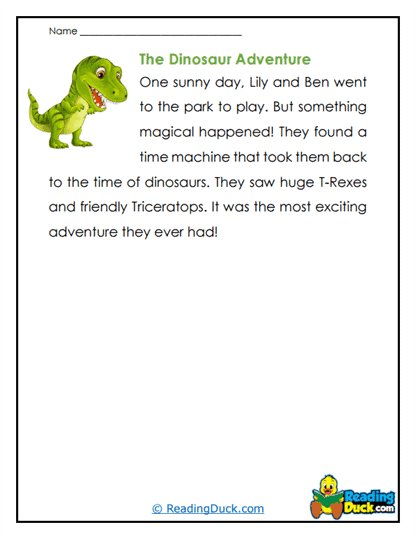
Dino Party
Confetti meets Cretaceous as dinosaurs gather for snacks, stomps, and maybe a polite roar. Readers spot who's there and what each dino is doing. The picture adds personality-spikes, plates, and tiny party hats. Kids practice identifying setting and mood without getting lost in the Triassic weeds. It's prehistory with punchlines.
Elephant Play
A tumble of trunks, splashes, and happy stomps turns a watering hole into a playground. Readers watch action unfold-spray, giggle, splash-like a mini movie. The art helps them track who does what and where. Questions highlight sequence and cause: who splashed first, and why did everyone cheer? It's big-hearted fun with jumbo comprehension.
Magic Paintbrush
One swipe and the picture pops to life-yes, that kite really might fly off the page. The passage invites wonder while keeping the story tidy. Visuals show the brush, the colors, and the "ta‑da" moments. Prompts lean into prediction: what happens if we paint a door? It's creativity with a gentle structure.
Magic Zoo
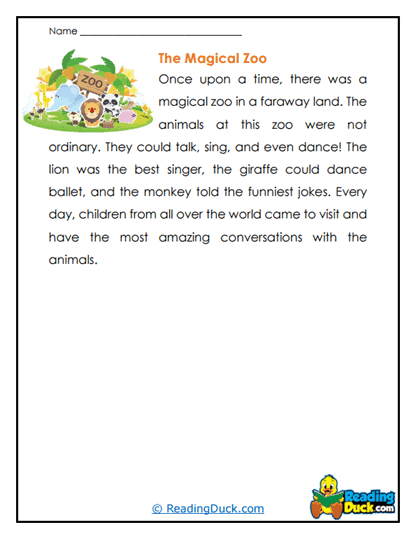
This zoo has the usual lions and lemurs plus a dash of impossible: glowing stripes, whispering feathers, maybe a snickering penguin. Readers compare what's real and what's delightfully not. The picture gives just enough clues to anchor imagination. Comprehension questions ask who, where, and what changed. It's a field trip with fairy dust.
Picnic Days
Blanket down, basket open, and a breeze that tastes like summer. Students pick out simple details-who's eating, what's in the basket, where they are. The art helps with categorizing items and actions. Questions guide sequencing from setup to last bite. It's a calm, sunny scene that builds observation skills.
Picnic Magic
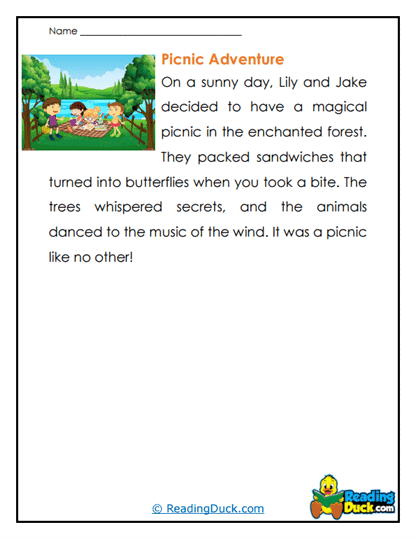
Same blanket, but now the sandwiches sing and the lemonade sparkles. Readers learn to blend realistic details with a playful twist. Visual hints make the magic feel surprisingly logical. Prompts invite "what if" thinking without losing the main idea. It's imagination tucked between two slices of bread.
Rainbow Land
Every step changes color and every cloud has backstage passes to the sky show. The passage invites kids to track hues and notice patterns. The illustration shouts with color while keeping the path clear. Questions spotlight setting and mood-how does this place feel? It's a chromatic stretch for careful eyes.
Robot Race
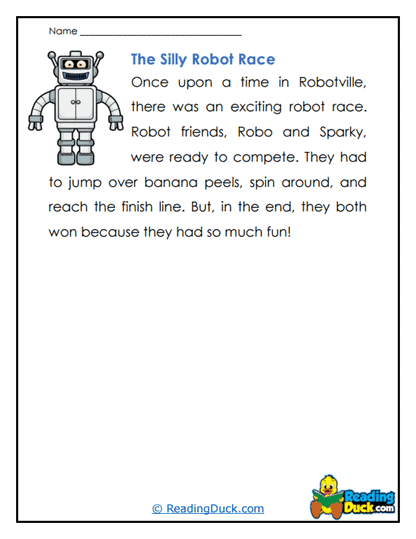
Ready, set, whirr-the robots line up and the gears start gossiping. Readers follow a tidy start‑to‑finish structure. Visuals spotlight motion, direction, and little differences between racers. Prompts ask who's ahead, what obstacle appears, and how it ends. It's speed plus logic, with a friendly beep.
Silly Heroes
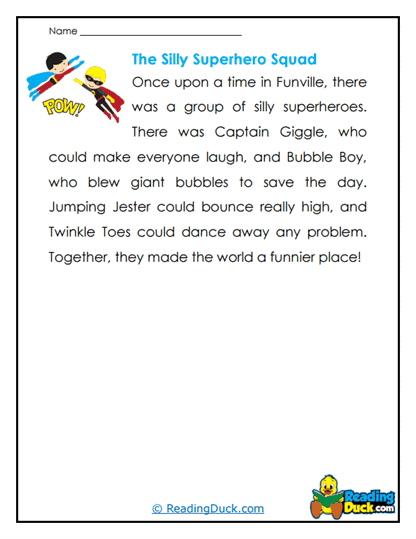
Capes on, serious faces-yet the emergencies are hilariously tiny. Students practice character traits and motivation in miniature. The art exaggerates expressions for easy inference. Questions explore problem‑solution: what was the "crisis," and how did they fix it? It's heroic structure with giggles built in.
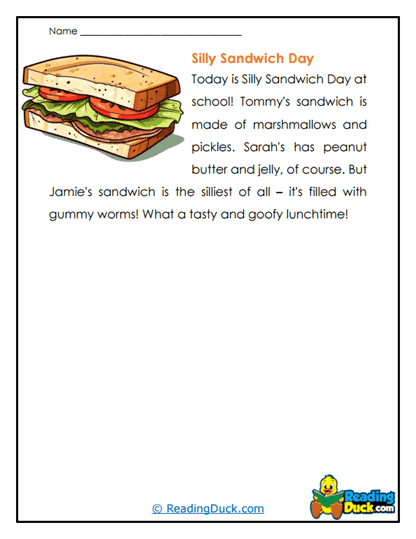
Silly Sandwiches
Lunch has opinions, and the pickles are unusually chatty. Readers identify speakers, actions, and a bonkers setting that still makes sense. The picture anchors the nonsense so comprehension stays on course. Prompts reinforce main idea versus funny extras. It's deli‑cious reading with extra whimsy.
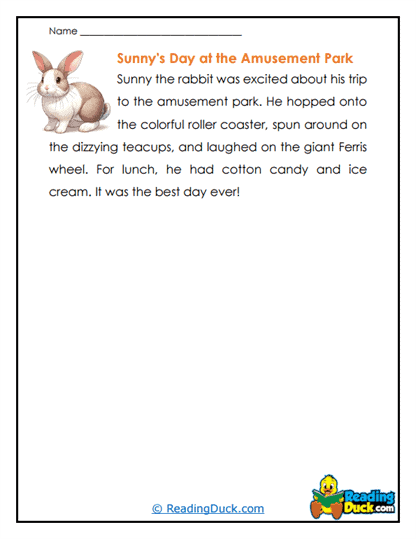
Sunny's Fun
Sunny squeezes every drop out of a bright day-games, friends, and a "just one more" moment. The text models a simple sequence with cheerful pacing. Visual clues show time of day and shifting activities. Questions nudge kids to retell in order. It's sunshine in story form, SPF included.
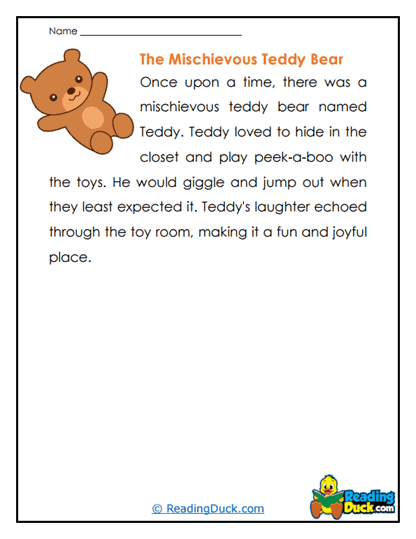
Teddy Mischief
A plush friend goes rogue: cookie crumbs, crooked pillows, zero regrets. Readers track clues to see what Teddy actually did. The art is a giggle factory of small details. Prompts practice cause‑effect and making inferences from evidence. It's gentle chaos with a cuddly culprit.
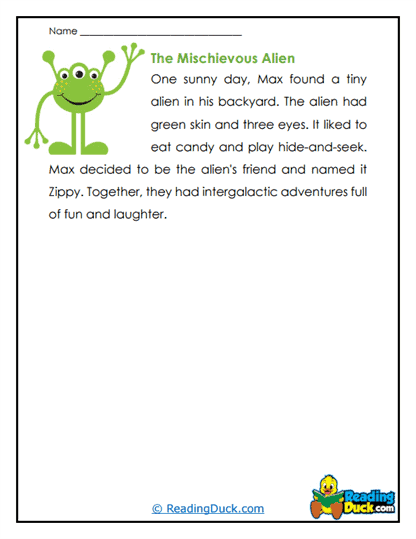
The Alien Days
A normal school day-except the classmates have antennae and recess is on the moon. Students compare familiar routines with wacky new rules. The picture bridges strange and relatable perfectly. Questions ask what's similar, what's different, and how the narrator feels. It's cultural exchange, outer‑space edition.
Time Travel
Click, flash, whoosh-suddenly the past smells like campfire and the future hums like a robot cat. The passage keeps the journey clear with crisp cues. Visuals show when and where without a history lecture. Prompts focus on sequence and setting clues. It's a tiny timeline roller coaster.
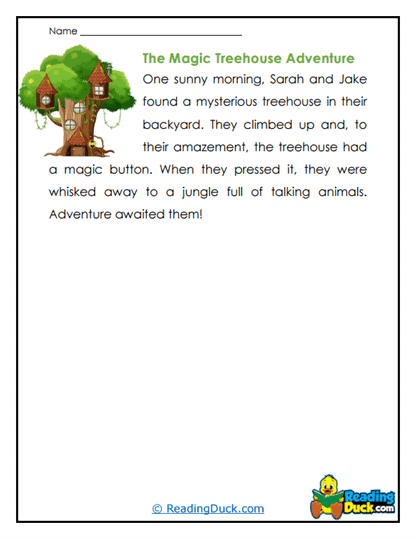
Treehouse Journey
Up the ladder, into a fort that feels like a whole secret world. Readers explore setting details-maps, snacks, and a shared plan. The illustration invites "Let's go!" energy. Questions highlight teamwork and next steps. It's adventure distilled into one leafy perch.
Make sure to bookmark our website now.
Enjoy all our free reading worksheets.
Our materials adhere to the principles of the Science of Reading.