If you've never heard of a ballad, think of it as the lovechild between a story and a song - only it didn't just elope to Vegas last week, it's been around for centuries, carrying tales of knights, heartbreak, and the occasional ghostly encounter. Ballads are the original binge-worthy dramas, except instead of Netflix, you got a bard in the town square belting it out with dramatic pauses for effect. They can be tragic, romantic, heroic, or hilariously over-the-top... sometimes all in the same poem.
But ballads aren't just historical relics dusted off for English class. They've shaped folk traditions, inspired popular music, and kept oral storytelling alive long before Wi-Fi made cat videos the main form of cultural preservation. They give voice to communities, keep legends alive, and prove that humans have always loved a juicy story - preferably in verse.
Our ballad worksheets take all that narrative magic and package it into engaging, bite-sized learning adventures. Whether you're unpacking rhyme schemes, analyzing a tragic hero's fate, or discovering why pirates are such popular subjects, these materials make exploring ballads lively, relatable, and fun. By the end, you won't just understand what makes a ballad tick - you might be ready to compose one yourself (costume bard hat optional).
A Look At Each Worksheet
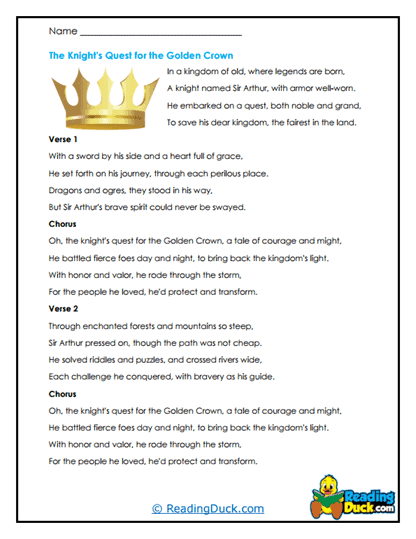
Arthur's Crown
This worksheet dives into the legendary world of King Arthur, exploring the myth, the man, and the magic behind his crown. You'll trace how ballads weave together history and imagination, turning a ruler into a larger-than-life hero. Expect chivalry, mystery, and the occasional sword fight in verse. Did you know Arthur's legend has been told and retold for over 1,000 years - making it the original reboot franchise?
Clashing Clans
Here you'll examine a ballad brimming with family feuds, epic showdowns, and just enough melodrama to make Shakespeare blush. The worksheet guides you through the structure of conflict in verse and the rhythms that heighten tension. You'll also look at how setting plays a role in mood and meaning. Fun fact: some of the earliest ballads were essentially musical news reports about clan disputes.
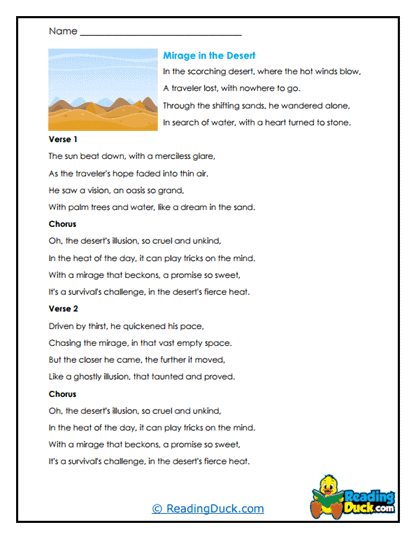
Desert Mirage
This activity focuses on a ballad steeped in imagery, where illusions and reality blur under a blazing sun. You'll learn how poets use sensory language and repetition to create an almost dreamlike atmosphere. The guide breaks down stanza structure and refrains to show how they shape the story. Ever wonder why deserts are such popular backdrops? It's all about isolation, mystery, and the possibility of seeing what isn't there.
El Dorado's Journey
A worksheet for treasure hunters at heart, this one follows a quest for a golden city through rhythmic storytelling. You'll explore symbolism, adventure motifs, and how ballads build suspense through pacing. Expect to unpack metaphorical gold along with the imagined kind. The hunt for El Dorado was a real obsession in the 16th century - and ballads helped keep the legend alive.
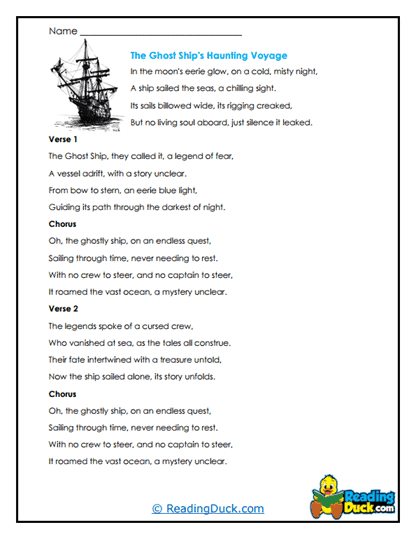
Ghostly Voyage
This worksheet takes you on a spectral sea journey, with eerie refrains and haunting imagery. You'll study how repetition and rhythm create an almost hypnotic, chilling effect. The resource also highlights how setting and supernatural elements work together to grip the listener. Bonus tidbit: sea ballads often doubled as cautionary tales for sailors - though ghosts probably weren't the official maritime hazard.
Gypsy's Revenge
In this piece, betrayal and retribution take center stage, wrapped in vivid language and a steady, building beat. The worksheet unpacks how emotional stakes are heightened through rhyme and meter. You'll also examine how cultural archetypes influence ballad characters. Did you know that many traditional ballads traveled across continents via oral tradition alone?
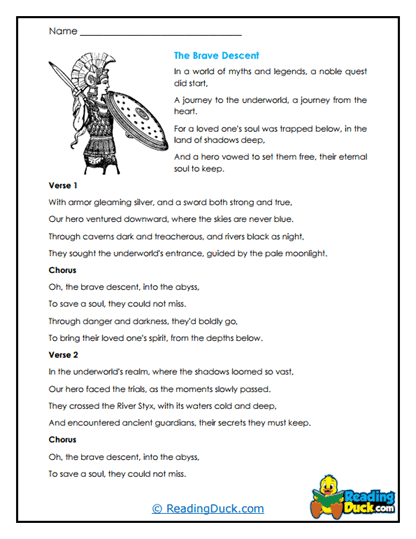
Hero's Descent
This activity focuses on the tragic arc of a once-mighty figure brought low by fate or folly. You'll break down narrative structure, character motivation, and symbolic imagery. The worksheet also introduces the concept of poetic irony. Heroes falling from grace has been a favorite theme for centuries - from ancient epics to modern rock ballads.
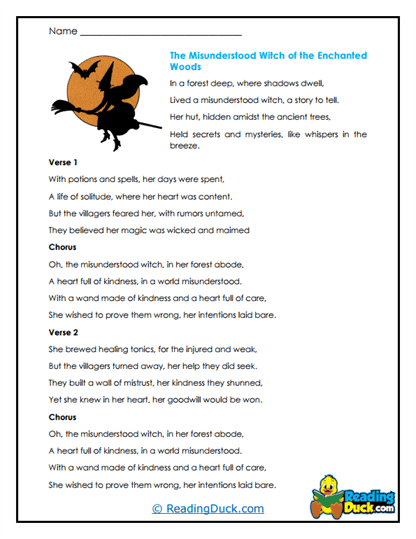
Kind Witch
A twist on the typical "evil sorceress" tale, this ballad paints magic in a surprisingly compassionate light. The worksheet explores how ballads subvert expectations through tone and characterization. You'll also look at how dialogue in verse creates intimacy. Fun fact: not all witches in folklore were sinister - some were local healers or wise women.
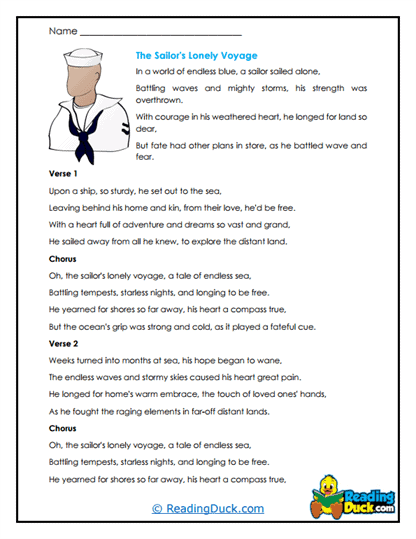
Lonely Sailor
This one is all about longing, loss, and the endless horizon. You'll see how rhythm mimics the ebb and flow of the sea and how imagery paints emotional isolation. The guide also examines personification of nature. Sailor ballads often doubled as letters home - just with a lot more rhyming.
Lovers' Rift
A ballad of romance gone wrong, this worksheet explores how conflict can be as compelling as passion in verse. You'll study word choice, pacing, and emotional contrasts. The activity also considers how cultural norms shape love stories in ballads. Ever noticed how heartbreak ballads never go out of style? Neither have we.
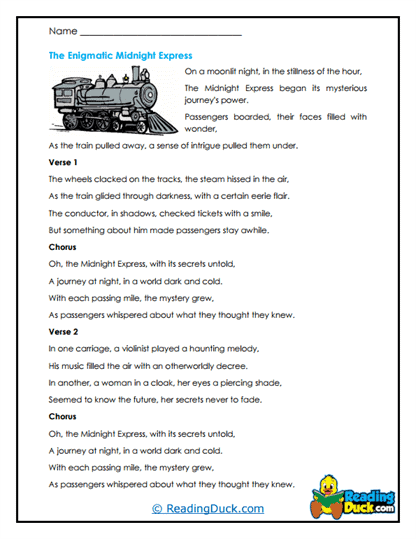
Midnight Express
Set on a mysterious nighttime journey, this worksheet focuses on how mood is built through rhythm and repetition. You'll analyze sensory details that bring the dark to life. The guide also shows how suspense can hinge on what's not said. There's something inherently thrilling about travel by moonlight - especially in ballads.
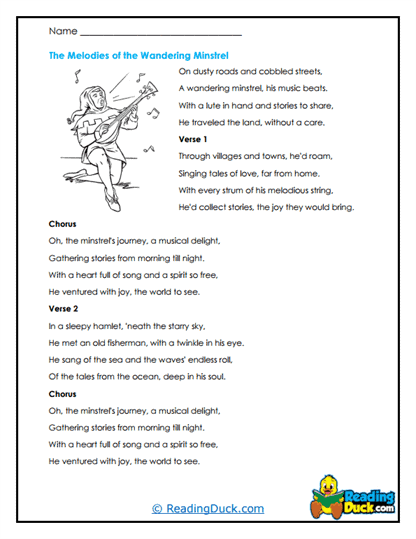
Minstrel's Melody
This piece puts the storyteller in the spotlight, showing the ballad as both performance and text. The worksheet covers the role of the narrator, audience interaction, and oral tradition. It's perfect for seeing the "song" in storytelling. Historically, minstrels were the Spotify playlists of the Middle Ages - traveling from town to town with the latest hits.
Pirate's Quest
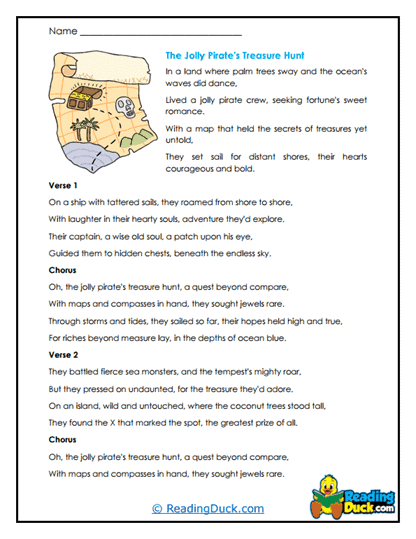
Adventure on the high seas, complete with treasure maps, daring raids, and a catchy refrain. This worksheet highlights how action sequences are framed in verse. You'll also learn how repetition builds both momentum and memorability. Pirates and ballads go together like rum and... well, more rum.
Pirate's Betrayal
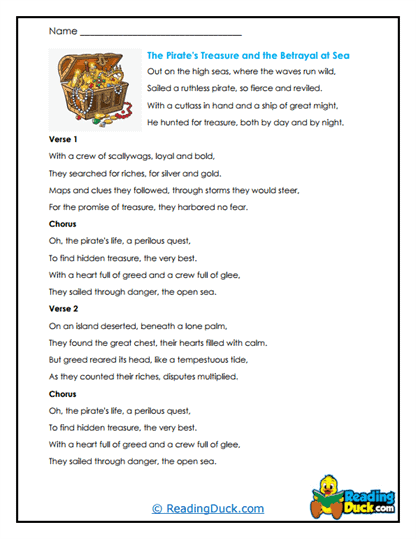
The darker side of seafaring, this ballad explores treachery and broken bonds aboard ship. You'll look at character dynamics, tension-building, and the art of the twist ending. The guide also delves into how nautical imagery enhances betrayal's sting. Fun fact: pirate ballads were often moral tales warning about greed - not that it stopped anyone.
Shepherd's Wisdom
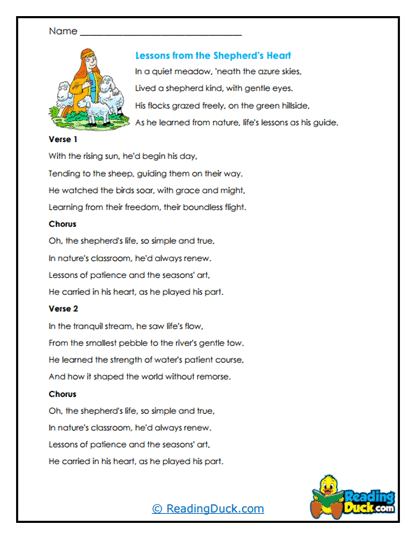
A gentler ballad, this one focuses on pastoral life and the quiet strength of its characters. The worksheet examines nature imagery, moral themes, and lyrical simplicity. It's a peaceful counterpoint to more dramatic ballads. Shepherd figures often symbolize guidance and stability - even when they're fictional.
Looking At The Ballad Genre
Ballads are narrative poems, often set to music, that tell a story in simple, rhythmic language. They're usually structured in quatrains with alternating lines of iambic tetrameter and trimeter, and often use rhyme schemes like ABCB. Their tone can range from tragic to humorous, but the storytelling remains central. Whether sung or read, ballads thrive on their ability to hook the audience quickly and carry them along until the final, often dramatic, resolution.
Historically, ballads emerged from oral tradition, passed down through generations long before they were written. They flourished in medieval Europe, especially among communities that relied on traveling performers to share news, legends, and moral tales. Over time, they spread globally, adapting to local cultures and themes while retaining their narrative core. The invention of print in the 15th century helped cement ballads as a literary form alongside their oral roots.
Common tropes in ballads include star-crossed lovers, heroic feats, supernatural encounters, betrayals, and moral lessons. Refrains, incremental repetition, and vivid imagery are staples, keeping the audience engaged and aiding memorization for performance. Settings often range from rugged landscapes and quiet villages to high seas and mystical realms, each adding flavor to the tale.
Some of the most famous ballads come from the British Isles, such as "The Rime of the Ancient Mariner" and "The Ballad of Chevy Chase." Authors like Samuel Taylor Coleridge and ballad collectors like Francis James Child have helped preserve and popularize the form. Beyond the page, ballads have influenced folk music traditions worldwide - from Appalachian mountain songs to modern singer-songwriters.
Readers are drawn to ballads because they combine the accessibility of song with the depth of storytelling. They offer drama, emotion, and often a moral takeaway, all wrapped in memorable rhythm and rhyme. A well-crafted ballad invites the listener to imagine, feel, and even participate - making it as much a communal experience as a literary one.
Make sure to bookmark our website now.
Enjoy all our free reading worksheets.
Our materials adhere to the principles of the Science of Reading.