Epic poetry is like the A-list blockbuster of literature-long, bold, and packed with heroes, monsters, divine drama, and enough fate-bending action to make even modern superhero movies seem low-budget. It's the genre where warlords talk to gods, journeys span continents, and the universe itself sometimes stops to listen. If you're ready to go big in verse, epics are your rocket ship. These poems walk that line between myth and legend-a linguistic odyssey you can't ignore.
But why keep epic poetry in your teaching toolbox? Because it's the ultimate foundation-builder: it forges understanding of narrative scope, heroism, and cultural identity, all while flexing poetic muscles. Epics shaped how stories are told-not just in the past, but even today, in every "hero's journey" blockbuster or viral fantasy novel. These worksheets help students dive deep into theme, structure, and the rich world-building that makes epic poetry feel alive.
Our Epic Poetry Worksheets deliver this content in heavy-duty downloadable PDFs: packed with reading, guided questions, character maps, quotes to decode, and even mapping exercises to track the journey. Whether you're tracing a hero's path across seas or tracking divine interventions, these materials break the towering epic down into memorable, interactive bite-sized modules. Think of it as Your Own Portable Mythology Lab.
A Look At Each Worksheet
Ancestral Call
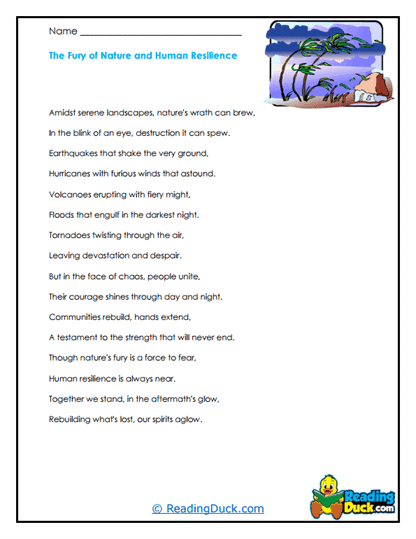
This worksheet explores the hero's lineage and how heritage drives purpose. It highlights how epic openings ground us in mythic stakes and sets the stage for quests. You'll trace how lineage frames identity and fate. Bonus fun: family trees in epics often include deities-eat your genealogy lessons.
Battle on the Plains
Here, students dissect action sequences, analyzing vivid imagery, pacing, and the roles of armies and leaders. The worksheet also invites reflection on combat's symbolic meaning, not just its physicality. War in epics is choreography of chaos-with hidden messages under the bloodshed.
Cursed Quest
This activity centers around a hero bound by prophecy-or royal decree-on a dangerous mission. You'll unpack how foreshadowing and divine meddling shape tension. The worksheet also prompts debate: is destiny liberation or entrapment? Curses are epic plot engines-say that three times fast.
Divine Council
A setup for godly drama, this guide invites students to examine how deities argue, influence, or meddle in mortal affairs. You'll analyze dialogue, tone, and the cosmic scale of conflict. There's also a creative prompt: rewrite the council in a modern "group chat" format. Immortals gossip so hard.
Epic Encounters
This worksheet puts emphasis on transformative face-offs-hero meets monster, ally meets stranger. Students study archetype, tension, and how description heightens meaning. The guide also nudges toward considering personal and cultural masks in these clashes. Every epic encounter is a mirror-or a monster.
Journey by Sea
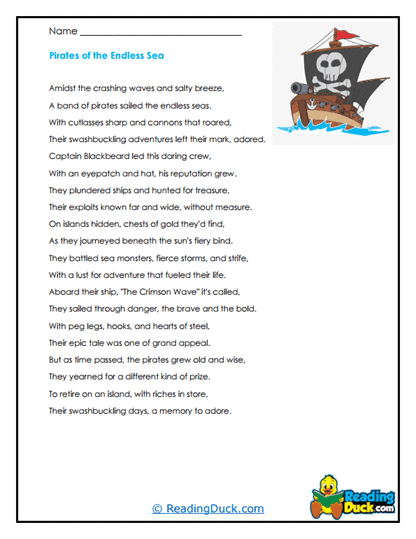
A true classic-this worksheet tracks challenges across the waves. You'll look at imagery, setting, and rhythm that mimic ocean motion. There's also a task: compare the sea's role to the hero's internal struggle. Nothing says "myths are testing me" quite like braving Poseidon's moods.
Keeper of Fate
Here, students explore characters who stand on the edge of destiny-prophets, oracles, seers. You'll unpack how prophecy and choice collide in framing epic consequence. The worksheet also asks: are these figures pit-stops or path-makers? Fate's guardians know what's coming-but do we ever?
Lost City
Perfect for world-building buffs, this worksheet analyzes echoes of civilization in ruins. You'll study imagery, symbolism, and how setting speaks of past glory-or doom. The guide also includes a map activity: where did that city lie? Lost cities remind us greatness falls-and poets don't let us forget.
Oathbound Heroes
This activity looks at loyalty and its epic weight-from sworn friends to brotherhoods forged in battle. You'll examine tone, dialogue, and how truth becomes a sacred bond. There's also a prompt: rewrite an oath in today's language-emoji included. Honor gets a glow-up.
Quest for Fire
A metaphorical or literal blaze, this worksheet centers on pursuit of power, survival, or knowledge. You'll analyze imagery, symbolism, and how danger fuels narrative. The guide also includes reflection: is fire creation-or destruction? In an epic, the line is blazing thin.
Realm's Betrayal
Here, betrayal shakes kingdoms and loyalty unravels. You'll dissect character motives, imagery, and narrative turning points. The worksheet also asks students: what makes betrayal epic, not petty? In epics, betrayed is a title-not just a mood.
Song of Triumph
A celebratory close-or pause-in the hero's journey, students examine triumphant imagery, tone, and structure. You'll look at how rhythm rises through victory and scaffolds closure. There's also a creative cue: compose a victory chant in your voice. Because every epic deserves its encore.
Trials of the Heart
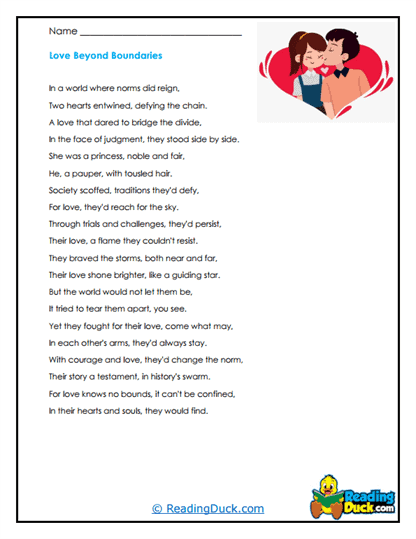
This worksheet focuses on emotional trials-love, leadership, inner conflict-not just mobs or monsters. You'll unpack introspection, metaphor, and shifting tone. The guide nudges students to consider: is the heart's trial more epic than any sword? Sometimes the hardest battles are inside.
Underworld Descent
Dramatic, dark, necessary-this home in on heroes crossing into the realm of the dead. You'll study tone, imagery, and the mythic turn of facing death. The worksheet also invites comparison: descent or rebirth? In epics, the underworld is less a place, more a reckoning.
Wisdom of Ancients
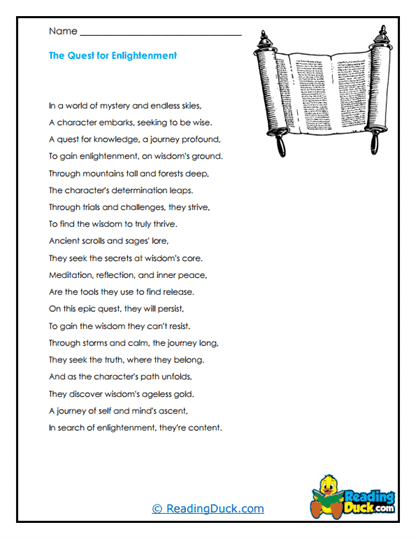
This worksheet honors sage characters, mentor figures, or ancestral guidance. Students examine dialogue, metaphor, and the weight of inherited wisdom. It also suggests: what ancient lesson still echoes today? Teachers-and mentors-live on in advice.
Looking At The Epic Poetry Genre
Epic poetry is defined by its grand scale: heroes, gods, battles, quests, and fate woven into verse that echoes like thunder. The tone is elevated, the narrative sweeping, and every word often carries mythic weight. Structure can vary-from formally metered lines to more flexible modern adaptation-but the sense of journey and legacy remains central. Epics demand attention not just as stories, but as vehicles of cultural memory.
Historically, epics began as oral traditions-think ancient bards reciting tales of divine ancestry and world-ending wars. They were memorized, performed, and evolved with each telling. Over time, they were written down-for example, The Iliad, The Odyssey, Beowulf, The Ramayana, and The Mahabharata-becoming cornerstones of national myth and identity.
Common tropes in epic poetry include the quest or journey; divine intervention; heroism tested by trials; temptation and redemption; and the fallen city or world-changing event. Character archetypes-wise mentor, loyal companion, treacherous betrayer-anchor these sweeping tales. And language often employs repetition, epithets, and catalogues (long lists of ships, armies, or deeds) to build immersion and grandeur.
Notable epics span continents and eras-from Homer's Greece through India's panoramic myth cycles to medieval Europe and beyond. Their influence spans literature, film, and even video games, because the hero's journey remains one of humanity's favorite frames for storytelling. Epics are canon, but also catalysts-find them and you'll see the DNA of many stories that followed.
Make sure to bookmark our website now.
Enjoy all our free reading worksheets.
Our materials adhere to the principles of the Science of Reading.