If Canada were a person, it would be the friend who shows up in a warm jacket, brings snacks for everyone, and casually mentions they live near glaciers, forests, and some of the loudest waterfalls on Earth. Canada is a huge country with cozy stereotypes and seriously impressive geography, history, and culture packed into it. From frozen tundra to bustling cities, it's a place where nature and people constantly interact. Even if students think they already know Canada, there's a lot more going on than maple syrup and politeness.
Learning about Canada helps students understand how geography shapes culture, how history shapes identity, and how diversity can be a national strength. Canada's story includes Indigenous roots, global connections, bilingual traditions, and modern multicultural communities. These topics encourage students to think critically about citizenship, cooperation, and respect for differences. Understanding Canada also builds global awareness, helping students see how countries influence one another in today's interconnected world.
This worksheet collection makes exploring Canada approachable, engaging, and surprisingly fun. Each passage is designed to build strong reading comprehension while introducing meaningful social studies content. Students practice key literacy skills without feeling overwhelmed, and teachers get resources that fit neatly into lessons. Parents will appreciate that learning about Canada here feels more like discovery than homework.
Meet the Worksheets
Nature Nation
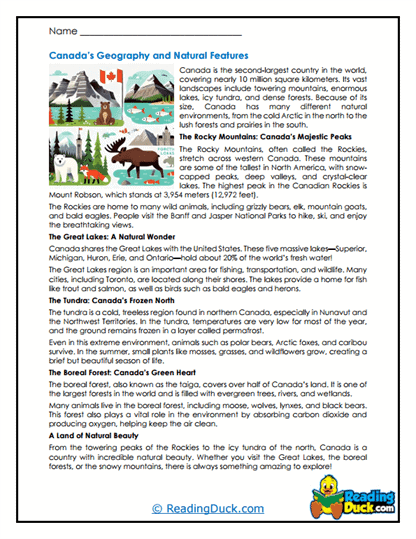
This worksheet explores Canada's physical geography, from towering mountains to icy tundra and dense forests. Students learn how landforms like the Canadian Shield and the Great Lakes influence climate, wildlife, and human activity. Clear explanations help students identify main ideas and build geography-related vocabulary. Fun thought experiment: imagine trying to farm or travel if your backyard were solid rock or frozen half the year.
Historic Roots
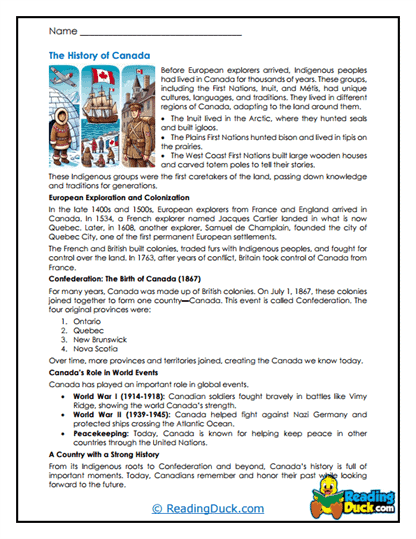
This worksheet traces Canada's story from Indigenous peoples to European settlement and modern nationhood. Students follow key events like Confederation and Canada's role in global conflicts through a clear historical narrative. The passage strengthens sequencing and cause-and-effect thinking. It's a reminder that countries, like people, don't just appear overnight-they grow through choices and challenges.
Cultural Mosaic
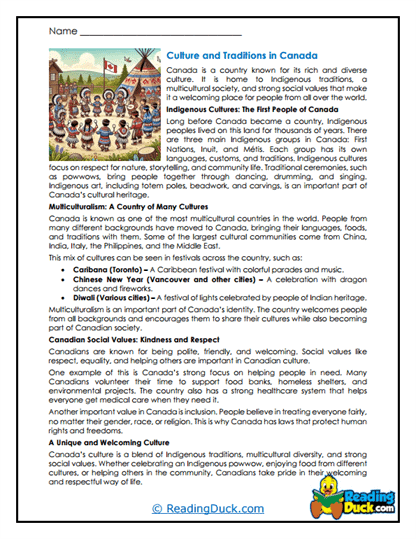
This worksheet highlights Canada's diverse cultures and shared values of respect and inclusion. Students read about Indigenous traditions, immigrant communities, and celebrations that shape Canadian identity. The content encourages comparison and thoughtful discussion. Canada calls itself a cultural mosaic because the pieces stay unique instead of blending into one big blur.
Voices Canada
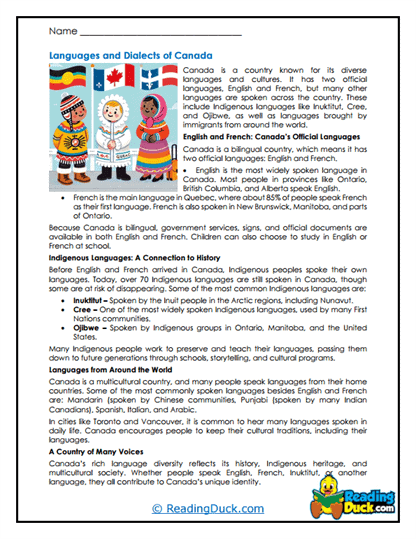
This worksheet focuses on the languages spoken across Canada, including English, French, and Indigenous languages. Students learn about bilingualism and why language preservation matters. The passage builds vocabulary awareness and understanding of how language reflects culture. It may surprise students to learn how many languages are spoken daily across Canadian communities.
Tasty Traditions
This worksheet introduces students to iconic Canadian foods and their cultural origins. Readers explore treats like poutine, bannock, and Nanaimo bars through descriptive explanations. The passage helps students practice identifying key details and summarizing information. Warning: learning about food while hungry may cause sudden snack cravings.
Iconic Canada
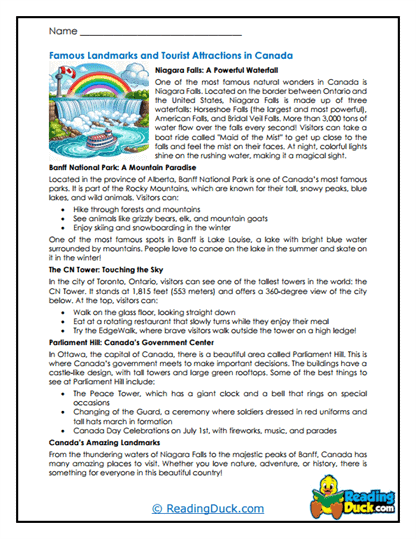
This worksheet highlights famous Canadian landmarks and why they matter. Students learn about places like Niagara Falls, Banff National Park, and Parliament Hill through vivid descriptions. The passage strengthens visualization and informational reading skills. It's basically a mini travel guide without the need for a passport.
Wild North
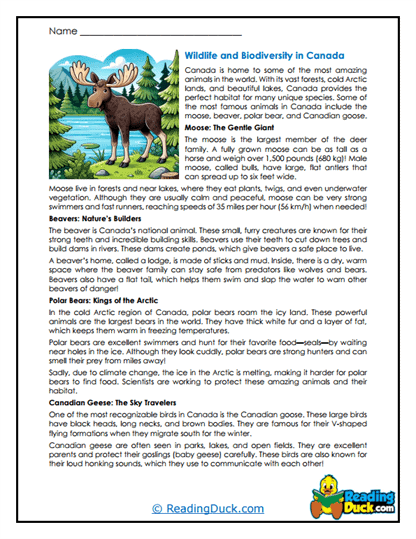
This worksheet dives into Canada's wildlife and ecosystems, from moose to polar bears. Students read about habitats, adaptations, and conservation efforts. The content supports science vocabulary and evidence-based thinking. Fun fact: Canada has more lakes than the rest of the world combined, which animals find very convenient.
Festival Fun
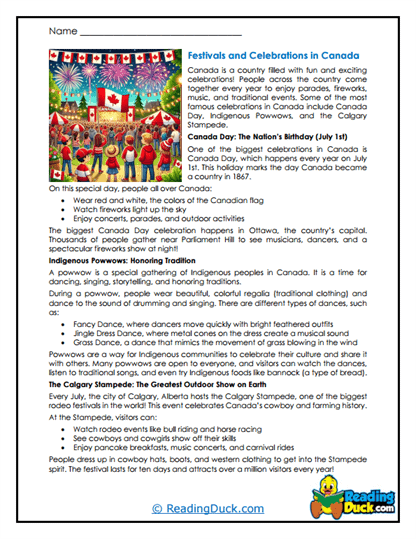
This worksheet explores major Canadian celebrations and their traditions. Students read about events like Canada Day, Powwows, and the Calgary Stampede in chronological detail. The passage strengthens sequencing and summarization skills. It proves that learning history can include music, parades, and a lot of dancing.
Seasonal Canada
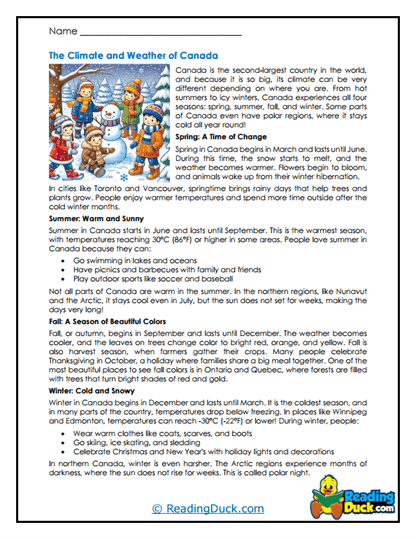
This worksheet explains Canada's climate and the four distinct seasons. Students learn how people adapt to extreme temperatures and regional weather differences. The reading strengthens cause-and-effect reasoning. It also explains why Canadians can talk about the weather for a very long time.
Active North
This worksheet focuses on sports and outdoor activities that shape Canadian culture. Students read about hockey, lacrosse, skiing, and more. The familiar topic helps build reading confidence and fluency. Hockey isn't just a sport here-it's practically a national language.
Creative Canada
This worksheet introduces students to Canadian art, literature, and music. Readers learn about famous authors, artists, and musicians who helped shape Canada's creative identity. The passage builds descriptive vocabulary and comprehension through real-world examples. It turns out Canada produces more than just cold weather and nice manners.
Indigenous Heritage
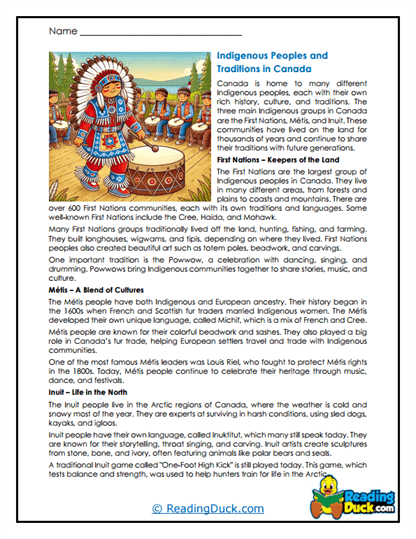
This worksheet focuses on the cultures and traditions of First Nations, Métis, and Inuit peoples. Students learn about traditional lifestyles, storytelling, celebrations, and the importance of cultural preservation. The passage encourages respect, reflection, and critical thinking. These stories remind students that Canada's history began long before borders were drawn.
About Canada
Canada is a vast country in North America known for its diverse landscapes, cultures, and communities. It stretches from the Atlantic Ocean to the Pacific and all the way up to the Arctic. Canada includes bustling cities, quiet rural towns, and some of the most dramatic natural environments on the planet. Understanding Canada means looking at how people, land, and history interact. It's a country shaped as much by cooperation as by geography.
Canada's history begins with Indigenous peoples who lived on the land for thousands of years before European arrival. French and British explorers later established settlements, leading to cultural blending and conflict. In 1867, Canada became a confederation, forming a self-governing nation. Over time, Canada developed its own identity while maintaining global connections. Historical events continue to influence how Canada sees itself today.
Key ideas students encounter when studying Canada include multiculturalism, bilingualism, confederation, and Indigenous heritage. Multiculturalism refers to Canada's commitment to respecting diverse cultures. Bilingualism highlights the use of both English and French in government and education. Confederation explains how provinces joined together under one national system. These concepts help students understand how unity and diversity coexist.
Canada's impact can be seen in daily life, from government policies to cultural celebrations. Its emphasis on inclusion and cooperation influences education, law, and community life. Canadian geography affects transportation, industry, and recreation. Wildlife conservation and environmental stewardship are also major priorities. Studying Canada helps students see how values shape national decisions.
Modern Canada continues to face important questions and debates. How can cultural traditions be preserved while embracing change? What is the best way to protect the environment while supporting economic growth? How should governments balance national and regional interests? These questions keep Canada's story evolving and invite students to imagine what the country's future might look like.
Make sure to bookmark our website now.
Enjoy all our free reading worksheets.
Our materials adhere to the principles of the Science of Reading.