Germany is a country where fairy-tale castles sit next to modern cities, and centuries of history meet cutting-edge innovation. It's known for forests, rivers, music, engineering, and a past that shaped much of Europe and the modern world. From medieval empires to reunification in the 20th century, Germany's story is full of change, challenge, and resilience. Students often recognize pieces of Germany, but studying it as a whole reveals how deeply connected its geography, history, and culture really are.
Learning about Germany helps students understand how a nation learns from its past while shaping its future. Germany's history offers powerful lessons about unity, responsibility, and peace. Its cultural traditions, languages, and regional identities show how diversity exists within a single country. Studying Germany also builds global awareness by highlighting how countries influence one another through economics, culture, and cooperation.
This worksheet collection makes learning about Germany engaging, structured, and approachable. Each passage combines strong informational content with clear reading support, helping students build comprehension skills alongside social studies knowledge. Teachers gain flexible resources that work across subjects, while students gain confidence reading complex topics. Parents will appreciate materials that are meaningful, informative, and accessible.
Meet the Worksheets
German Landscapes
This worksheet explores Germany's geography and natural features, from forests and rivers to mountains and coastlines. Students learn how regions like the Black Forest and the Rhine River Valley shape culture, tourism, and daily life. The passage strengthens main idea identification and geography-related vocabulary. It shows how natural features quietly influence how people live every day.
German History
This worksheet traces Germany's history from early empires to reunification in 1990. Students explore how major events shaped modern Germany and its focus on peace and unity. The passage builds sequencing and cause-and-effect reasoning skills. It reminds readers that history doesn't disappear-it leaves lessons behind.
German Icons
This worksheet highlights famous German landmarks and their cultural significance. Students learn about castles, cathedrals, gates, and walls that tell stories of the past. The passage supports visualization and fact extraction skills. It proves that landmarks are history you can walk through.
German Traditions
This worksheet focuses on German customs, celebrations, and everyday traditions. Students explore how events like Oktoberfest and Christmas markets reflect shared values. The passage encourages comparison and inferencing. It shows how traditions help hold communities together.
German Voices
This worksheet introduces the German language and its many regional dialects. Students learn how language reflects regional identity and cultural history. The passage builds vocabulary awareness and grammar recognition. It may surprise students how different German can sound from one region to another.
German Flavors
This worksheet explores traditional German foods and their cultural connections. Students read about dishes tied to festivals, regions, and daily meals. The passage strengthens descriptive comprehension and summarization. Reading about food makes history a little more delicious.
German Festivals
This worksheet highlights major celebrations and their meanings. Students explore traditions, music, food, and historical significance behind festivals like Carnival and Unity Day. The passage builds sequencing and detail identification skills. It shows how celebration and history often go hand in hand.
German Seasons
This worksheet explains Germany's climate and seasonal changes. Students learn how weather patterns affect activities, festivals, and daily routines. The passage strengthens cause-and-effect reasoning. It also explains why seasonal traditions change so much throughout the year.
Creative Germany
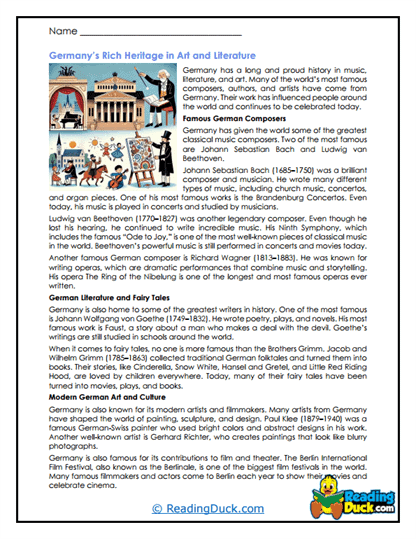
This worksheet explores Germany's contributions to art, literature, music, and design. Students learn about influential composers, writers, and modern creators. The passage supports analytical reading and example-based comprehension. It highlights how creativity can echo across centuries.
Active Germany
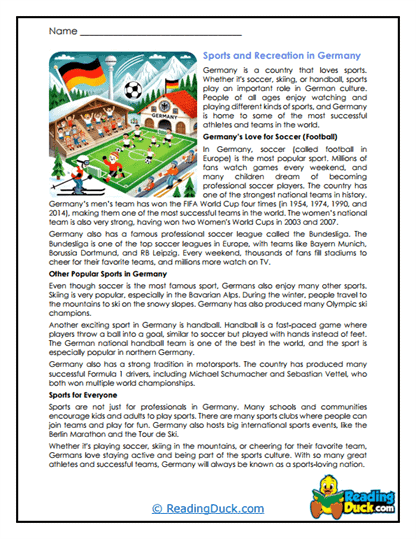
This worksheet focuses on sports and recreation in Germany. Students explore popular activities and Germany's success in international competition. The passage boosts engagement and reading fluency. It shows how sports can unite people beyond language and region.
German Structures
This worksheet examines Germany's architecture from medieval castles to modern landmarks. Students learn how buildings reflect history, craftsmanship, and innovation. The passage strengthens detail analysis and explanatory reading. It proves that architecture is storytelling made of stone and steel.
German Industry
This worksheet explores Germany's economy and global industries. Students learn about engineering, technology, manufacturing, and renewable energy. The passage builds technical vocabulary and synthesis skills. It shows how innovation connects Germany to the world.
About Germany
Germany is a country in Central Europe known for its rich history, strong economy, and cultural influence. It features diverse landscapes, including forests, rivers, mountains, and coastlines. Germany's location has made it a crossroads of trade, ideas, and cultural exchange. Understanding Germany means exploring how geography, history, and innovation interact. It is a country shaped by both tradition and progress.
Germany's history includes powerful empires, cultural achievements, and difficult chapters that reshaped the nation. Events of the 20th century had a lasting impact on Germany and the world. The division into East and West Germany and their reunification in 1990 marked a turning point. These experiences influenced Germany's modern commitment to peace and cooperation. History remains central to Germany's national identity.
Key concepts students encounter when studying Germany include reunification, regional identity, federal government, and cultural heritage. Regional identity highlights how traditions and dialects vary across the country. Federal government explains how Germany balances national and regional leadership. Cultural heritage connects music, art, architecture, and customs. These ideas help students understand complexity within one nation.
Germany's influence extends globally through industry, science, and culture. Its engineering, technology, and renewable energy leadership affect economies worldwide. German music, literature, and design continue to inspire creators. Daily life reflects values of organization, craftsmanship, and community. Studying Germany helps students see how responsibility and innovation can coexist.
Modern Germany continues to evolve in a changing world. How does the country balance tradition with modern technology? What role should Germany play in global environmental efforts? How can history guide future decisions? These questions keep Germany's story moving forward and invite students to think critically about the world around them.
Make sure to bookmark our website now.
Enjoy all our free reading worksheets.
Our materials adhere to the principles of the Science of Reading.