About Our In- Prefix Reading Comprehension Worksheets
The in- prefix is a versatile part of English, usually meaning "not" or "opposite of" as in invisible ("not visible") and incomplete ("not complete"). It can also mean "into" or "within" as in insert ("to put into") or include ("to bring into a group"). Because it shifts meaning in different ways, recognizing this prefix is important for building decoding and comprehension skills.
This worksheet collection offers engaging passages where in- words are naturally embedded in stories. Students see how these words shape meaning while also answering comprehension questions that check both story understanding and prefix recognition. The variety of settings-from inventions to hidden treasures-ensures that the phonics skill is practiced in meaningful and enjoyable ways.
By working through these passages, students become more confident readers who can both decode in- words and interpret them in context. This strengthens word knowledge, expands vocabulary, and reinforces comprehension strategies across multiple genres.
Looking At Each Worksheet
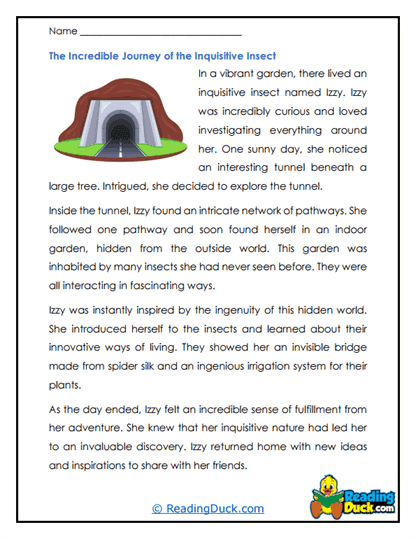
Curious Insect
This passage follows a tiny insect that wanders into places it probably should not explore. Along the way, words like invisible and intricate describe its unusual journey. Students learn how the in- prefix adds detail to the bug's adventure. The comprehension focus is on sequencing and detail recall. Readers can spot prefix words while following the insect's discoveries. This worksheet helps blend phonics with close reading skills.
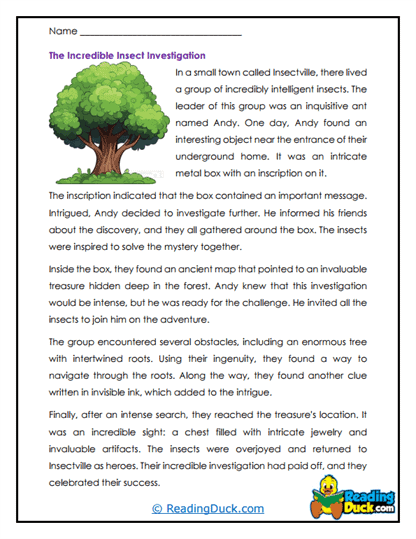
Insect Treasure Hunt
Children embark on a treasure hunt where clues are hidden by insects that live in intricate patterns underground. The text introduces in- words such as insert and incomplete to describe the challenges. Students answer comprehension questions about following directions and interpreting context. The prefix is highlighted naturally within the adventurous plot. This keeps decoding tied directly to story understanding. The activity is perfect for practicing both vocabulary and comprehension in a playful setting.
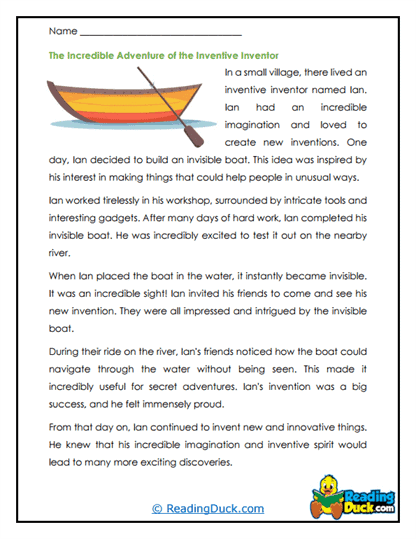
Inventor's Invisible Boat
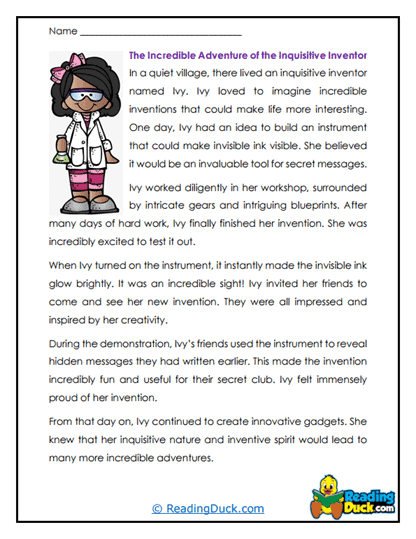
An inventive character designs a boat that becomes invisible when it touches water. The passage is filled with in- words like invent, inspire, and invisible, reinforcing the skill. Comprehension questions check cause and effect relationships in the story. Students connect how the prefix signals "not" or "into." They also practice spotting these words as they follow the inventor's journey. This worksheet encourages both creative thinking and phonics practice.
Invisible Island
Explorers set sail and find an island that seems invisible to the eye until a storm reveals its shores. The passage weaves in in- words that highlight mystery and surprise. Comprehension tasks ask students to identify setting and main idea. Readers notice how the prefix "in-" often signals something hidden or unseen. Spotting those words makes the passage richer in meaning. It combines decoding with building suspenseful comprehension.
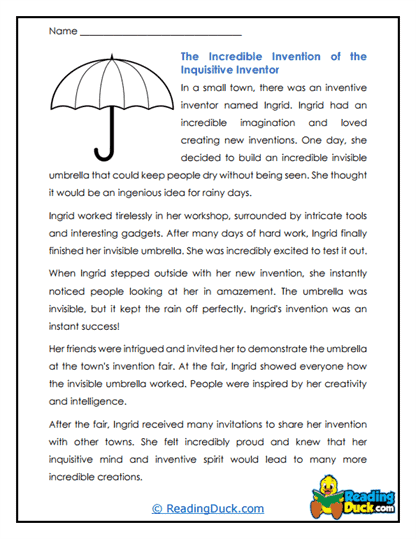
Invisible Umbrella
A child discovers an umbrella that makes anything beneath it invisible. The passage uses words like invisible, incredible, and invention to highlight the prefix. Questions focus on making predictions and drawing conclusions. Students see how "in-" changes words to create imaginative meaning. While reading, they practice both vocabulary recognition and story reasoning. This worksheet pairs phonics with a fun, magical theme.
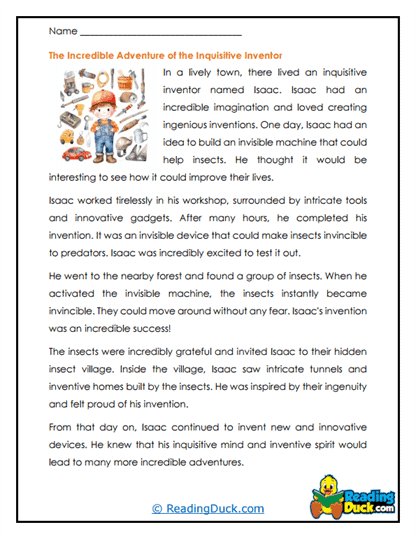
Isaac's Invention
Isaac builds an invention that helps his town with everyday problems. Along the way, incomplete designs and incorrect steps challenge him until he succeeds. The story emphasizes in- words in both positive and negative ways. Comprehension questions guide readers to notice problem and solution. They see how "in-" can mean both "not" and "into" depending on the word. This reinforces flexible word study along with story analysis.
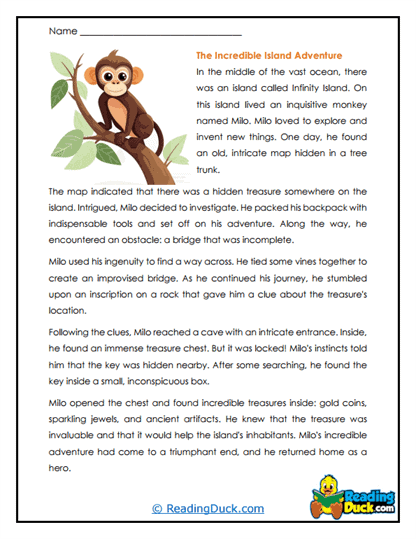
Island Quest
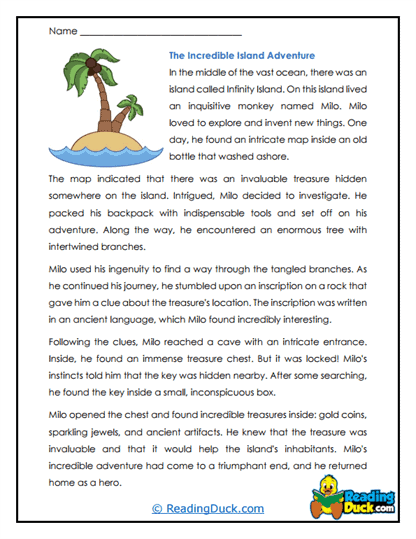
Adventurers set off to explore an island where invisible maps and incorrect clues make the trip tricky. The in- words highlight obstacles and solutions in the story. Comprehension questions target main events and problem-solving. Readers decode the words while interpreting their role in the adventure. This creates strong connections between phonics and plot. The worksheet is both exciting and instructional.
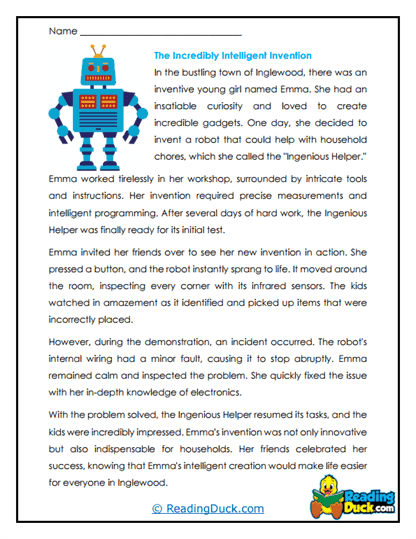
Robot Helper
A robot tries to help but often makes incorrect choices that create new problems. Words like incomplete and inactive add humor to the tale. The comprehension focus is on cause and effect, showing how the robot's mistakes lead to lessons. Students identify how in- changes word meanings. They connect the prefix to both humor and context. This passage is perfect for blending phonics with fun.
Secret Messages
A child finds notes that are invisible until placed under special light. The passage introduces in- words like invisible, incorrect, and instruct. Questions ask students to infer meaning and analyze how the clues work. Readers notice how the prefix "in-" affects multiple parts of the story. Spotting those words makes comprehension stronger. The worksheet encourages curiosity while reinforcing decoding.
Treasure Island
Treasure hunters search an island where incorrect paths lead to danger and invisible clues point the way. The in- words highlight challenges and discoveries. Students answer comprehension questions about setting, sequence, and detail. They learn to connect word parts to meaning within the adventure. While reading, they actively look for in- vocabulary. This activity strengthens both phonics and comprehension in an exciting way.
An Example In- Prefix Reading Passage
Inside the forest, Maya found an invisible doorway that led her into an incredible secret room. She felt insecure at first, but an instructive note gave her the courage to continue. Though the journey seemed impossible, she discovered an invaluable treasure hidden in plain sight.
Where Is The In- Pattern?
You can spot the in- prefix in words like invisible (not able to be seen) and incredible (so amazing it's almost not believable). Both examples show how "in-" changes the meaning of the base word in ways that are easy to notice.
Make sure to bookmark our website now.
Enjoy all our free reading worksheets.
Our materials adhere to the principles of the Science of Reading.