About Our Over- Prefix Reading Comprehension Worksheets
The over‑ prefix generally means "too much," "above," or "beyond", as seen in words like overreact, overwhelm, overcook, overlook, and overtake. Recognizing over‑ helps students understand when an action or condition exceeds expectations-whether it's intensity, size, or frequency-strengthening both decoding and vocabulary comprehension.
This collection offers short, compelling reading passages in which over‑ words are naturally embedded within engaging, illustrated narratives. Each worksheet includes multiple-choice comprehension questions designed to reinforce both students' understanding of the story and how the prefix over‑ changes meaning in context. Delivered in PDF format with convenient answer keys, these materials are versatile and easy to integrate into classroom, small group, or at-home reading routines.
By repeatedly encountering over‑ in diverse and meaningful contexts, learners sharpen their ability to break complex words into roots and prefixes while building inference skills. This dual focus boosts fluency, supports vocabulary acquisition, and anchors morphological awareness in reading comprehension.
Looking At Each Worksheet
Garden Mystery Adventure
In a garden where flowers overgrow, students read about how wild vines and towering sunflowers overwhelm garden paths. The story uses over‑ words like overflow, overpower, and overgrown to build a sense of magical chaos. Comprehension questions focus on setting and cause-effect: how does the garden change? Readers spotlight how over‑ signals excess in nature. As they decode, they see how those words shape mood and imagery. It's a vibrant blend of morphology and descriptive reading.
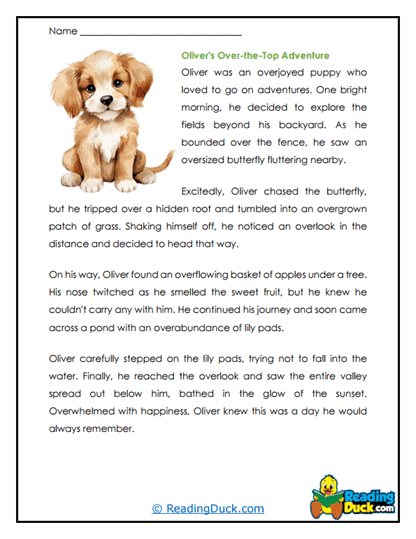
Oliver's Backyard Quest
Oliver's plans overextend into the sunset when his backyard becomes a sprawling obstacle course. The text features over‑ words such as overstep, overbuild, and overreach. Questions guide students to identify sequence and mistakes along the quest. They notice how over‑ communicates going too far physically or metaphorically. This passage helps learners connect action and vocabulary with real-world worry and ambition. Great for teaching nuance and reflection.
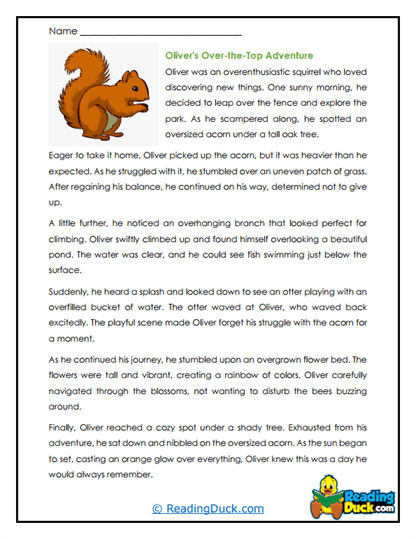
Oliver's Squirrel Escapade
A sprightly squirrel overleaps fences and overestimates its agility through crowded trees. The story includes over‑ words like overzealous, overbalance, and overshoot as the squirrel misjudges its jumps. Comprehension questions focus on character actions and consequences. Students spot how over‑ signals too much energy or miscalculation. As they decode, they connect word formation with funny misadventure. This one adds humor to morphology.
Olivia's Balloon Adventure
Olivia's hot air balloon overinflates and barely holds together as she overlooks clouds in her excitement. Over‑ vocabulary such as overinflate, overexcited, and overlook animate the tale. Questions prompt analysis of risks and rewards. Readers mark how over‑ indicates excess or inattention. They link morphological clues to narrative tension. It's a lighthearted way to practice decoding and plot.
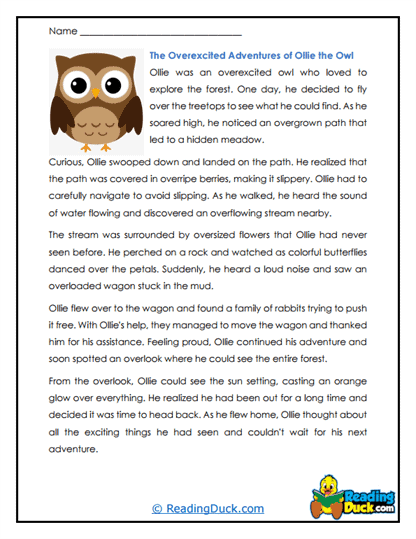
Ollie's Forest Quest
Ollie overshoots his trail and overestimates the forest's size, getting lost among overwhelming trees. The passage uses over‑ words like overgrown, overtime, and overcome to show his challenge and eventual triumph. Students focus on timeline and problem-solving through comprehension questions. They notice how over‑ marks extremes in setting and ability. Decoding connects directly to Ollie's emotional arc. A nature-rich lens on morphology and resilience.
Oscar's River Adventure
Oscar paddles a canoe that overcooks supper on a campfire and overflows with confidence-but the river banks overwhelm his sense of direction. Over‑ words such as overcook, overflow, and overconfidence drive a tale of outdoor learning. Questions center on sequencing and emotion. Learners discover how over‑ reveals excess in both action and feeling. As they read, they link morphology to scenario. Perfect for blending STEM and word study.
Overland Fair Fun
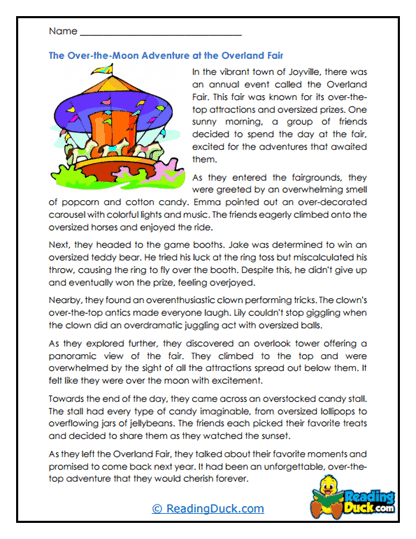
At the county fair, overcrowded rides and overpriced snacks make the day overstimulating while fun. The story weaves over‑ terms like overcrowd, overtake, and overtone to color the scene. Comprehension prompts ask students to compare expectations versus reality. Students trace how over‑ signals intensity or sensory overload. Decoding helps them sense why schedules and setting shift. Great for social studies and language overlap.
Overlook Park Day
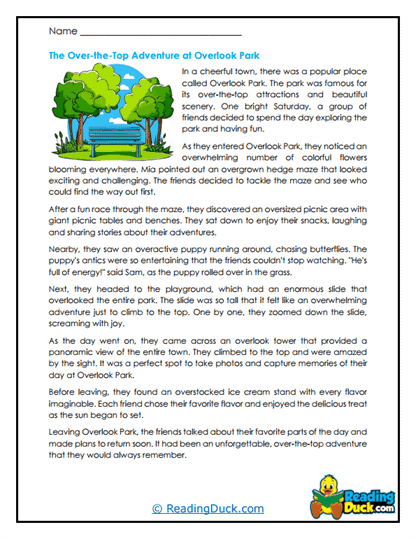
A class overplans their field trip to a scenic park and overpack everything from sandwiches to supplies. Over‑ words-overplan, overpack, overlook-highlight how too much planning can backfire. Comprehension focuses on sequence and summarizing events. Readers note how over‑ changes tone toward stress. They learn to connect morphological forms with story arcs. This is perfect for real-world literacy connections.
Picnic Adventure
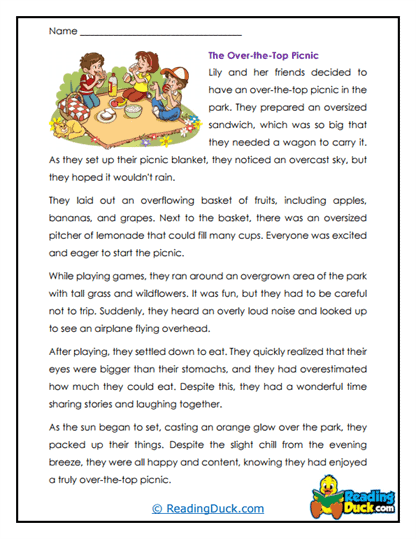
A family picnic overflows with laughter and overeats so much that they can't overlook crumbs on the blanket. The text includes over‑ words such as overflow, overeats, and overlook. Questions guide readers to track cause, effect, and mood. Students highlight how over‑ marks excess in actions and environment. Decoding merges with sensory detail to deepen description. A delightful slice-of-life passage for phonics.
Treehouse Tales
Children overbuild their treehouse and overdecorate it until branches overbend under decoration weight. Over‑ vocabulary like overbuild, overdecorate, and overbend add humor and physical context. Comprehension questions explore problem-solving and cause-and-effect. Learners mark how over‑ signals too much of a good thing. Decoding and storyline closely inform each other. Engaging for construction, creativity, and word study.
An Example Over- Prefix Reading Passage
Ellie overpacked her backpack with too many toys, then overheated in the midday sun because the layers were too many. She tried to overlook the sweat forming on her forehead, but her energy began to overflow with new ideas for cooling down.
Where Is The Over- Pattern?
You can spot over‑ in these words:
Overpacked - packed too much.
Overheated - too hot.
Overlook - ignore or miss.
Overflow - spill beyond the limit.
Make sure to bookmark our website now.
Enjoy all our free reading worksheets.
Our materials adhere to the principles of the Science of Reading.