CCCVC is a phonics pattern that stands for Consonant-Consonant-Consonant-Vowel-Consonant-for example, words like scrap, stunt, or sprint. This pattern appears when three consonants come together at the beginning of a word before the vowel and then a consonant. Recognizing this structure helps learners decode more advanced words accurately and builds fluency in reading connected text.
The CCCVC reading comprehension worksheets offer a compelling collection of short passages like "Crystal Cave" and "Dragon's Spell," where CCCVC words are woven into engaging narratives designed to teach and reinforce this specific phonics pattern. Each worksheet comes in PDF format and includes a downloadable answer key, making it easy for both educators and families to integrate them into reading lessons or at-home practice.
Practicing with CCCVC passages supports both decoding and comprehension-students repeatedly decode CCCVC words, which strengthens recognition and blending skills, while also understanding and enjoying a meaningful story. This combination builds confidence as learners practice complex word structures in context, helping them progress to more sophisticated reading with ease.
Looking At Each Worksheet
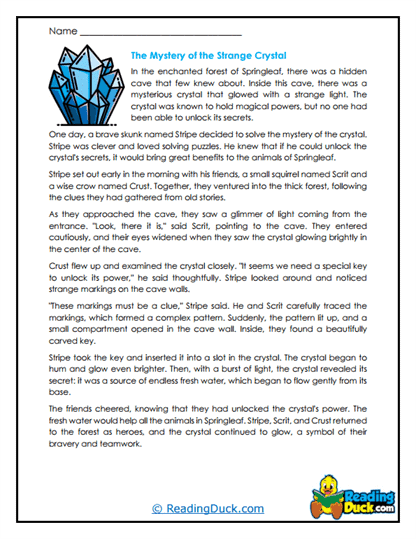
Crystal Cave
This passage takes readers on a mysterious adventure into a shimmering cave full of hidden gems. CCCVC words like crystal and cave appear naturally within the text, providing practice decoding the pattern in connected speech. The comprehension task encourages students to recall sensory details and describe what they might discover. By reading how crystal glints or cave echoes, students see CCCVC patterns in vivid language. As they track story details, they learn to spot and recognize CCCVC words quickly while understanding meaning. This worksheet helps deepen both phonics awareness and reading fluency by combining decoding with an imaginative scene.
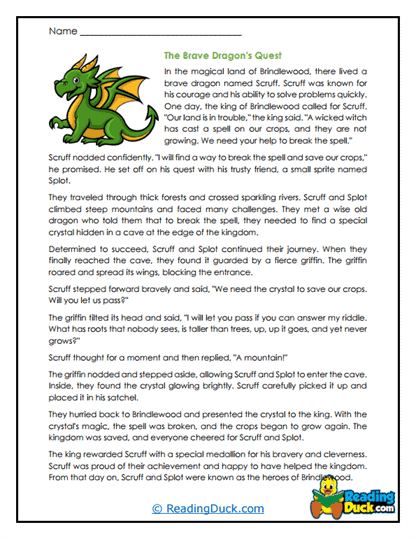
Dragon's Spell
In this magical scene, a brave hero confronts a dragon's spell and must break the charm. Words like dragons and spell feature the CCCVC structure and appear within context-rich narrative moments. Students must understand the sequence of events to answer comprehension questions, such as identifying how the spell changes the setting. By linking CCCVC words to action ("dragon," "spell," "scram"), learners connect sound structure to meaning. They're prompted to notice how the pattern works in real reading situations while interpreting plot elements. This duel between phonics and fantasy lets students practice decoding while engaging with drama.
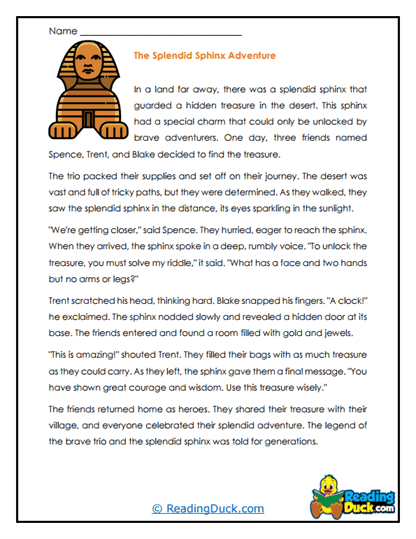
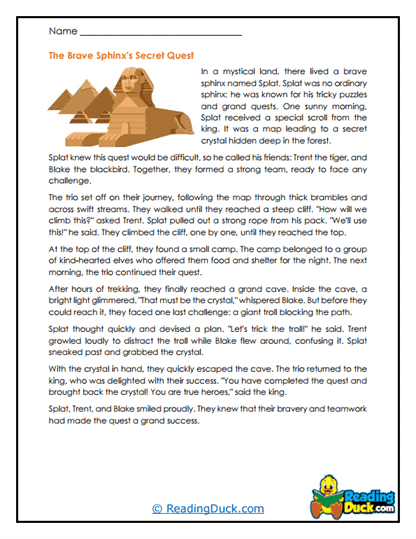
Sphinx Adventure
Readers join a journey centered around the mythical Sphinx, exploring riddles or hidden tombs. CCCVC words such as sphinx showcase how three consonants cluster before the vowel within an interesting context. Comprehension focuses on the riddle's answer or the adventurer's reaction, guiding attention to key meaning. Students reinforce recognizing the pattern when reading phrases like "the sphinx guards." They practice blending consonants efficiently while following the narrative flow. This worksheet aids phonics development while building reading comprehension through intrigue.
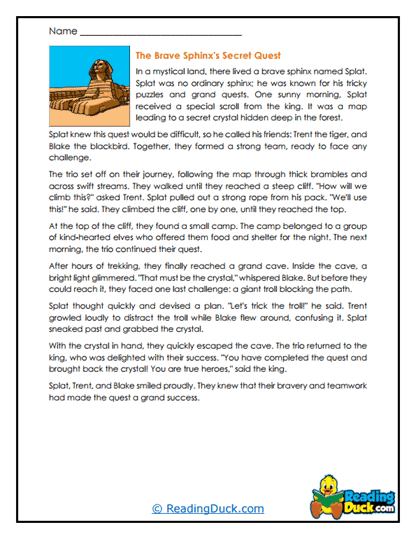
Sphinx's Quest
Another Sphinx-themed tale, this one might revolve around a quest to unlock the sphinx's secret or solve a puzzle. CCCVC words like sphinx's appear in context. Students need to track quest stages and character motivations to respond to comprehension prompts. Through decoding words like quest, learners practice the CCCVC pattern amid suspenseful context. They're encouraged to spot such patterns while following narrative clues. This dual decoding-comprehension format strengthens phonics skills and reading engagement at once.
Sphinx's Secret
This passage reveals a hidden secret guarded by the Sphinx-maybe a treasure or code. Words such as sphinx's, secret, and similar CCCVC-structured words appear in the storyline. Students must infer mood or setting from descriptive details to answer comprehension questions. This encourages noticing phonics patterns in meaningful places-not just practicing them in isolation. By connecting sound structure with story detail, learners integrate phonics and meaning. It's a rich mix of decoding challenge and reading comprehension.
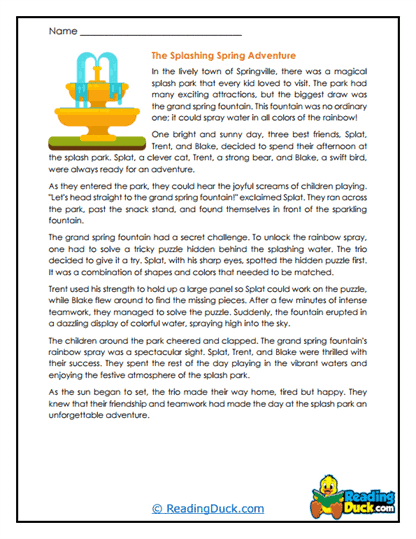
Splash Park Quest
This worksheet centers on a fun adventure at a splash park, where kids go on a quest for a lost item. CCCVC words like splash and quest occur within playful, action-oriented text. Students answer questions about who goes where and what they find, reinforcing understanding of sequence. While they enjoy the narrative, they naturally encounter CCCVC structures in context. Tracking the story helps them notice the pattern while understanding events. This builds fluency by blending decoding practice with storyline engagement.
Spring Sprint
In this passage, characters race in a sprint outdoors during springtime. CCCVC words like spring and sprint appear in dynamic descriptions. Comprehension prompts might ask about what participants see or feel during the sprint, integrating sensory language. As students decode spring and sprint, they practice the consonant-cluster pattern. The movement context makes the pattern memorable. This setting fuses phonics and meaning to support fluent, expressive reading.
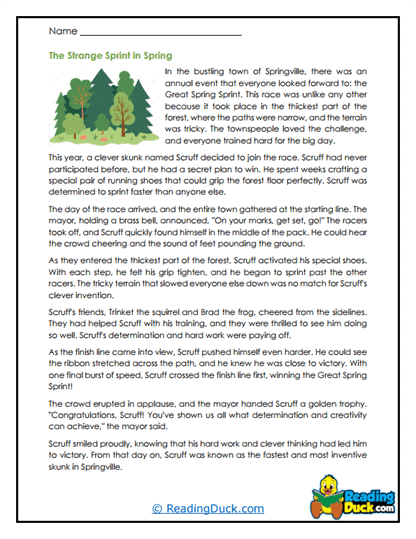
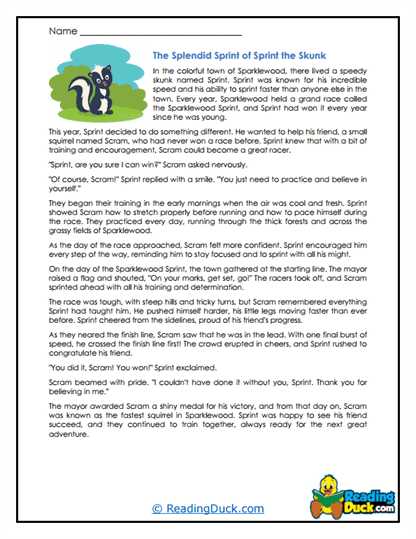
Sprint Skunk
Here, a sprinting skunk might be the star of the story-either a race or a funny chase. CCCVC words like sprint and skunk provide decoding practice amid humor or action. Students answer comprehension questions such as what the skunk does or how others react. The fun context helps them spot CCCVC words like sprint and skunk while staying focused on understanding. It encourages playful reading while reinforcing phonics skills. This worksheet emphasizes enjoyment and accuracy in reading.
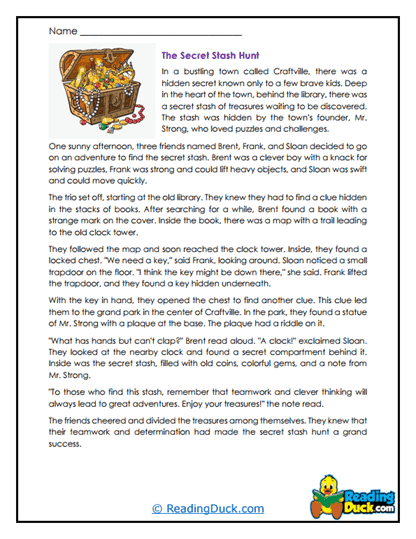
Stash Hunt
This passage likely features characters on a hunt to find a stash-maybe treasure or hidden items. CCCVC words like stash and hunt are used within context. Comprehension may involve tracking clues or locations in the hunt. While students follow the narrative, they decode CCCVC words skillfully. Connecting phonics patterns to problem solving supports both decoding and comprehension. It's a strategic way to read and recognize CCCVC in meaningful text.
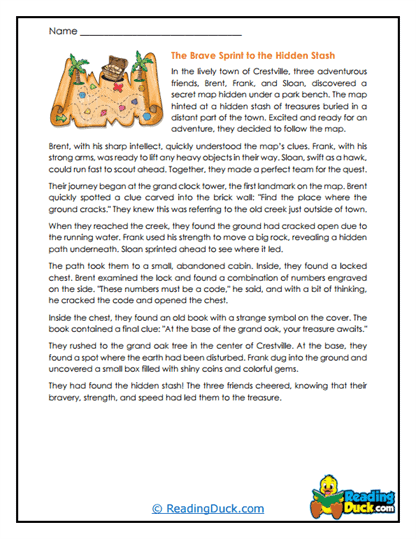
Stash Sprint
A combination of stash and sprint ideas-maybe characters race to find a stash before someone else does. CCCVC words such as stash and sprint feature prominently. Comprehension tasks could be about who wins or how they find the stash. Students practice noticing CCCVC structures while following a fast-paced storyline. This supports fluency through repeated, purposeful encounters within engaging narrative. The energy of the text keeps decoding relevant and meaningful.
An Example CCCVC Reading Passage
Here's an original, fun-yet plausible-mini passage using CCCVC words repeatedly:
A crisp spring morning, Scout crept toward a hidden stash in the crystal cave. A sly sphinx sprang out with a scrap of parchment wrapped in a scroll. Scout's heart thumped as the sphinx sent a swift sprint through the cavern's strip of shadows. At the end, Scout reached the stash-a sparkling crystal crate. The sphinx grinned, offering the scroll in exchange for a brave quest. Scout clasped the crystal in one hand and the scroll in the other, ready to sprint to new adventures.
Where Is The CCCVC Pattern?
You can spot the CCCVC structure in words like crisp, spring, stash, crystal, scroll, sprint, and scratch (if "scrap," etc.). These are words where three consonants begin the word before a vowel and final consonant. For example, "crisp" (c-r-i-s-p), and "spring" (s-p-r-i-n-g) clearly show CCCVC patterns. Recognizing these helps with decoding and fluent reading.
Make sure to bookmark our website now.
Enjoy all our free reading worksheets.
Our materials adhere to the principles of the Science of Reading.