Our VCCV Reading Passages worksheets focus on the Vowel‑Consonant‑Consonant‑Vowel (VCCV) phonics pattern-an essential structure that helps early readers learn to break longer words into syllables for smoother decoding. These passages are thoughtfully designed to support the development of reading fluency, decoding skills, and spelling accuracy, all while engaging students in meaningful comprehension practice. The worksheets come as downloadable PDFs, each including a reading passage, multiple-choice comprehension questions, and an answer key for convenient use in classrooms, tutoring, or homeschooling settings.
By repeatedly encountering the VCCV pattern in context, students strengthen their ability to recognize and apply syllable segmentation strategies-enhancing their confidence in reading more complex words and improving overall literacy.
Looking At Each Worksheet
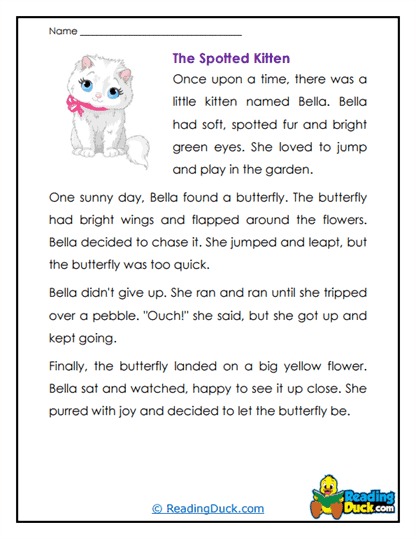
Curious Kitten
An inquisitive kitten embarks on a gentle adventure through a garden. The story incorporates VCCV pattern words like kitten and garden (e.g., kit-ten, gar-den). Comprehension questions guide students to recall key actions and describe how the kitten explores. Identifying VCCV words helps students link phonics patterns to meaning. This passage is excellent for one-on-one reading practice or group instruction. It supports both phonics decoding and narrative understanding.
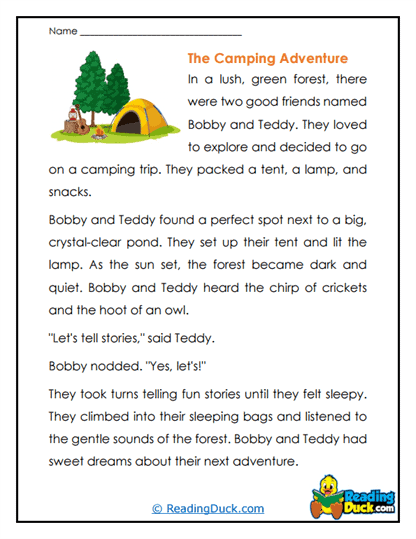
Forest Camping
Set among tall trees and a crackling campfire, this passage follows campers settling in for a night under the stars. Words like forest (for-est) and camping (camp-ing) highlight the VCCV pattern. Comprehension tasks might ask students to visualize the scene or sequence events. Spotting the VCCV structures aids both decoding and vocabulary development. This worksheet pairs well with outdoor-themed activities or discussions. It reinforces phonics fluency emerging from meaningful context.
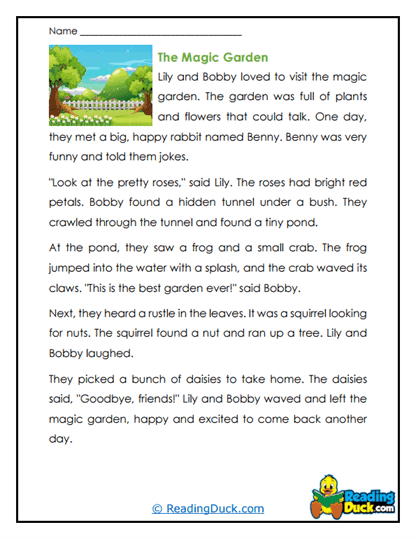
Garden Magic
A magical garden blooms with surprise and wonder. VCCV words such as garden and magic (gar-den, ma-gic) appear to enrich the scenery. Students respond to questions about enchantment and setting. Recognizing VCCV patterns connects decoding with immersive imagery and meaning. Ideal for imaginative reading or paired storytelling. It deepens both phonics awareness and comprehension in a creative framework.
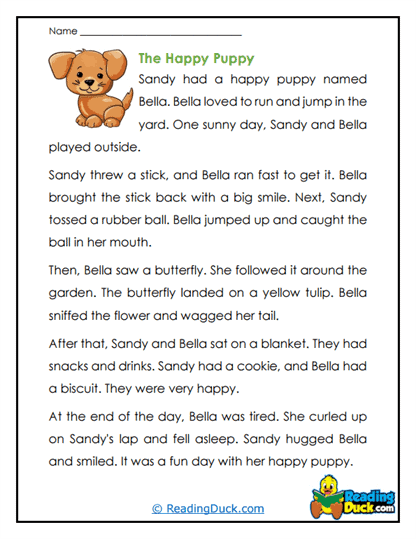
Happy Puppy
A playful puppy chases butterflies through a backyard. Words like puppy (pup-py) and butterfly (but-ter-fly) showcase VCCV structures. Comprehension questions might involve describing the puppy's actions or setting. Noticing these VCCV patterns supports both decoding and vocabulary recognition. This passage is perfect for lively read-aloud sessions. It builds both phonics confidence and comprehension skills.
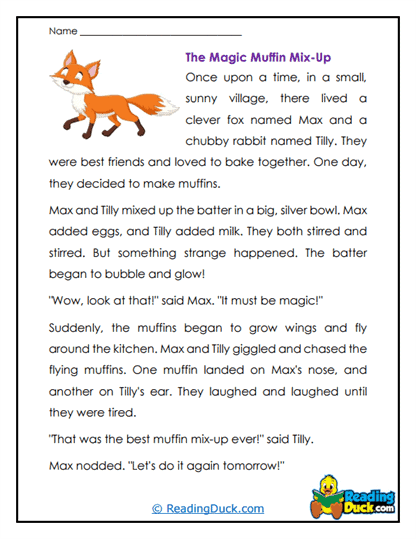
Magic Muffins
In a cozy kitchen, magical muffins come to life with shimmering sweetness. VCCV examples include magic and muffins (ma-gic, muf-fins). Students may answer questions about the mood, characters, or magical events. Recognizing VCCV patterns helps learners decode more confidently and enjoy the story's wonder. This worksheet encourages creative writing or imagination-driven responses. It mixes phonics practice with narrative charm.
Park Picnic
Families gather for a relaxing picnic in the park. Words like picnic (pic-nic) and family (fam-i-ly, though that's slightly more complex) offer VCCV or multi-syllable opportunities. Comprehension prompts could ask students to recall the food or describe activities. Identifying VCCV segments supports both phonics fluency and content understanding. This worksheet suits group reading or thematic units about family or seasons. It reinforces both decoding and narrative detail.
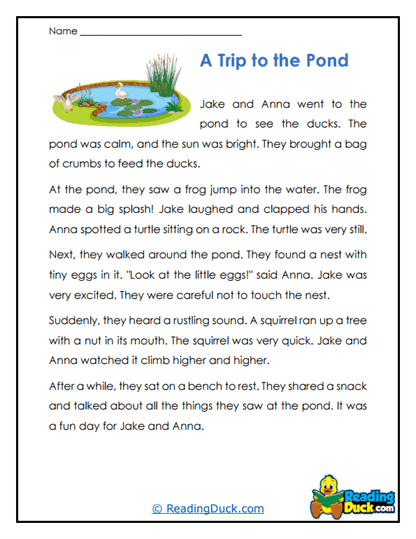
Pond Adventure
Explorers discover life around a quiet pond. Words like pond (though not VCCV), pond-er, or ad-ven-ture may appear (depending on passage complexity), offering VCCV-like opportunities. Comprehension tasks might include identifying creatures or actions. Recognizing VCCV patterns strengthens decoding and comprehension. Ideal for pairing with science or nature-based lessons. It helps connect phonics to real-world contexts.
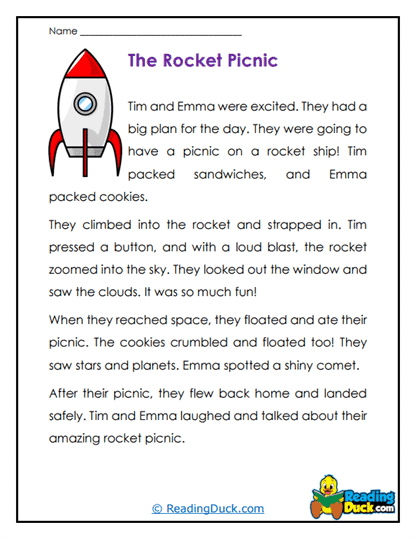
Space Picnic
A group shares snacks while observing the stars in space. Words such as spacecraft (~space-craft) or picnic (pic-nic) reflect VCCV segments. Students might answer questions about what they see or do in the passage. Spotting VCCV patterns supports both fluent reading and imaginative understanding. This worksheet ties science and literacy together in a creative scenario. It encourages both decoding practice and comprehension.
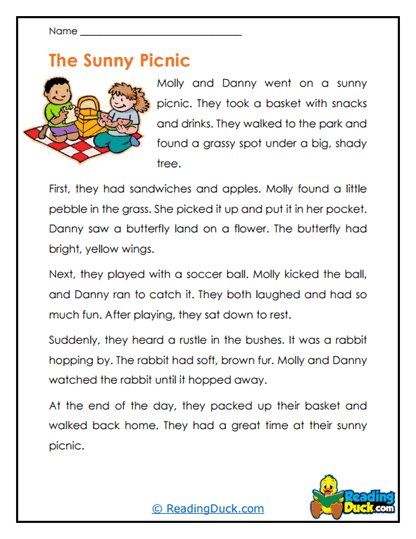
Sunny Picnic
An outing under a bright sun unfolds with laughter and warmth. Words like sunny (sun-ny) and picnic (pic-nic) again exemplify VCCV. Comprehension questions may focus on sensory description or people's emotions. Recognizing the syllable breaks reinforces phonics focus and meaning. This passage is perfect for themed lesson plans about weather or outdoor fun. It strengthens both confidence in decoding and scene comprehension.
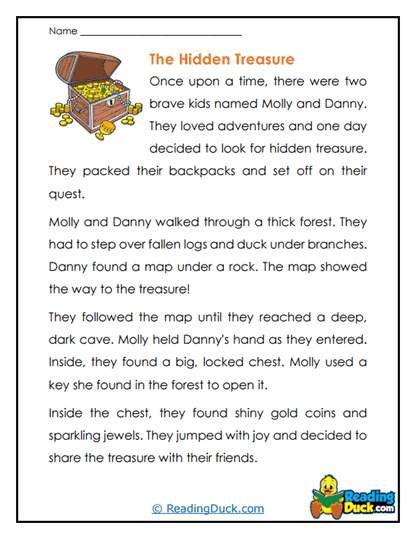
Treasure Hunt
Hidden secrets await as characters search for treasure. Words like treasure (trea-sure, more complex) or hunter (hunt-er, VCCV) may appear. Students answer questions about clues, sequence, or setting. Identifying VCCV patterns helps decode challenging words within context. This worksheet fits well into story-based discussions or creative problem-solving activities. It supports both phonics fluency and comprehension.
An Example VCCV Reading Passage
Olly the kitten pup-ped along the gar-den path toward a small hunter, curious about the next clue under a bright muf-fin tree.
Where Is The VCCV Pattern?
You can spot VCCV structures in words like pup-ped (pup-ped), gar-den, and hunt-er, where a split between two consonants marks separate syllables. These examples show how using VCCV patterns helps students break words into manageable parts for clearer pronunciation and meaning.
Make sure to bookmark our website now.
Enjoy all our free reading worksheets.
Our materials adhere to the principles of the Science of Reading.