About Our First Grade Sight Word Reading Comprehension Worksheets
At the first-grade level, students continue to build fluency by learning a new set of high-frequency sight words-such as after, again, every, him, and when-which often don't follow simple phonetic rules and must be recognized instantly by sight. The First Grade Sight Word Reading Passages worksheets weave these essential words into short, engaging passages to promote both reading fluency and comprehension. Encountering these sight words in context helps young readers internalize them more naturally and effortlessly.
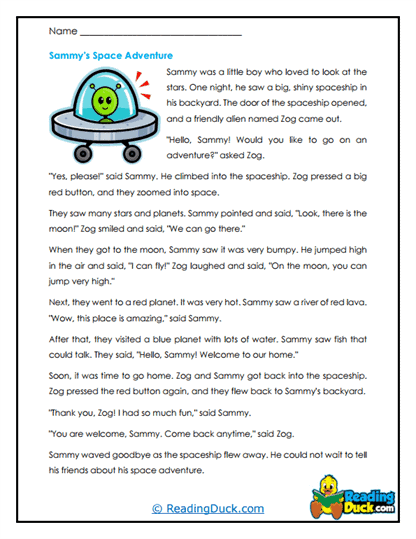
Each worksheet includes a vibrant, age-appropriate illustration that brings the story to life and keeps children motivated to read. Following the passage, multiple-choice comprehension questions help assess understanding and reinforce sight word recognition. These worksheets are provided in easy-to-use PDF form, with downloadable answer keys, making them perfect for both classroom and at-home practice.
Mastering first-grade sight words is a game-changer: recognizing these words automatically allows young readers to focus on meaning rather than decoding, boosting both their reading confidence and comprehension. The engaging content and supportive visuals make practicing these words fun and meaningful for learners at this stage.
Looking At Each Worksheet
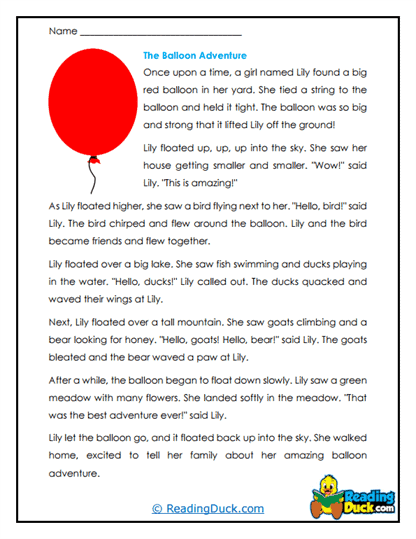
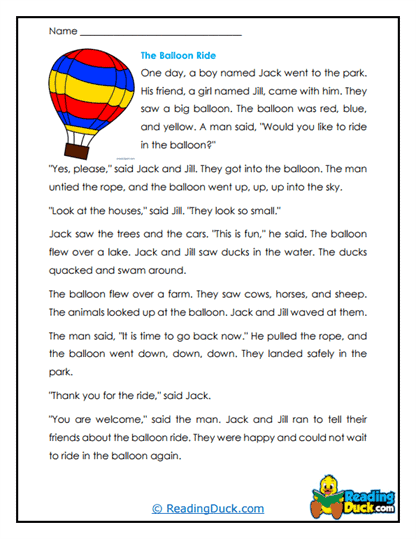
Balloon Ride
This passage likely follows a child or group on a hot air balloon ride, with sight words like after, again, him, and when woven into the narrative. Young readers may imagine soaring above fields, spotting landmarks, or feeling the breeze. The comprehension questions probably ask about what was seen or felt during the ride. Sight words are repeated in natural sentences that anchor meaning. The imaginative scenario makes spotting words like "after" or "again" feel playful rather than forced. This worksheet invites readers to enjoy a sky-high adventure while building word recognition.
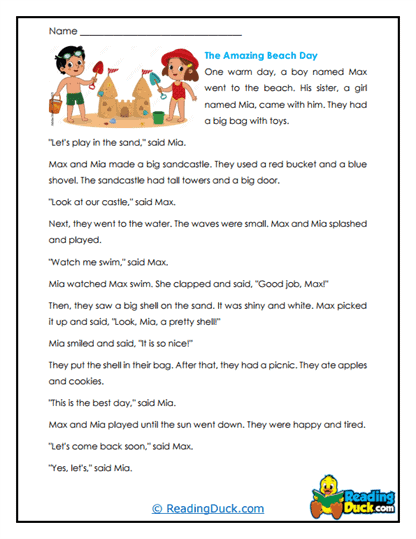
Beach Fun
In this story, children may play by the ocean-building sandcastles or chasing waves-with sight words such as any, give, old, and some embedded in the text. Readers likely follow along with sensory details: warm sand, splash of water, and seashells. Comprehension questions probably focus on what the characters did or found. Sight words appear in enjoyable, context-rich sentences, making them easier to recall. The picture of a sunny beach keeps students engaged. The passage blends relaxation with reading practice in a natural way.
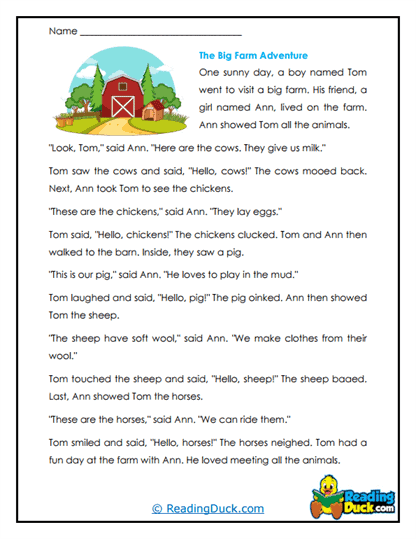
Farm Friends
This worksheet may feature children or farm animals going about their day-feeding chickens or petting lambs-with sight words such as could, every, live, and them sprinkled throughout. The story helps readers picture life on a farm, including sights, sounds, and smells. Questions likely ask about who the characters are and what they did. Sight words help build sentence flow: "Could you feed them?" or "Every lamb lives here." The friendly farm theme softens the repetition of high-frequency words. This passage balances descriptive language with essential sight word exposure.
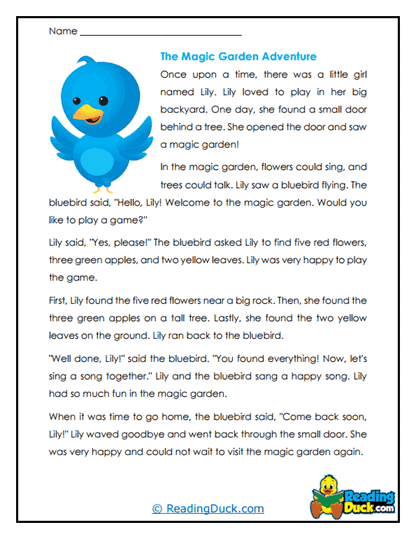
Flower Melody
In this passage, readers might imagine flowers swaying or opening in rhythm-like dancing to a melody-with sight words such as ask, had, may, and then included. The poetic scene supports comprehension questions about what happened next or how the flowers moved. Sight words appear in lyrical, flowing sentences: "May the petals open then glow." The musical imagery makes reading feel rhythmic and engaging. Students spot words like "then" or "ask" with emotional connection to the scene. This worksheet merges beauty with beginning reading skills.
Forest Friends
This reading likely brings readers into a forest filled with animal friends-such as squirrels or owls-with sight words like her, his, of, and some in the narrative. Students may follow who's doing what among the forest creatures. Comprehension questions could ask about actions or relationships among the characters. The text blends sight words into vivid descriptions: "Her fur is soft," or "Some friends wait in trees." The woodland backdrop supports vocabulary development and sentence sense. This passage blends nature storytelling with foundational reading practice.
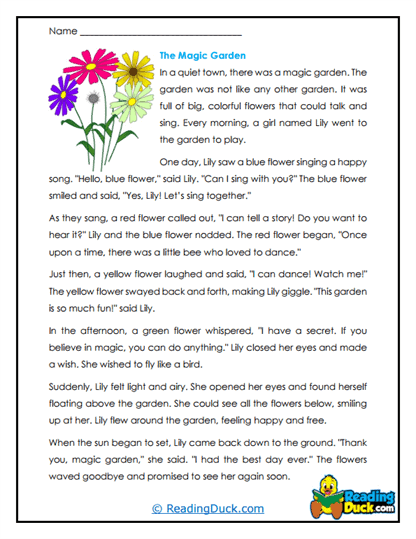
Garden Quest
Here, children may tend to a garden-planting seeds, watering plants, or watching them grow-with sight words like ask, could, old, and stop woven into the text. Readers follow the quest of nurturing life from seed to bloom. Comprehension questions likely center on steps taken or what was in the garden. Sight words appear as part of instructions or descriptions: "Could you stop and water?" or "Ask if it is old enough to pick." The gardening theme makes the task purposeful and grounded. Children can relate to the idea of growth as they practice reading.
Kite Adventure
In this passage, a child may fly a kite on a breezy day, encountering sight words like put, round, walk, and when. Students stroll through scenes of colors, wind, and play. Questions are likely about what happens during the flight or where the kite went. Sight words help carry narrative flow-"When we walk, the kite flies round." The imagery of sky and movement makes the story vivid. This worksheet offers movement and reading skills in harmony.
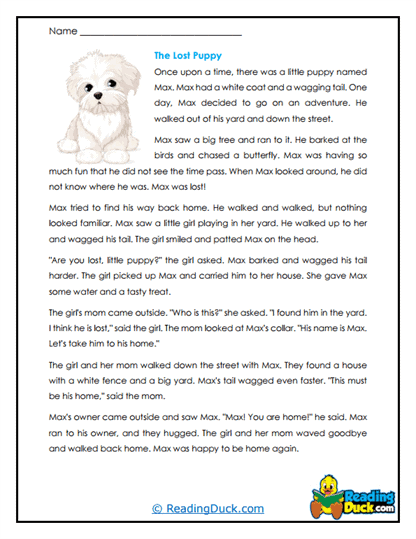
Lost Puppy
This story may follow a missing puppy and a search through the neighborhood, featuring sight words such as again, ask, had, and put. Readers might feel suspense as helpers call out and retrace steps. Comprehension questions may ask where the puppy was found or who helped. Sight words anchor the narrative in meaningful dialogue: "Ask again if you had seen him?" or "Put him back home." The emotional thread of caring makes reading memorable. This worksheet blends empathy with emergent reading skills.
Sky Balloon
This worksheet may present another sky-bound journey, with a balloon drifting among clouds-perhaps picking up sight words like from, fly, when, and could. Readers imagine the balloon's path and surroundings. Comprehension questions likely focus on details seen or choices made in the sky. Sight words appear naturally: "Fly from here when ready," or "Could you see the field below?" The airy imagery enhances the reading experience. This passage adds wonder to sight word practice.
Space Journey
Here, children may blast into space to explore planets or stars, using sight words like give, know, old, and walk-maybe metaphorically walking on the moon! Readers follow a journey of discovery in the cosmos. Comprehension questions might ask about what they saw or how they traveled. Sight words appear in sci-fi phrasing: "Know when to walk on the moon," or "Give the star a wave." The imaginative setting makes reading cosmic yet accessible. This worksheet combines adventure with essential literacy building.
An Example First Grade Sight Word Reading Passage
Once again, Sam could walk to the old tree in the park. He asked his friend to stop and watch the leaves fall. Every leaf flew from high above. He knew it was time to pick one. Then, he put the leaf in his book and smiled. Could he save it forever?
Where Is The First Grade Sight Word Pattern?
You can spot first-grade sight words such as again, could, walk, old, asked, stop, every, flew, from, knew, then, put throughout the passage.
For instance, "Once again, Sam could walk to the old tree" includes again, could, walk, and old.
Another example is "Every leaf flew from high above", which contains every, flew, and from, showcasing how these words appear in meaningful sentences.
Make sure to bookmark our website now.
Enjoy all our free reading worksheets.
Our materials adhere to the principles of the Science of Reading.