About Our Pre-Primer Sight Word Reading Comprehension Worksheets
Pre-Primer sight words are the very first set of words that young readers need to recognize instantly. These common words often cannot be sounded out easily, so students must learn them by sight. Building strong high-frequency word recognition helps children read smoothly and confidently, since words like the, and, I, go, and see appear in almost every early text. Mastering them early creates a solid foundation for future reading success.
Our Pre-Primer Sight Word Reading Passages provide fun, approachable stories that naturally weave these important words into simple, meaningful sentences. Each worksheet features an engaging theme-like going to the zoo, visiting the farm, or having fun at the park-so students can practice recognizing sight words in real reading experiences. Comprehension questions follow every passage, helping children not just read the words but also understand what they mean in context.
Practicing comprehension with pre-primer sight word passages helps children in two essential ways. First, it builds automatic recognition of the most common words they'll encounter, freeing up brain power for decoding new vocabulary. Second, it shows children that these "little words" are the glue that holds sentences together, making stories flow and ideas clear. With regular practice, students become both quicker and more thoughtful readers, ready to take on more complex texts with confidence.
Looking At Each Worksheet
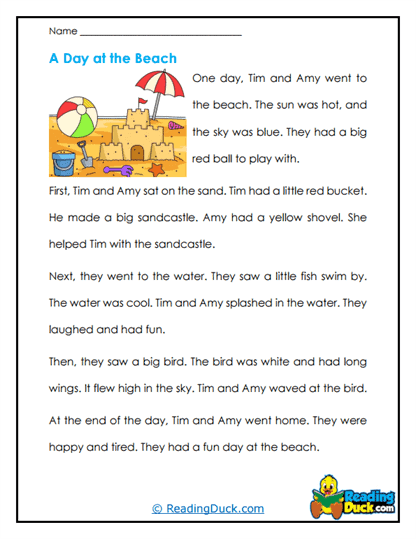
Beach Day
In this story, children head to the beach for a fun adventure filled with sand, sun, and play. The passage sprinkles in pre-primer sight words like the, I, and, and is to help students notice them while enjoying the storyline. Comprehension focuses on following simple actions, such as playing in the sand or watching the waves. As readers track the story, they can spot repeated sight words and connect them to the illustrations. The blend of repetition and context makes the words stick more naturally. This worksheet is a great way to build fluency while keeping the reading lighthearted and fun.
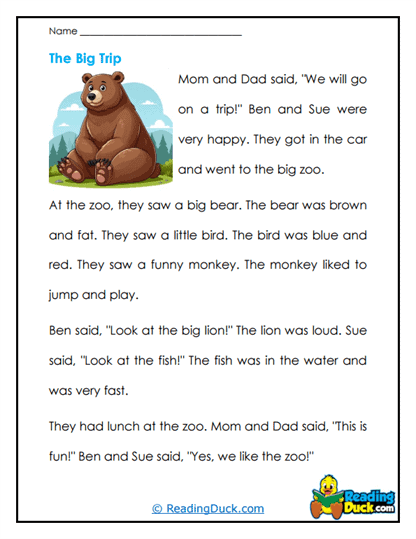
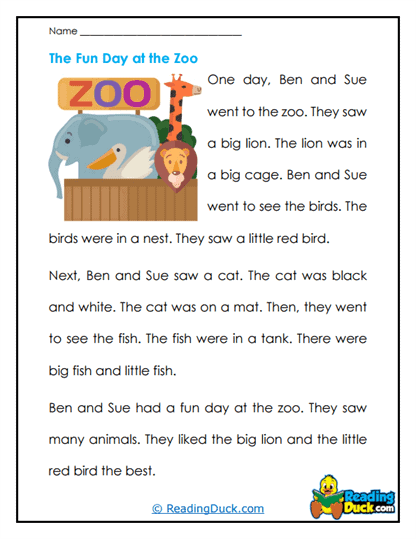
Big Zoo Trip
This worksheet takes students on an exciting trip to the zoo, where they see animals big and small. Words like big, see, I, and in are placed throughout the sentences so children can practice recognizing them in action. Comprehension questions highlight the characters' experiences as they look at animals, helping readers retell key details. The repetition of short, clear sentences makes sight words easy to catch. Students can point out words like "see" or "big" while enjoying the animal theme. This worksheet builds both sight word mastery and the ability to recall simple story events.
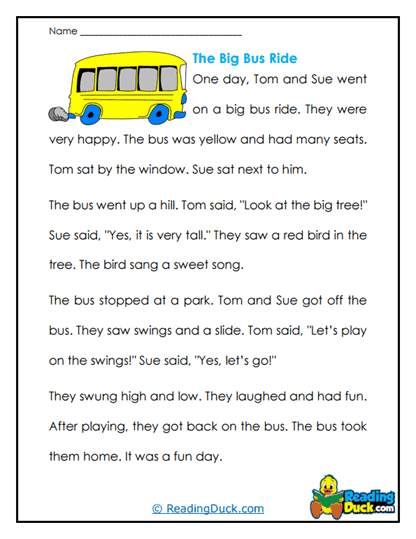
Bus Adventure
The bus becomes the star of this reading adventure, as children ride along and notice their surroundings. Sight words such as go, the, I, and to are used in easy phrases like "I go to the bus" or "The bus is big." The comprehension focus is on recognizing setting and action while following a familiar routine. Because the story uses predictable sentence patterns, sight words pop out clearly. Students can highlight words like "go" and "the" while also thinking about what happens in the passage. This worksheet is a natural way to connect real-life experiences with reading practice.
Farm Fun
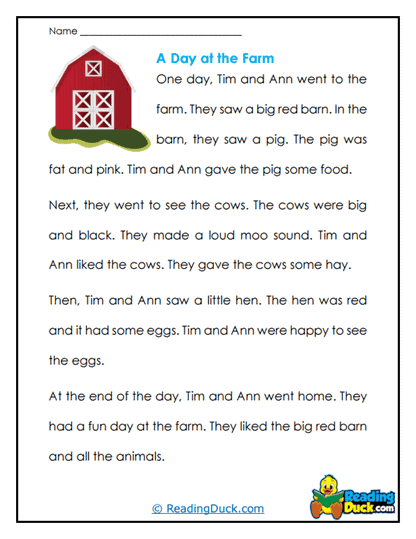
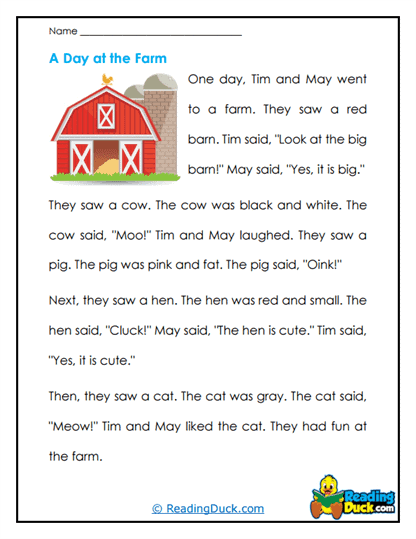
On the farm, students meet animals and explore barns in this cheerful passage. Sight words like in, on, the, and, and is are woven into simple observations, such as "The pig is big" or "I am on the farm." The comprehension questions guide readers to notice who is in the story and what is happening. Because the sight words are short and repeat often, they are easy to find. Readers gain confidence when they can identify words like "the" and "is" in quick succession. This worksheet turns learning sight words into a playful farm adventure.
Farm Visit
This passage expands the farm theme with a child visiting and noticing animals and farm life. Sight words like I, see, my, here, and for make frequent appearances to anchor the reading. The comprehension questions check for understanding of the child's experiences and details of the farm. Sight words such as "I" and "see" become key tools in piecing the story together. Students practice spotting these words while decoding new vocabulary like "barn" or "goat." The worksheet balances sight word fluency with early comprehension skills in a lively setting.
Lake Adventures
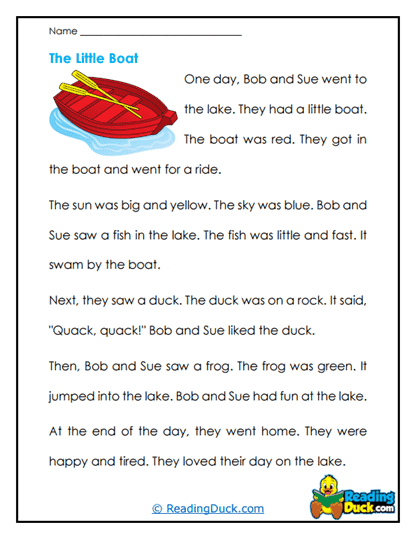
Children head outdoors for an adventure at the lake in this engaging passage. Sentences feature sight words like go, the, and, is, and I in short descriptive lines. The comprehension tasks focus on the activities and setting-students recall what the children see and do by the lake. Because the sentences repeat familiar words, learners can easily pick them out and read more smoothly. Spotting "the" and "I" becomes a confidence booster while still understanding the story. This worksheet combines nature themes with foundational reading practice.
Park Playtime
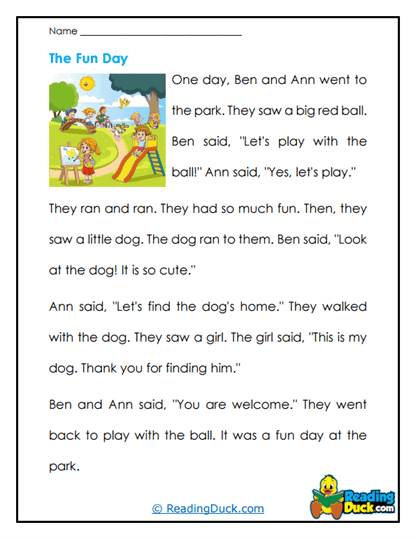
At the park, children swing, slide, and run in a story that brims with action. Sight words like play, I, in, the, and and help young readers follow along with each activity. The comprehension questions draw attention to what happens in the park and where events take place. Because sight words are embedded in action-oriented sentences, students connect reading with meaning quickly. They can easily recognize "I" or "play" while retelling the fun moments of the story. This worksheet is both energetic and skill-building for early readers.
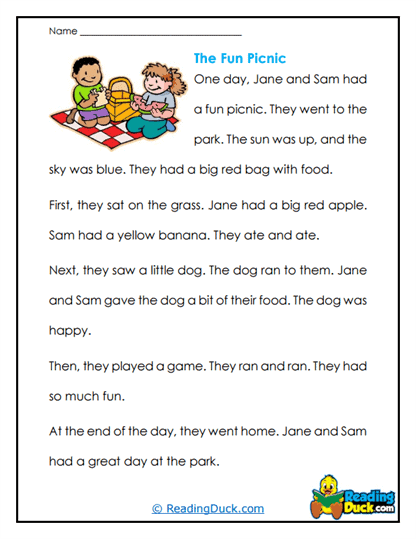
Picnic Joy
The story of a picnic gives students a chance to read about food, friends, and fun outdoors. Pre-primer words like I, the, is, can, and and appear in short, joyful lines such as "I can see the food." The comprehension focus is on identifying simple details about what happens at the picnic. Sight words repeat often so learners can feel successful spotting them in context. Readers can highlight familiar words as they make sense of the cheerful picnic event. This worksheet mixes social themes with literacy practice in a delightful way.
Playground Fun
Readers explore swings, slides, and play areas in this lively passage about the playground. Sight words like fun, see, I, the, and and fill sentences that describe children at play. The comprehension questions guide students to recall what the characters do and notice specific details. The frequent sight words stand out in easy sentence structures, boosting confidence. Learners quickly see patterns in words like "see" and "fun." This worksheet makes practicing sight words an energetic, relatable experience.
Zoo Adventure
This worksheet offers another trip to the zoo, packed with animals and excitement. Words like big, I, see, the, and and appear in sentences that keep the story moving. The comprehension activities focus on what animals are spotted and what makes them interesting. The repeated words make recognition easier each time they appear. Students can quickly point out familiar words while connecting them to zoo adventures. This worksheet blends sight word mastery with a sense of discovery and wonder.
An Example Pre-Primer Sight Word Reading Passage
I go to the farm and I see a big pig. The pig is in the pen and it is red. I can run to the barn and see my cat. The sun is up and we play in the hay. It is fun and I am happy.
Where Is The Pre-Primer Sight Word Pattern?
You can spot sight words like I and see throughout the passage, which repeat to build fluency. For example, in the sentence "I go to the farm and I see a big pig," both I and see are used. Another example is "It is fun and I am happy," where the words it, is, and, I, and am all appear as pre-primer sight words.
Make sure to bookmark our website now.
Enjoy all our free reading worksheets.
Our materials adhere to the principles of the Science of Reading.