Social and emotional skills are the invisible gears that help life run smoothly. They're what keep us from yelling at the toaster when it burns our bread and what help us say, "Hey, let's talk," instead of "You're wrong!" They're about understanding ourselves, connecting with others, and managing the rollercoaster of human feelings with something resembling grace.
Why does it matter? Because every interaction-from playground games to workplace meetings-runs smoother when people can listen, empathize, and work through conflict. Social and emotional learning (SEL) has been linked to better communication, healthier relationships, improved decision-making, and greater resilience in the face of challenges. These skills aren't "extras"-they're essentials for thriving in school, at home, and in the big, unpredictable world.
Our Social and Emotional worksheets turn these big, important life skills into approachable lessons. Students learn how to name their feelings, manage their reactions, and navigate social situations thoughtfully. Each comes with practical scenarios, reflection prompts, and an answer key so educators can guide discussions with confidence.
A Look At Each Worksheet Category
Anger Management
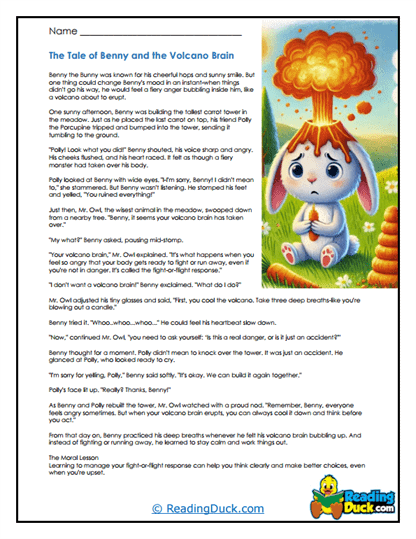
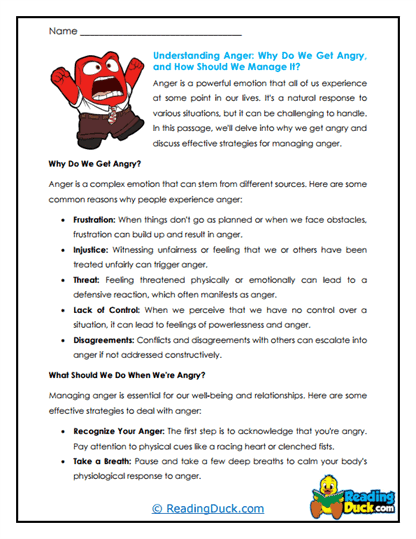
This section teaches students how to recognize the signs of anger before it boils over. It introduces strategies like deep breathing, counting to ten, and stepping away from tense situations. Through relatable scenarios, students practice identifying their emotional triggers and choosing healthy responses. The worksheets also cover how unexpressed anger can turn into bigger issues if ignored. By the end, learners understand that controlling anger doesn't mean ignoring it-it means channeling it productively.
Bullying
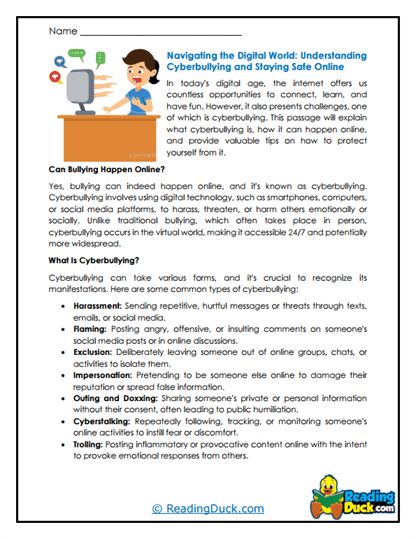
Students learn what bullying looks like, from obvious physical aggression to subtle social exclusion. The worksheets help them distinguish between conflict and bullying, encouraging early and safe intervention. They explore the roles of bully, target, and bystander, along with strategies to address each. Empathy exercises help students see the emotional impact of harmful behavior. Through reflection and role-play, they develop confidence to stand up for themselves and others.
Character Education
This section dives into values like honesty, kindness, and responsibility. Students examine real-life scenarios to decide how to act in ways that reflect good character. The worksheets encourage self-reflection on personal values and how they guide daily choices. They also explore how consistent behavior builds trust and respect. By practicing these principles, students see how strong character benefits themselves and the communities around them.
Emotions and Feelings
Students learn to identify a wide range of emotions beyond just "happy" or "sad." Worksheets include emotion wheels, facial expression matching, and situational prompts. They also explore how emotions can influence thoughts and behavior, for better or worse. Students practice expressing feelings constructively, both verbally and nonverbally. This builds emotional vocabulary and helps them navigate social situations more smoothly.
Life Skills
This section covers practical abilities like problem-solving, goal-setting, and time management. Students learn how these skills help in academics, friendships, and personal projects. The worksheets include planning templates, decision-making flowcharts, and everyday challenges to solve. Realistic examples show how preparation reduces stress and improves outcomes. By developing these skills, students are better equipped to handle life's many curveballs.
Mindfulness and Meditation
Students are introduced to techniques for staying present and calm under pressure. Worksheets guide them through breathing exercises, sensory awareness activities, and simple meditations. They learn how mindfulness can reduce stress, improve focus, and promote emotional balance. Real-life scenarios show how mindful moments can shift reactions from impulsive to thoughtful. Over time, they discover how regular practice can boost overall well-being.
Relationship Management
This section focuses on building and maintaining healthy, respectful relationships. Students explore topics like conflict resolution, compromise, and supportive communication. Worksheets encourage them to think about boundaries, trust, and reciprocity. They also learn to recognize when relationships are unhealthy and how to seek help. These tools help students form connections that are both positive and lasting.
Respect
Students learn that respect isn't just about politeness-it's about valuing others' feelings, rights, and differences. Worksheets use real-life situations to practice showing respect in diverse contexts, from the classroom to online spaces. They also explore self-respect and how it shapes their interactions. Activities include empathy mapping and respectful disagreement exercises. By the end, students see respect as a habit, not a one-time gesture.
Self Awareness
Students explore their strengths, weaknesses, values, and emotions. The worksheets guide them in reflecting on how their personal traits influence decisions and relationships. They also learn about self-talk and how it can be constructive or harmful. Activities encourage journaling, personality inventories, and goal-setting. Greater self-awareness helps them make choices aligned with their values and aspirations.
Social Awareness
This section focuses on understanding and appreciating perspectives different from one's own. Students practice active listening, empathy, and recognizing social cues. Worksheets use role-play to help them experience situations from multiple viewpoints. They also explore how culture and context shape behavior. Developing social awareness builds stronger, more inclusive communities.
Social Skills
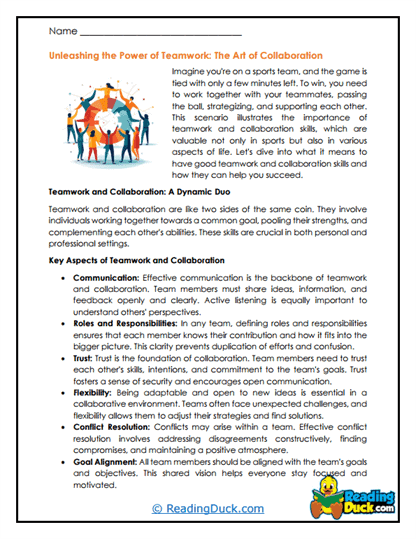
Students learn the building blocks of effective interaction, from starting conversations to reading body language. Worksheets cover cooperation, turn-taking, and assertive (not aggressive) communication. They also practice giving and receiving constructive feedback. Activities use games and group challenges to reinforce these skills in action. Over time, students gain the confidence to interact positively in a variety of settings.
About Social and Emotional Learning
Social and Emotional Learning (SEL) is the process of developing the self-awareness, self-control, and interpersonal skills that are essential for life. It's not about memorizing facts-it's about learning how to be a thoughtful human in a busy, complex world. SEL gives students the tools to manage emotions, build healthy relationships, and make responsible decisions.
Historically, SEL concepts have been woven into education through character-building and moral instruction, but modern SEL is grounded in psychology and neuroscience. Research shows that students with strong SEL skills have better academic outcomes and improved mental health. These aren't just "soft skills"-they're life skills with hard results.
In the real world, SEL is everywhere. It's in how you navigate a disagreement at work, how you comfort a friend, or how you motivate yourself through challenges. Businesses value it in employees, teachers rely on it for classroom harmony, and communities depend on it for cooperation.
SEL also plays a role in tackling bigger issues, from reducing bullying to improving public health. Programs rooted in SEL have shown success in lowering dropout rates, improving conflict resolution, and fostering empathy. Its impact stretches far beyond the classroom.
Looking ahead, SEL will be even more important as technology changes how we connect, work, and live. In a fast-paced, sometimes divided world, social and emotional skills will help the next generation adapt, collaborate, and thrive-not just survive.
Make sure to bookmark our website now.
Enjoy all our free reading worksheets.
Our materials adhere to the principles of the Science of Reading.