When Food Goes Bad Multiple Choices
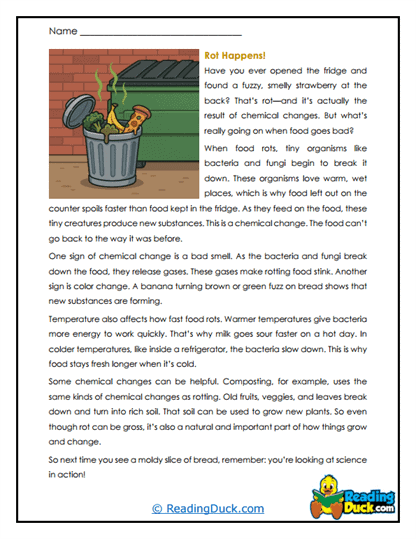
Most children have seen moldy bread or spoiled fruit, but few realize they are looking at chemistry in action. This passage explains that when food rots, tiny organisms such as bacteria and fungi break it down through chemical changes. Students learn that these microorganisms create entirely new substances, producing changes in color, smell, and texture that cannot be reversed. The text also explores how temperature affects the speed of rotting and introduces composting as a helpful example of chemical change in nature. Readers discover that while food spoilage can be unpleasant, decomposition is an important process that helps recycle nutrients back into the environment.
Reading passages that explain everyday events through science help students build stronger comprehension because they connect new concepts with familiar experiences. Children practice identifying cause-and-effect relationships while learning how environmental conditions influence chemical reactions. Vocabulary such as decomposition, bacteria, fungi, and nutrients strengthens both science knowledge and reading skills. These engaging examples encourage students to ask questions about the world around them and recognize chemistry in ordinary situations.