About Our Nuclear Energy Reading Comprehension Worksheets
Nuclear energy is one of the most powerful sources of electricity in the world, and it all begins with something incredibly small-atoms. These worksheets introduce students to how nuclear energy works, how it powers homes and businesses, and the important role it plays in today's energy systems. Along the way, children explore topics such as nuclear fission, reactor safety, radioactive waste, and future technologies like fusion power. By using clear explanations and real-world examples, these readings make a complex topic easier to understand.
Our Nuclear Energy Reading Comprehension Worksheets help students strengthen nonfiction reading skills while building science and STEM knowledge. As they read, students practice identifying main ideas, following sequences, comparing ideas, expanding academic vocabulary, and understanding cause-and-effect relationships. The passages also encourage critical thinking by presenting both the benefits and challenges of nuclear energy in a balanced, age-appropriate way. These skills support success in science, reading, and informed decision-making.
Learning about nuclear energy encourages children to ask thoughtful questions about how electricity is produced and how scientific discoveries shape everyday life. They discover how engineers, scientists, and researchers work together to solve complex problems while improving safety and developing new technologies. As students gain confidence reading informational texts, they also build a deeper appreciation for the role science plays in meeting the world's energy needs. We hope these worksheets inspire curiosity about science, engineering, and the future of clean energy.
Meet the Worksheets
Can Nuclear Energy Help Fight Climate Change?
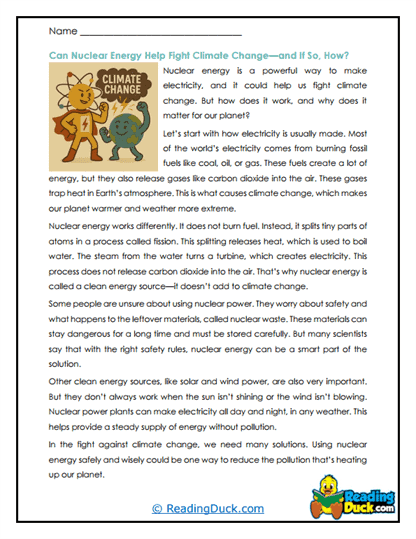
Students explore how nuclear power can help reduce greenhouse gas emissions while producing reliable electricity. They compare nuclear energy with fossil fuels and renewable energy sources to understand different approaches to generating power. This worksheet strengthens comparison skills and encourages balanced thinking about real-world challenges. Readers discover that solving climate change often involves considering many different energy options.
Comparing Energy Sources
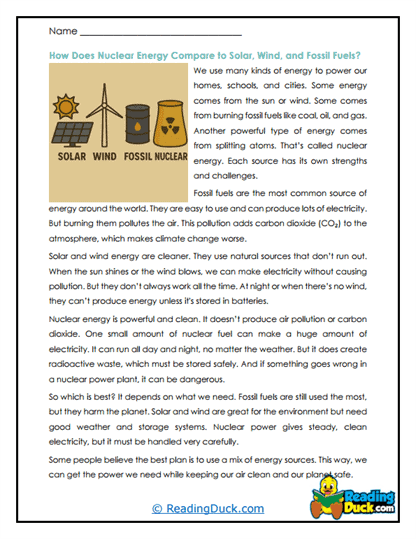
Students compare nuclear power with solar, wind, and fossil fuels to see how each source produces electricity. They examine the strengths and challenges of each option while learning why many communities rely on a mix of energy sources. This worksheet builds analytical thinking and comparison skills through real-world examples. Readers gain a broader understanding of how electricity reaches their homes.
Could Nuclear-Powered Spacecraft Take Us to Mars?
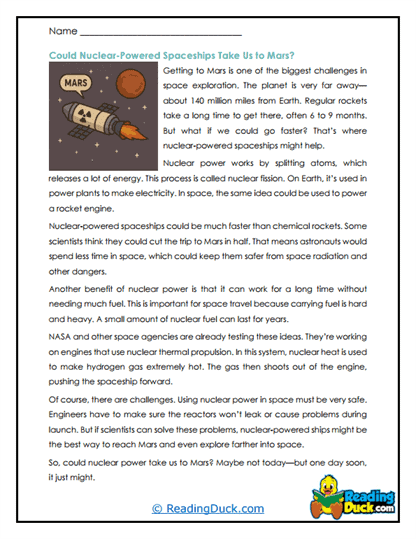
Students discover how nuclear technology could help future astronauts travel deeper into space. They learn about nuclear propulsion systems and why they may make long-distance space missions more practical. This worksheet combines science, engineering, and space exploration in an engaging way. Readers see how today's research could shape tomorrow's discoveries.
From Atoms to Electricity
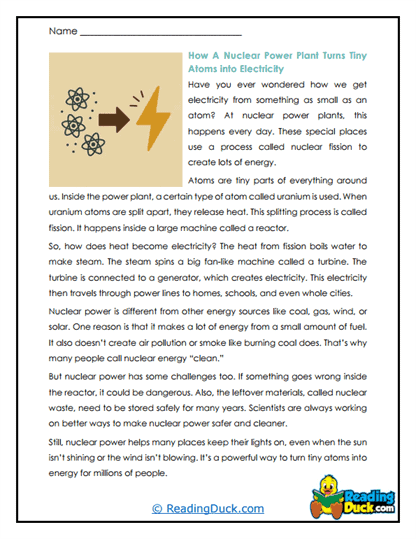
Students follow the complete journey of electricity inside a nuclear power plant. They learn how nuclear fission creates heat, how steam spins turbines, and how generators send electricity through the power grid. This worksheet strengthens sequencing skills while explaining a complex process step by step. Readers gain a clearer understanding of how tiny atoms help power entire cities.
Fusion Power
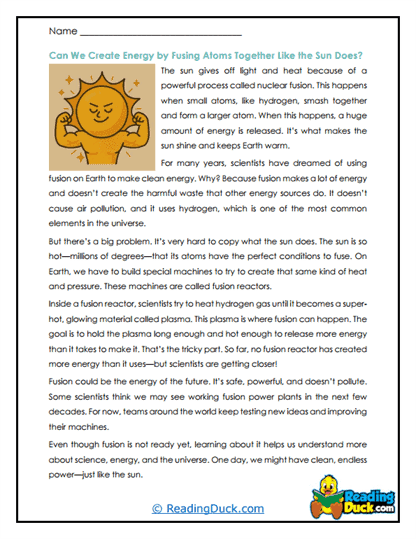
Students learn about nuclear fusion, the same process that powers the Sun. They discover why scientists believe fusion could someday provide clean, abundant energy and why recreating those conditions on Earth is so challenging. This worksheet introduces exciting future technology while building scientific vocabulary. Readers see how research today could transform energy production in the future.
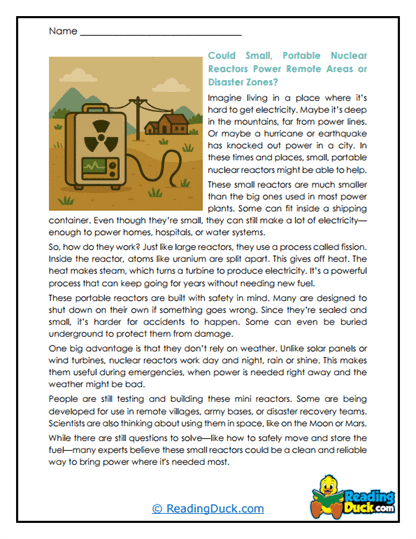
Mini Reactors
Students explore the growing field of small modular reactors and how they differ from traditional nuclear power plants. They learn how these compact reactors could provide electricity in remote locations, disaster areas, and future space missions. This worksheet strengthens comprehension by connecting engineering solutions to real-world needs. Readers discover how innovation continues to improve energy technology.
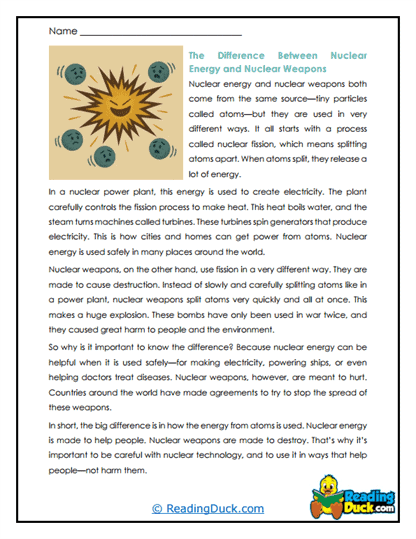
Nuclear Energy vs. Nuclear Weapons
Students examine the important differences between peaceful nuclear energy and nuclear weapons. They learn how controlled nuclear reactions safely produce electricity while uncontrolled reactions are used in weapons. This worksheet strengthens comparison skills and helps clear up common misconceptions. Readers gain a balanced understanding of two topics that are often confused.
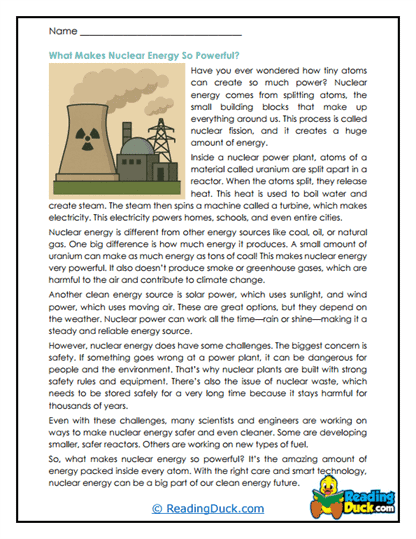
Power from Tiny Atoms
Students are introduced to the basic principles of nuclear energy and nuclear fission. They learn how splitting atoms releases energy that can be used to generate electricity while exploring both the advantages and challenges of nuclear power. This worksheet builds a strong foundation for understanding modern energy production. Readers discover how something incredibly small can produce enormous amounts of power.
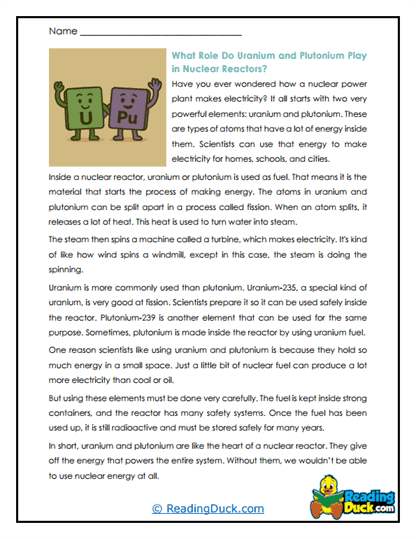
Reactor Fuel
Students investigate the special fuels used inside nuclear reactors. They learn how uranium and plutonium release energy through controlled nuclear reactions and why these materials must be handled carefully. This worksheet strengthens scientific understanding through clear explanations of reactor technology. Readers discover how tiny amounts of fuel can power millions of homes.
Understanding Nuclear Safety
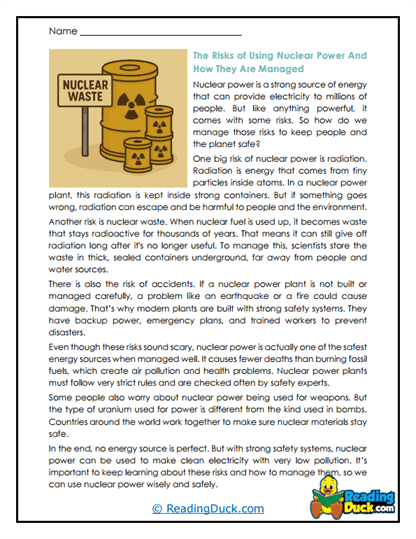
Students learn about the many systems engineers use to keep nuclear power plants operating safely. They explore radiation, radioactive waste, containment systems, and the careful monitoring that protects people and the environment. This worksheet develops problem-and-solution thinking while presenting balanced information. Readers gain confidence in understanding an often misunderstood topic.
What Happens to Nuclear Waste?
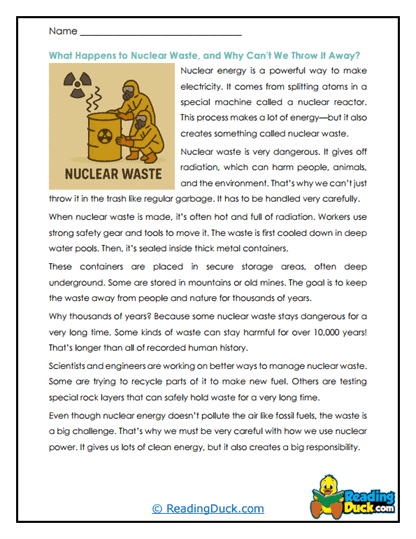
Students examine one of the biggest challenges facing nuclear energy. They learn how spent nuclear fuel is stored, protected, and studied as scientists develop safer long-term solutions. This worksheet strengthens critical thinking while introducing real-world scientific challenges. Readers discover how careful planning helps manage radioactive materials responsibly.
What Is a Nuclear Meltdown?
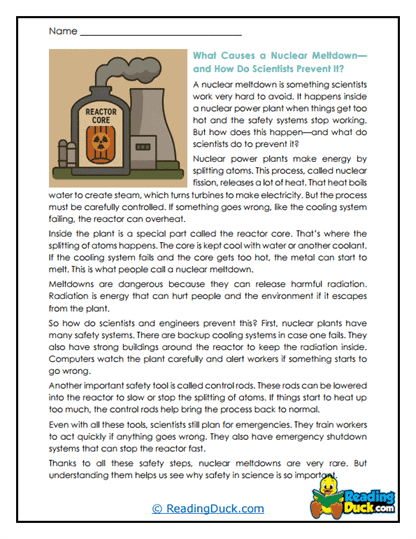
Students learn what a nuclear meltdown is and why it is extremely rare. They explore how reactor cooling systems, emergency shutdown procedures, and multiple layers of protection help prevent serious accidents. This worksheet strengthens sequencing and cause-and-effect skills through factual explanations. Readers develop a better understanding of how modern nuclear plants are designed for safety.
A Better Look At Nuclear Energy
Nuclear energy plays an important role in producing electricity for millions of people around the world. By using the energy stored inside atoms, nuclear power plants generate large amounts of electricity while producing very little carbon dioxide during normal operation. Scientists and engineers continue working to improve reactor safety, manage radioactive waste, and develop exciting new technologies such as fusion power and small modular reactors. Studying nuclear energy helps students understand one of today's most important scientific and engineering fields.
Reading about nuclear energy also helps students become stronger readers and critical thinkers. They practice following scientific explanations, comparing different ideas, building academic vocabulary, and evaluating evidence from informational texts. These skills support learning in science, technology, engineering, and many other subjects. With every passage, students gain confidence while discovering how science and innovation help power the modern world.
Make sure to bookmark our website now.
Enjoy all our free reading worksheets.
Our materials adhere to the principles of the Science of Reading.