About Our Chemical Changes Reading Comprehension Worksheets
Chemical changes happen all around us, even when we do not notice them. From baking cookies and lighting fireworks to powering batteries and digesting food, chemistry is part of everyday life. These worksheets introduce students to the exciting world of chemical changes through familiar examples that make science easy to understand. Along the way, children learn how new substances form and why some changes can never be reversed.
Our Chemical Changes Reading Comprehension Worksheets help students build strong nonfiction reading skills while exploring important science concepts. As they read, students practice identifying main ideas, finding supporting details, expanding academic vocabulary, and understanding cause-and-effect relationships. The passages also encourage critical thinking by helping readers connect scientific ideas to real-life situations they experience every day. These skills strengthen both science knowledge and reading confidence.
Learning about chemical changes encourages children to ask questions, make careful observations, and think like scientists. They discover that chemistry explains many of the events happening in kitchens, gardens, factories, and even inside their own bodies. By reading engaging informational texts, students gain confidence in understanding more advanced STEM topics. We hope these worksheets spark curiosity and inspire a lifelong interest in science and learning.
Meet the Worksheets
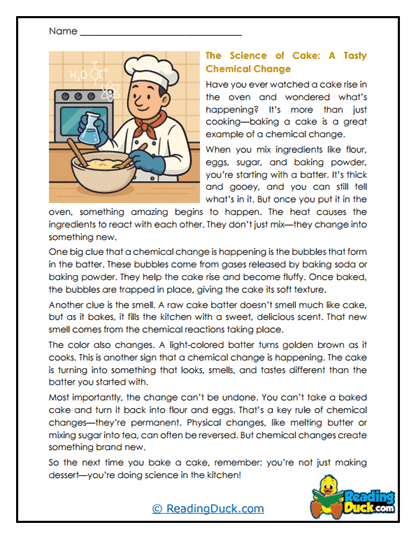
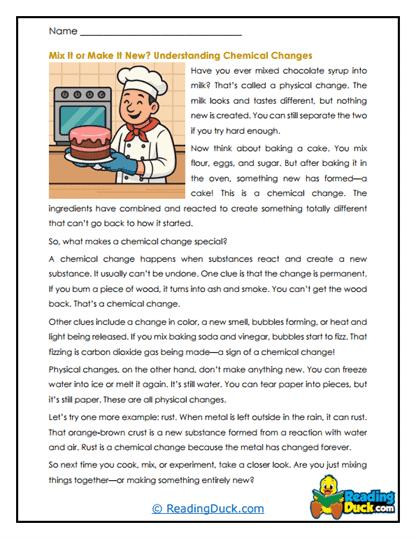
Baking Up Science
Students discover how baking a cake is really a series of chemical reactions. They learn how ingredients change when heated and why the finished cake cannot return to its original form. This worksheet strengthens cause-and-effect thinking while connecting science to a familiar activity. Readers see that every recipe is also an opportunity to explore chemistry.
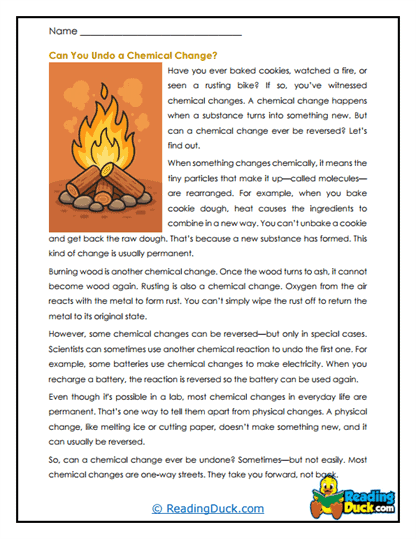
Can You Change It Back?
Students explore the difference between reversible and irreversible chemical changes. They compare examples like rusting, burning, baking, and rechargeable batteries to understand what makes some reactions permanent. The passage builds comparison and critical-thinking skills through clear scientific examples. Readers gain a better understanding of what makes chemical changes unique.
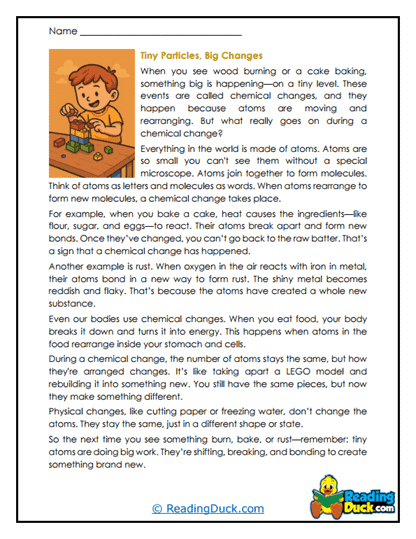
Chemistry You Can't See
Students learn that chemical reactions begin with tiny particles that are invisible to the naked eye. They explore how atoms and molecules rearrange to create completely new substances. This worksheet introduces abstract scientific ideas in an easy-to-understand way. It helps readers connect everyday events with the hidden science happening inside them.
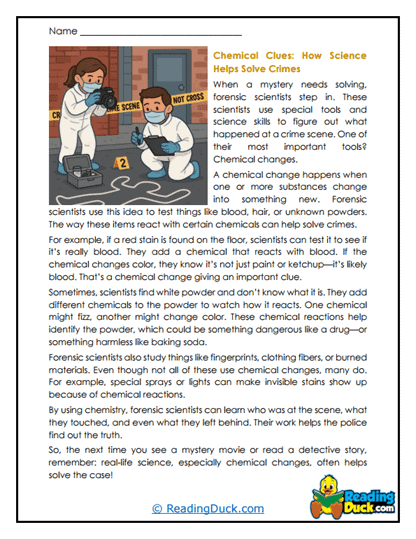
Chemical Clues
Students discover how forensic scientists use chemistry to solve real-world mysteries. They learn how chemical reactions help investigators examine evidence and uncover important clues. The passage strengthens inference and evidence-based reading skills while introducing an exciting STEM career. Readers see how science can make communities safer.
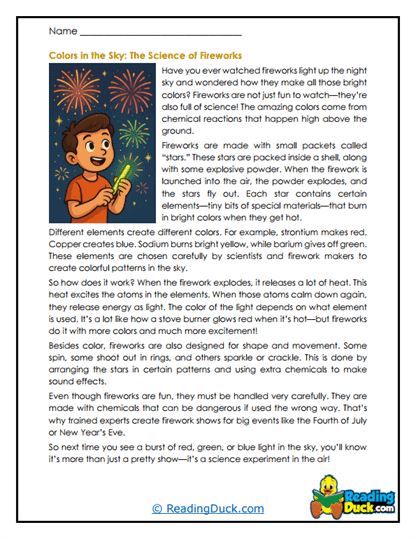
Fireworks and Chemical Reactions
Students investigate the science behind colorful fireworks displays. They learn how different elements produce different colors and how chemical reactions create light, sound, and motion. This worksheet strengthens sequencing and scientific reasoning skills. It transforms a favorite celebration into an engaging chemistry lesson.
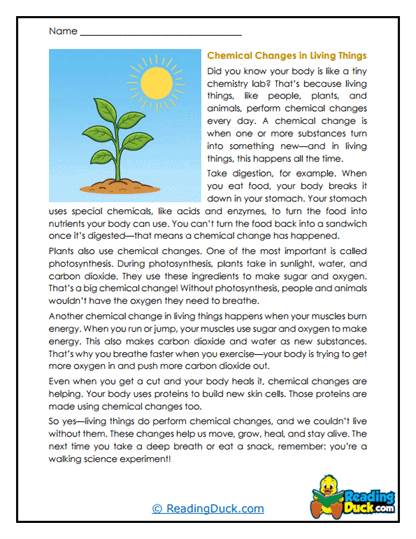
Living Chemistry
Students explore the chemical reactions that happen inside living things every day. They learn about digestion, photosynthesis, muscle movement, and how cells use chemistry to support life. The reading connects science directly to students' own experiences. It helps readers appreciate that chemistry is constantly at work inside their bodies.
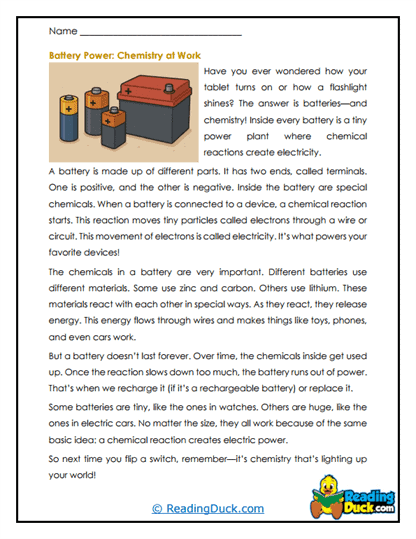
Power in Your Pocket
Students learn how batteries use chemical reactions to produce electricity. They discover why batteries eventually run out of energy and how rechargeable batteries work differently. This worksheet connects chemistry with the technology students use every day. Readers gain a practical understanding of how science powers modern devices.
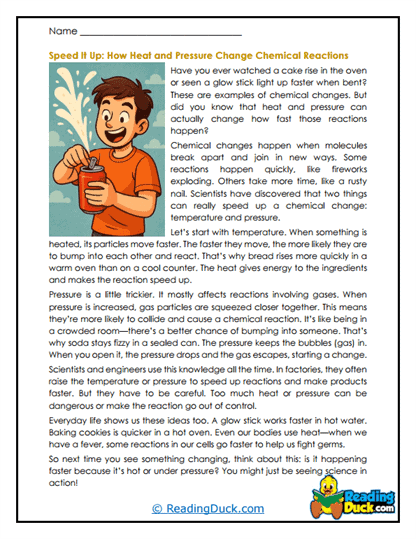
Speeding Things Up
Students examine how heat and pressure affect the speed of chemical reactions. They explore real-world examples from cooking, industry, and the human body to see reaction rates in action. The passage strengthens cause-and-effect reasoning and scientific vocabulary. It helps readers understand why some reactions happen faster than others.
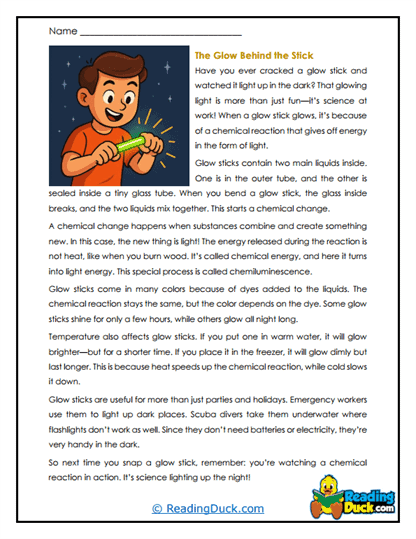
The Chemistry Inside a Glow Stick
Students discover what happens when a glow stick begins to shine. They learn how two liquids mix together to produce light through a chemical reaction called chemiluminescence. This worksheet builds comprehension by connecting science with a fun everyday object. Readers see how chemistry can create light without producing heat.
Understanding Irreversible Reactions
Students take a closer look at why most chemical changes cannot be undone. They examine familiar examples and learn what happens when entirely new substances are formed. The reading develops comparison skills and scientific reasoning. It helps students recognize one of the defining features of chemical reactions.
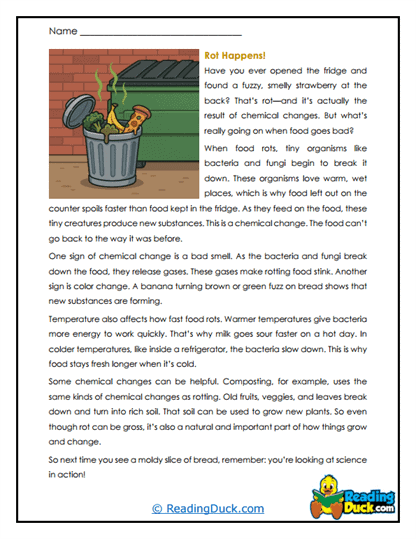
When Food Goes Bad
Students explore the science behind food spoilage and decomposition. They learn how bacteria and fungi break down food through chemical changes that recycle nutrients back into nature. This worksheet connects chemistry with everyday observations and environmental science. Readers discover that even rotting food plays an important role in healthy ecosystems.
When New Things Are Made
Students are introduced to the basic idea of chemical changes through familiar examples such as baking, burning, and cooking. They learn how scientists recognize chemical reactions by observing clues like bubbling, color changes, and new odors. This worksheet builds a strong foundation for understanding chemistry. It encourages students to recognize that science is happening all around them.
A Better Look At Chemical Changes
Chemical changes are responsible for many of the processes that shape our world. They help plants grow, allow our bodies to function, power vehicles and electronics, create useful materials, and recycle nutrients back into the environment. By studying chemical changes, students begin to understand that chemistry is not limited to laboratories-it is a part of everyday life. Exploring these reactions helps children see the connections between science, technology, and the world around them.
Reading about chemical changes also helps students become stronger readers and problem-solvers. They practice following scientific explanations, building academic vocabulary, identifying patterns, and using evidence to support their thinking. These skills prepare students for future success in science and many other subjects. With every passage, readers gain confidence while discovering the fascinating chemistry behind ordinary experiences.
Make sure to bookmark our website now.
Enjoy all our free reading worksheets.
Our materials adhere to the principles of the Science of Reading.