About Our Compounds and Mixtures Reading Comprehension Worksheets
Everything around us is made of matter, and learning the difference between compounds and mixtures helps students understand how the world works. From the air we breathe and the water we drink to the foods we eat and the products we use every day, chemistry is part of everyday life. These worksheets introduce students to compounds and mixtures through familiar examples that make complex science concepts easier to understand. Along the way, children discover how scientists classify materials and why those differences matter.
Our Compounds and Mixtures Reading Comprehension Worksheets help students strengthen nonfiction reading skills while building a strong science foundation. As they read, students practice identifying main ideas, comparing and contrasting concepts, expanding academic vocabulary, and using evidence to explain scientific ideas. The passages also encourage critical thinking by connecting classroom lessons to everyday experiences. These skills support success in science, reading, and problem-solving across many subjects.
Learning about compounds and mixtures encourages children to become more observant and curious about the materials they encounter every day. They begin asking thoughtful questions about how substances are made, how they can be separated, and why different materials have unique properties. As students gain confidence reading informational texts, they also develop a deeper appreciation for the science behind ordinary objects. We hope these worksheets inspire a lasting interest in chemistry and the amazing world of matter.
Meet the Worksheets
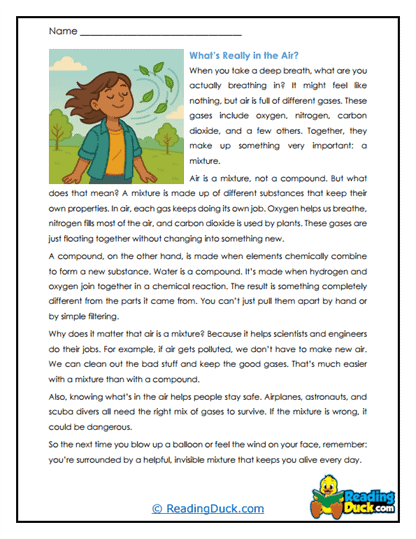
Breathing a Mixture
Students discover that the air around them is actually a mixture of several different gases. They learn how oxygen, nitrogen, carbon dioxide, and other gases work together while keeping their own unique properties. This worksheet strengthens comparison skills and scientific vocabulary. Readers realize that every breath offers a lesson in chemistry.
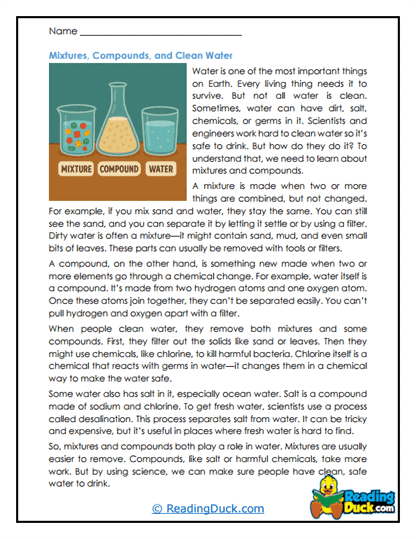
Clean Water, Smart Science
Students explore how chemistry helps make drinking water safe. They learn how filters remove mixtures while compounds like chlorine help destroy harmful bacteria. The passage builds sequencing and cause-and-effect skills through a real-world example. Readers gain a new appreciation for the science behind clean water.
Everyday Chemistry
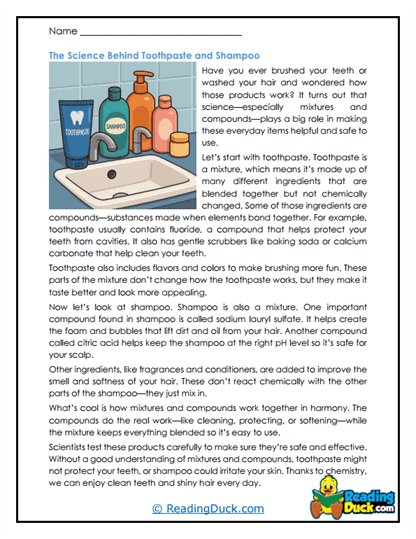
Students investigate the mixtures and compounds found inside everyday products like toothpaste and shampoo. They discover how different ingredients work together to clean, protect, and improve daily routines. This worksheet strengthens comprehension by connecting chemistry to familiar experiences. It shows that science is part of everyday life at home.
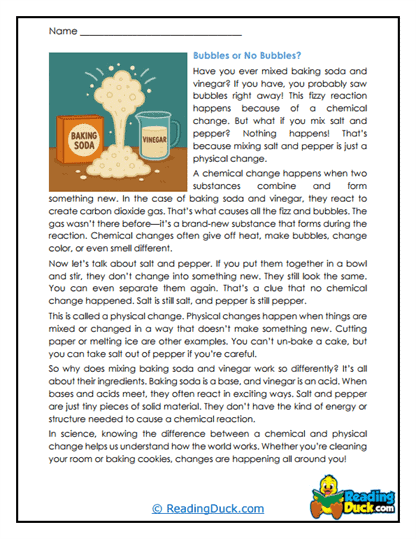
Fizz or No Fizz?
Students compare chemical changes with physical changes using fun examples like baking soda and vinegar. They learn how bubbling reactions create new substances while simple mixtures do not. The reading develops observation and critical-thinking skills. Readers discover how scientists recognize the signs of a chemical reaction.
Kitchen Chemistry
Students bring together everything they have learned by exploring mixtures and compounds found throughout the home. They examine common household products and discover why each ingredient serves an important purpose. This worksheet reinforces key chemistry concepts through familiar examples. It encourages students to see science in the products they use every day.
Looking Closer
Students learn how scientists determine whether a material is a mixture or a compound. They explore the tools, observations, and tests used to study different substances. The passage strengthens evidence-based thinking and comparison skills. Readers discover that careful investigation is an important part of science.
Metals Working Together
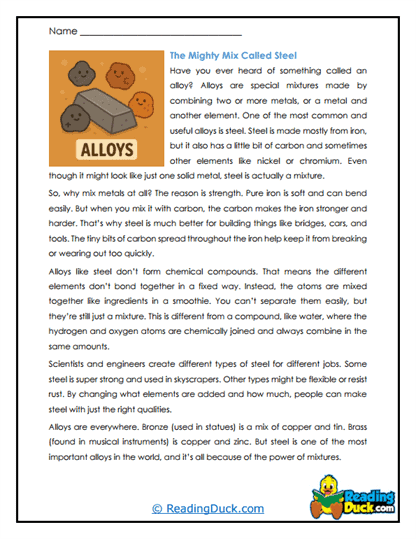
Students discover how alloys are created by combining different elements to produce stronger materials. They learn why steel, bronze, and brass are useful in buildings, tools, and everyday products. This worksheet connects chemistry with engineering and technology. Readers see how mixtures help shape the modern world.
Mixtures vs. Compounds
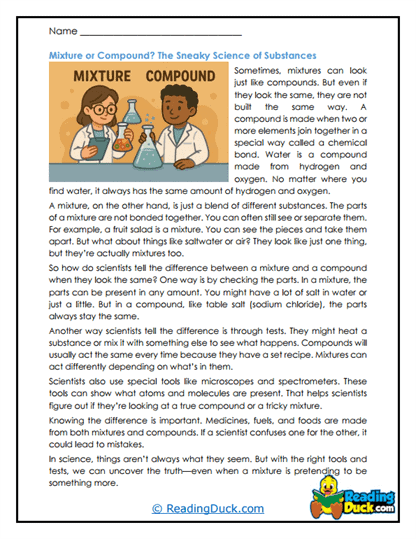
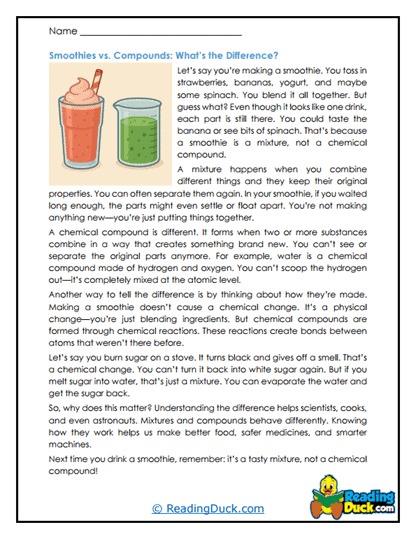
Students are introduced to the basic differences between mixtures and compounds through the familiar example of a smoothie. They learn how mixtures keep their original ingredients while compounds create entirely new substances. This worksheet builds a strong foundation for understanding chemistry concepts. Readers quickly recognize that science is happening in everyday activities.
Saltwater Secrets
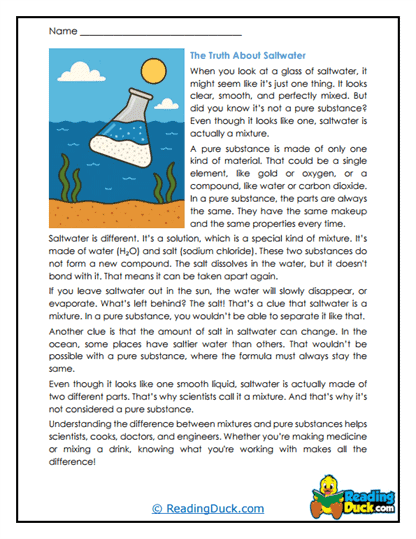
Students investigate why saltwater is considered a mixture instead of a compound. They learn how dissolved salt can still be separated from water through evaporation. The passage strengthens comparison skills and scientific reasoning. Readers discover that appearances can sometimes be misleading.
The Chemistry of Table Salt
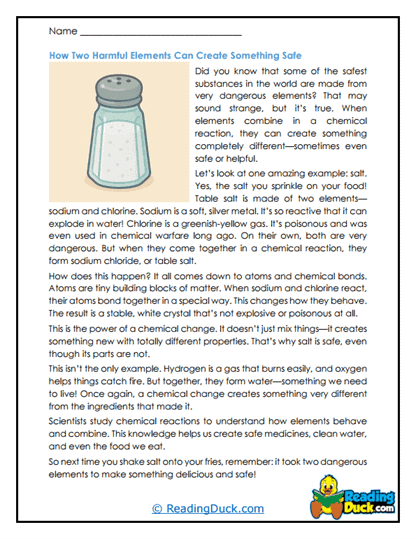
Students learn how two dangerous elements combine to create the safe, familiar compound known as table salt. They explore chemical bonds and discover how compounds develop completely new properties. This worksheet builds cause-and-effect understanding while introducing important chemistry vocabulary. Readers see how surprising chemical reactions can be.
Understanding Mixtures
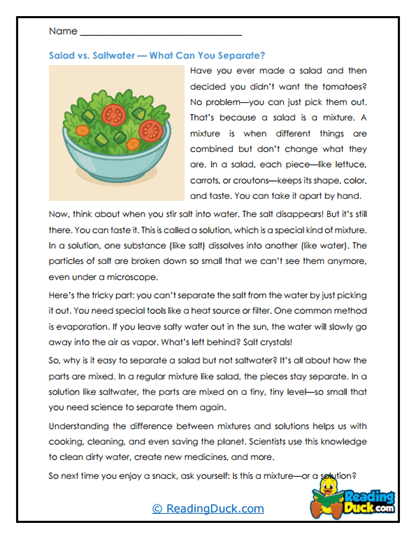
Students compare salads, saltwater, and solutions to learn how different kinds of mixtures behave. They discover why some mixtures are easy to separate while others require special methods like evaporation. The reading strengthens comparison and classification skills. It helps students understand how scientists separate materials in the real world.
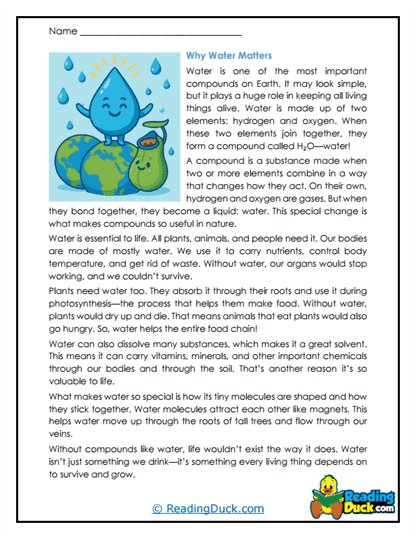
Why Water Is So Special
Students discover why water is one of the most important compounds on Earth. They learn how hydrogen and oxygen combine to create a substance with unique properties that support life. This worksheet connects chemistry to biology and Earth science. Readers gain a deeper appreciation for the compound they use every single day.
A Better Look At Compounds and Mixtures
Compounds and mixtures are found everywhere, from the foods we eat and the air we breathe to the materials used in buildings, medicines, and technology. Understanding how substances combine, separate, and interact helps students make sense of countless everyday experiences. By exploring these concepts, children learn that chemistry explains many of the materials and processes they encounter each day. These lessons build a strong foundation for future studies in science.
Reading about compounds and mixtures also helps students become stronger readers and critical thinkers. They practice comparing ideas, analyzing evidence, building scientific vocabulary, and explaining concepts using information from the text. These skills support learning across science, reading, and many other subjects. With every passage, students gain confidence while discovering that chemistry is an important part of the world around them.
Make sure to bookmark our website now.
Enjoy all our free reading worksheets.
Our materials adhere to the principles of the Science of Reading.