
Science Solves Mysteries Short Answer
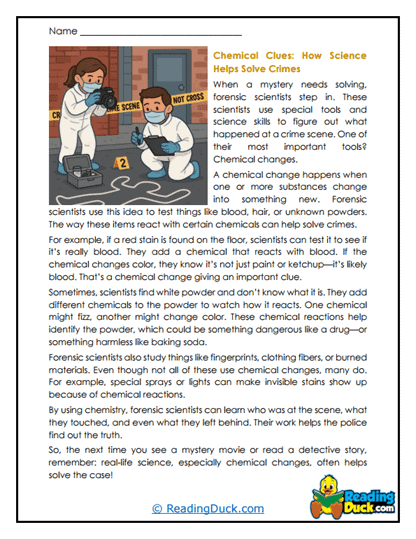
Many students enjoy detective stories, and this passage shows them that real investigators often rely on chemistry to solve crimes. Readers learn how forensic scientists study chemical changes to examine evidence such as blood, powders, burned materials, and unknown substances. The text explains that chemical reactions can reveal hidden fingerprints, identify mysterious materials, and help investigators understand what happened at a crime scene. Students discover that chemistry is an important tool for solving real-world problems and protecting communities. The passage demonstrates how scientific knowledge extends far beyond the classroom.
Reading passages that connect science with exciting careers helps students stay engaged while strengthening important literacy skills. Children practice identifying key details, drawing conclusions, and explaining how evidence supports scientific investigations. Academic vocabulary such as forensic science, evidence, chemical reaction, and investigation builds confidence when reading informational texts. These experiences encourage critical thinking while helping students see how science and reading work together to solve real-world mysteries.