
Baking Up Science Open Response
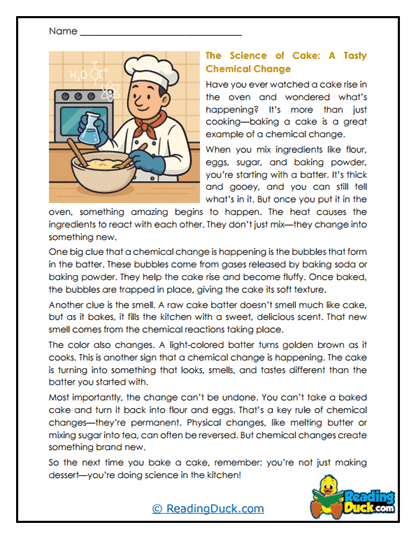
Most children think baking is simply following a recipe, but this passage shows that every cake is actually a science experiment. Students learn how ingredients such as flour, eggs, baking powder, and sugar react together when heated in the oven. The text explains how bubbles form, why batter rises, how new smells develop, and why the finished cake cannot be changed back into its original ingredients. Readers discover that baking is one of the easiest ways to observe a chemical change in everyday life. The passage helps students connect classroom science to an activity many families enjoy together.
Passages that connect science to familiar experiences help students build deeper understanding because they can easily relate new ideas to things they’ve already seen. Children strengthen comprehension by identifying cause-and-effect relationships and explaining how one event leads to another. Vocabulary such as reaction, ingredients, gases, and chemical change supports both science learning and reading development. These engaging connections help students become more confident readers while encouraging them to ask thoughtful questions about the world around them.