Mix It Up! Multiple Choices
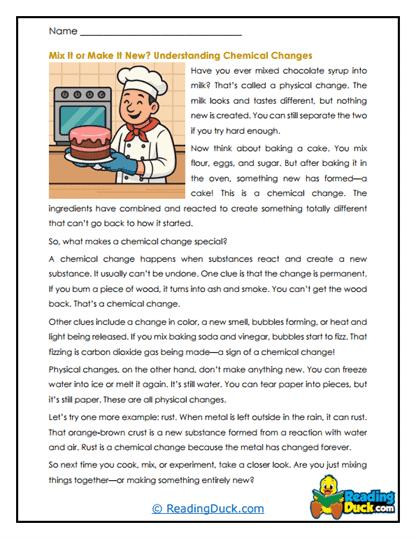
One of the most exciting moments in science is discovering that some changes create something completely new. This passage introduces students to the idea of chemical changes using familiar examples like baking a cake, burning wood, and cooking food. Readers learn that unlike physical changes, chemical changes produce brand-new substances that cannot usually be changed back. The text explains common clues that a chemical change has occurred, including color changes, bubbling, heat, light, and new smells. By connecting science to everyday experiences, students begin to see that chemistry is happening all around them-even in their own kitchens.
Reading informational passages like this helps students build strong nonfiction reading skills while making science easier to understand. Children practice identifying main ideas, supporting details, and comparing different types of changes. Along the way, they expand their vocabulary with words such as chemical change, physical change, reaction, and substance. These reading experiences also encourage students to observe the world more carefully and recognize scientific concepts in everyday life, building both confidence and curiosity.