
Fizz or No Fizz? Open Response
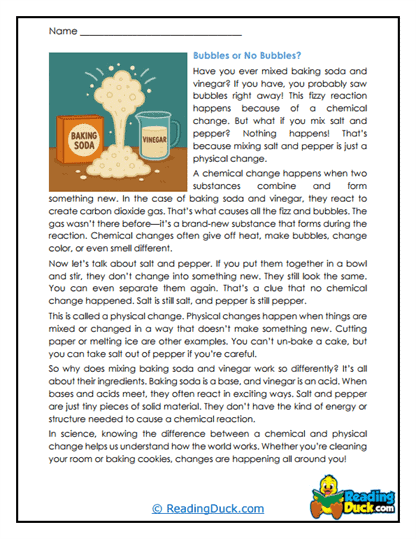
Mixing baking soda and vinegar creates a bubbling, foaming reaction that many children have seen before, but why does it happen? This passage explains that the fizz forms because a chemical reaction creates a brand-new gas called carbon dioxide. Students compare this exciting example with something much simpler, like mixing salt and pepper, where no new substance forms. By examining both situations side by side, readers learn the important difference between chemical changes, which create new substances, and physical changes, which simply combine or rearrange materials. Familiar examples help students understand how scientists observe clues to determine what kind of change has taken place.
This engaging nonfiction passage strengthens critical-thinking skills by encouraging students to compare observations and explain their reasoning. Children build reading comprehension while expanding their science vocabulary with words such as chemical change, physical change, reaction, carbon dioxide, and substance. Learning to recognize these differences helps students better understand the world around them, whether they’re baking, experimenting in class, or simply noticing everyday changes at home.