
Comparing Energy Sources
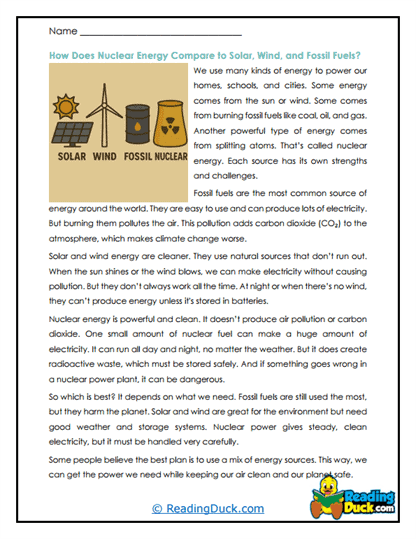
There are many different ways to produce electricity, and each comes with its own strengths and challenges. In this reading passage, students compare nuclear energy with solar power, wind energy, and fossil fuels. They learn that fossil fuels provide dependable electricity but release greenhouse gases, while solar and wind produce clean energy but depend on weather conditions. Nuclear power offers reliable electricity with very low carbon emissions during operation, but it also creates radioactive waste that requires careful storage. Rather than declaring one energy source “best,” the passage helps students understand why many communities use a combination of energy sources to meet different needs.
Reading comparison texts helps students build stronger analytical thinking while improving nonfiction comprehension. Children practice organizing information into categories, comparing evidence, and drawing reasonable conclusions based on facts presented in the text. Vocabulary such as renewable energy, fossil fuels, solar power, wind energy, carbon emissions, and power grid expands students’ understanding of both science and current events. The engaging examples help connect classroom learning to the energy choices people make around the world every day.
Questions:
Answer Keys: