The short a sound is one of the first vowel patterns children learn, showing up in simple, high-frequency words like cat, bag, and map. Because it is so common, mastering this vowel sound builds a foundation for early decoding success. In these passages, students see the short a appear again and again, not just in isolation, but in the flow of a real story. This allows them to connect sound to meaning, making phonics feel purposeful and relevant.
Our collection of Short A Reading Passages offers a variety of fun and creative stories-about cats, trains, parties, and even space adventures-all designed to highlight the short a vowel. Each passage is paired with comprehension questions that challenge students to think about what they read while also reinforcing phonics recognition. The worksheets are easy to use in the classroom or at home, with answer keys provided for quick feedback.
By practicing reading comprehension with short a passages, students strengthen both their decoding accuracy and their ability to understand connected text. They not only become more confident at spotting and pronouncing short a words, but they also learn to follow story events, answer questions, and make meaning as they read. This combination of phonics and comprehension is exactly what helps young readers move from sounding out words to becoming fluent, thoughtful readers.
Looking At Each Worksheet
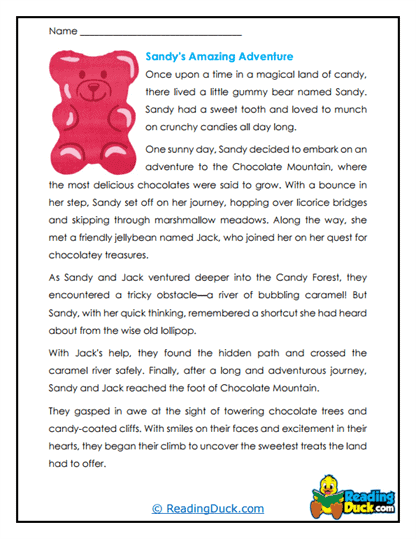
Candy Quest
This passage sends students on a playful hunt for candy treasures, with plenty of short a words like map, bag, and cap tucked into the adventure. The quest keeps readers engaged as they follow the steps of the journey, while also reinforcing the vowel sound through repetition. The comprehension questions encourage students to recall details from the quest and think about the order of events. While reading, they'll naturally highlight the "a" sound in words that drive the plot forward. The story makes phonics practice feel like a game, ensuring students stay focused. It's a fun way to strengthen decoding while also working on sequencing skills.
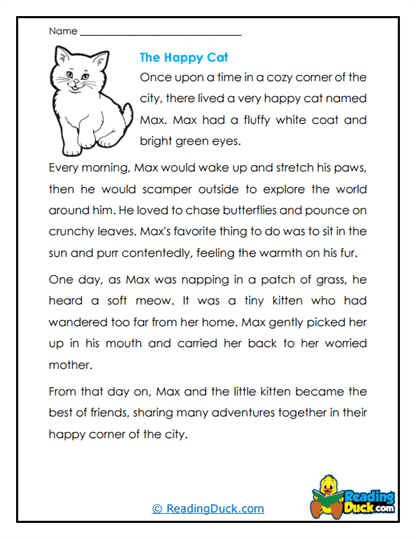
Cozy Cat
This story features a laid-back cat enjoying naps on a mat, under a hat, or on a warm lap. Students hear and see the short a sound repeated in almost every sentence, giving them repeated exposure without it feeling forced. The comprehension focus is likely on where the cat likes to rest and what makes it feel cozy. Students can point out or underline short a words as they follow along with the silly, snuggly antics. This combination helps tie sound recognition to story meaning. The worksheet encourages both phonics mastery and reading for detail.
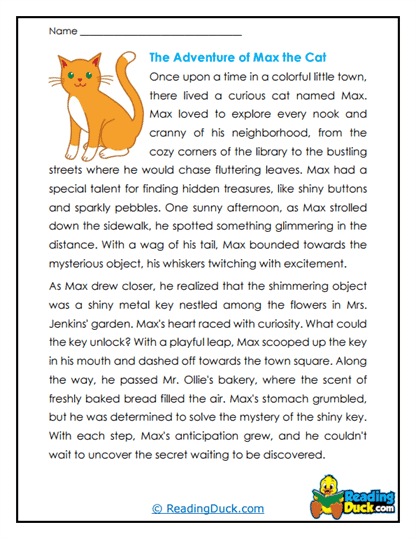
Curious Cat
Here, a mischievous cat explores its surroundings-peeking in a bag, chasing a bat, or startling a rat. The passage is filled with short a words that stand out as the cat's curiosity grows. Students answer questions about what the cat discovers, drawing their attention back to both the events and the phonics pattern. The repeated short a sound builds decoding strength while students read for meaning. This story gives them a chance to connect sound, word, and action in context. It's an engaging way to build both comprehension and fluency.
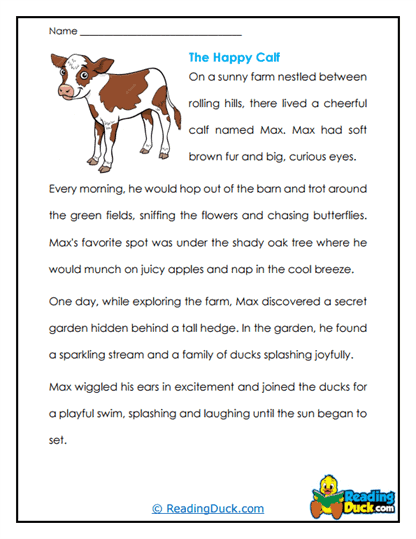
Farm Friends
On the farm, readers meet animals and objects like a ram, a ham, and a barn. These farmyard details bring in rich short a vocabulary, making the sound highly visible. Comprehension questions may focus on what the friends do together or how life on the farm works. The familiar setting makes it easy for students to visualize while reading. As they identify short a words, they strengthen both vocabulary and phonics knowledge. This worksheet combines topic-based learning with sound recognition for maximum impact.
Jungle Journey
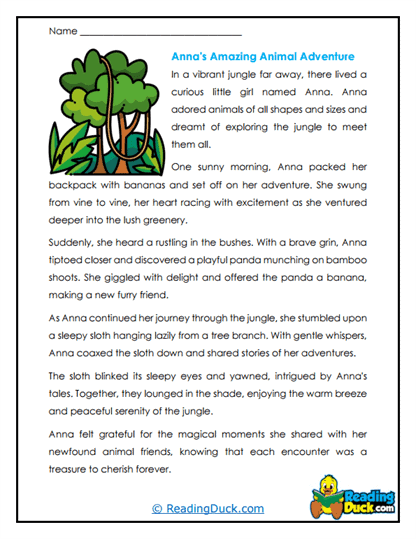
This adventurous passage follows a trek through the jungle with a trusty map and encounters with bats or even a hidden camp. The theme draws students in with excitement and mystery, while layering in the short a pattern repeatedly. The comprehension tasks may ask about the order of events or discoveries along the way. Readers stay focused on the storyline while reinforcing their phonics awareness. The adventure setting makes practicing vowel sounds feel exciting instead of routine. It's a powerful blend of fun and focused learning.
Panda Party
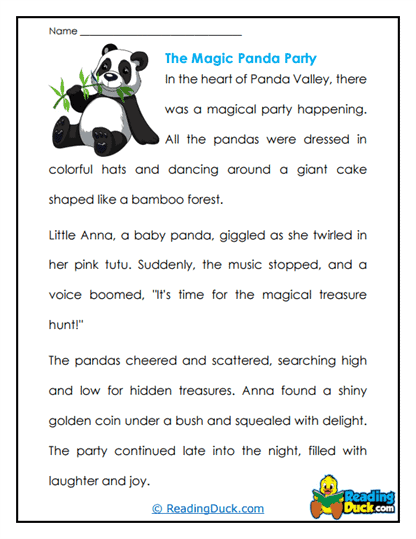
In this lively story, pandas throw a party complete with hats, bags, and plenty of snacks. The upbeat theme makes the short a words more memorable as students laugh their way through the celebration. Questions might ask what the pandas did at the party or what foods were served, reinforcing detail-oriented comprehension. Spotting the vowel sound in playful words ensures that phonics practice feels connected to fun. The worksheet shows that reading is both purposeful and entertaining. This one works especially well for group reading activities.
Silly Snail
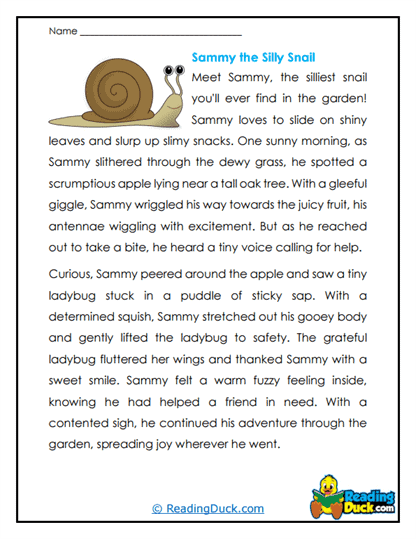
Students meet a quirky snail who may wear a hat, carry a pan, or leave a trail. The absurdity of the character ensures that readers stay entertained while noticing the short a sound. Questions about what makes the snail "silly" encourage close reading and attention to details. Phonics awareness is strengthened as students underline or call out short a words during the read-aloud. The humor makes the vowel sound stick in their minds long after the story is finished. It's a playful mix of decoding and comprehension practice.
Space Adventure
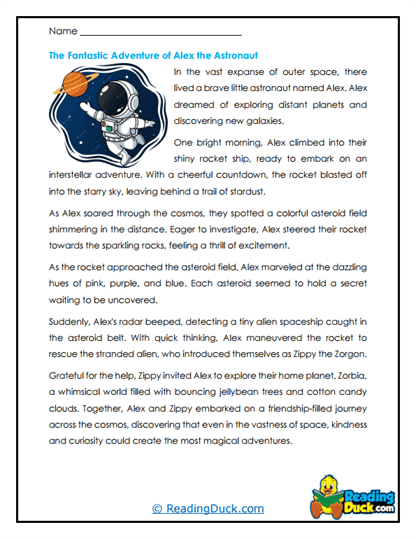
This passage blasts off into outer space, where astronauts and aliens cross paths with short a items like a cap, bag, or even a laser tag game. The unexpected mix of science fiction and phonics grabs attention immediately. Comprehension questions may focus on where the travelers went or what they discovered. Readers identify short a words in futuristic contexts, which makes phonics feel more flexible and useful. The unusual setting sparks creativity as well as reading fluency. It's an out-of-this-world way to reinforce vowel sounds.
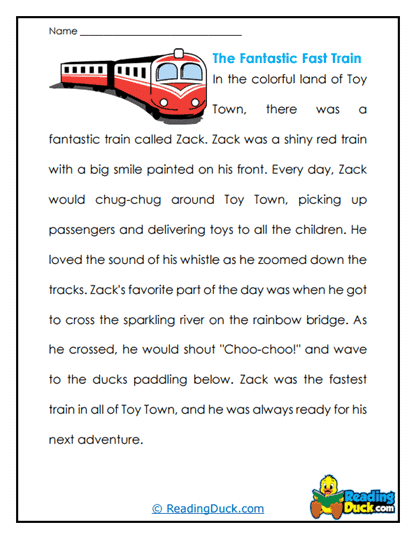
Speedy Train
The tale of a train racing down the track adds rhythm and excitement to the short a pattern. Vocabulary such as bag, cart, and hat builds repetition of the target sound. Questions may explore where the train is headed or who is on board, supporting comprehension of plot and setting. The fast-paced style naturally lends itself to fluency practice. Students practice both decoding accuracy and expression as they read quickly. The train theme makes phonics learning dynamic and memorable.
Tiny Explorer
A brave explorer with a map and bag sets off to discover caves, bats, and hidden camps. This passage brims with short a words while keeping students engaged with the theme of adventure. The comprehension activities ask them to recall steps of the journey or describe what was found. Reading becomes both a discovery of story and of phonics patterns. The text gives readers a chance to apply sound recognition in a meaningful context. It's perfect for building both curiosity and reading confidence.
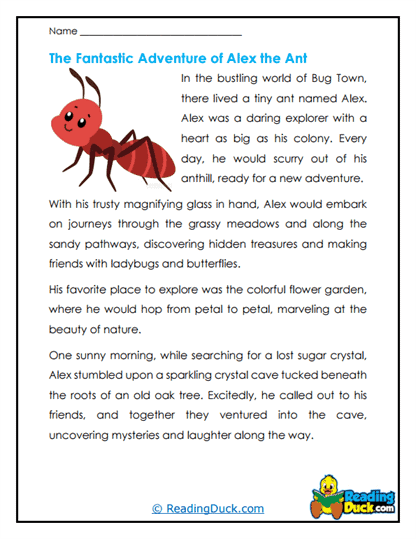
An Example Short A Reading Passage
Alex the cat sat on a mat and gazed at a hat that lay near a bag. He had a map and a can of jam in his hand as he planned a trip to a camp on a vast flat land. The cat sprang up, took the map and the bag, then ran fast across the sand. At the camp, Alex asked for jam and sat by a tall tree. Soon, he had a snack and a nap before sunset.
Where Is The Short A Pattern?
You can easily spot the short a sound throughout the passage in words like cat and mat, as well as map and bag. These examples make the short a pattern clear and frequent, helping students notice how the sound appears in different contexts.
Make sure to bookmark our website now.
Enjoy all our free reading worksheets.
Our materials adhere to the principles of the Science of Reading.