The short e sound is a key foundational vowel pattern that appears in everyday words like bed, pen, and red. Mastering this simple yet essential sound strengthens early decoding skills and gives readers the confidence to tackle more complex words. In our Short E Reading Passages Worksheets, children encounter this vowel sound within full, engaging sentences-boosting not just phonics awareness, but also making phonics feel meaningful and connected to real reading.
Our collection delivers a range of fun, illustrated passages-each designed to capture young learners' attention and make reading practice enjoyable. Each passage includes multiple-choice comprehension questions, helping students apply what they've read and reinforcing their understanding of both the sound and the story. The ease of downloadable PDFs and answer keys makes these worksheets a practical, ready-to-use resource for busy teachers, parents, and tutors.
By practicing comprehension with short e passages, students get repeated exposure to target vowel sounds in context. This fosters stronger decoding skills, improves reading fluency, and deepens text comprehension. As students learn to recognize the short e sound within stories, they build the essential bridge from decoding to fluent, meaningful reading.
Looking At Each Worksheet
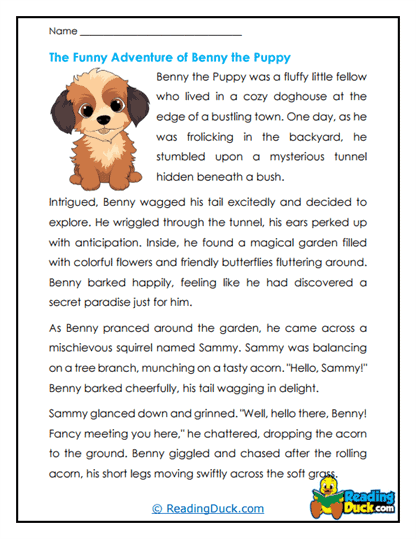
Benny's Backyard Tunnel
In this passage, Benny-and perhaps his pet-digs a hidden tunnel in the backyard, encountering tools and items like bed, pen, or hen along the way. The repeated "e" vowel sounds help students tune into the short e as they follow the tunnel adventure. Comprehension questions may ask where Benny dug the tunnel or what he found inside, weaving phonics with plot awareness. As they read, students can highlight or say the short e words to reinforce the sound. This mix of curiosity and sound focus keeps learning lively. It's a great story for blending decoding with narrative understanding.
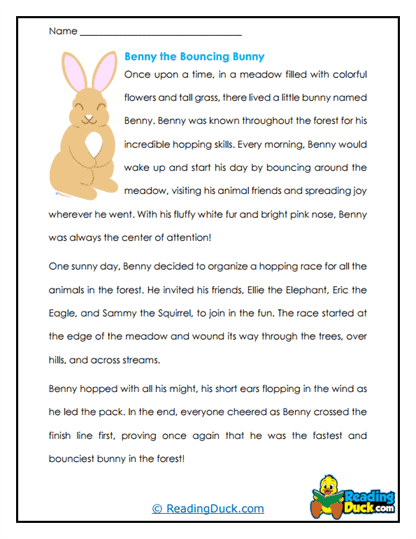
Benny's Hopping Race
Benny may hop from one spot to another-perhaps racing over wet grass or past a hen shed-packed with short e words. Students follow his playful leaps while hearing "e" in every hop. Questions likely invite them to recall how the race unfolded or who hopped fastest. Encouraging children to clap or echo each short e word builds auditory and phonics connection. The rhythmic nature of hopping makes this one fun and memorable. It strengthens sound awareness and story recall at the same time.
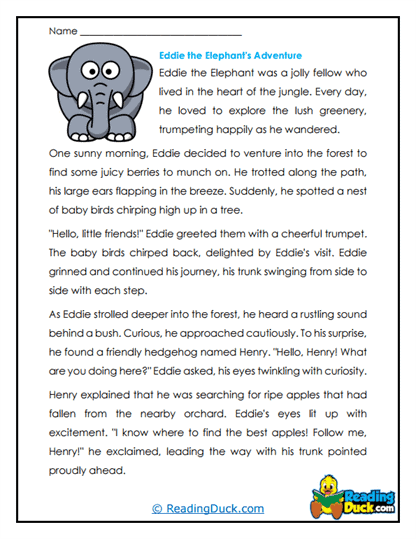
Eddie's Jungle Adventure
Eddie embarks on a jungle trek, meeting creatures and obstacles that include short e sounds-like a friendly hen, a hidden pen, or muddy ten tree stumps. As students explore the jungle with Eddie, they naturally encounter the target vowel in context. Comprehension tasks may ask what Eddie discovered or where he went next. Kids can underline the short e words, linking reading with phonics spotting. The adventure feels immersive and educational. This worksheet boosts both decoding confidence and narrative comprehension.
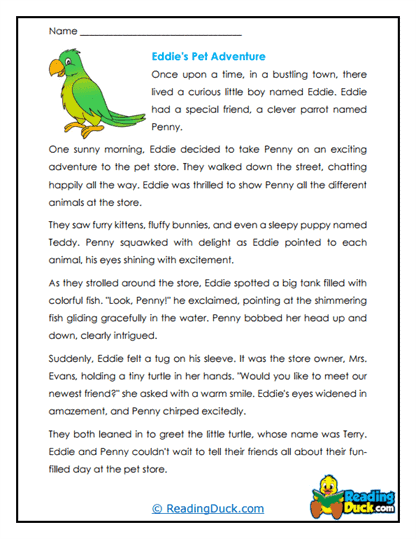
Eddie's Pet Store Visit
Here, Eddie visits a pet store filled with critters in pens, kittens, or even tanks-emphasizing the short e sound. Learners can visualize the store scene and enjoy noticing short e words throughout. Comprehension tasks might ask which pet Eddie liked best or what he ended up choosing. While reading, students can circle short e words, reinforcing pattern recognition. The everyday interaction feels relatable and fun. It supports reading comprehension while reinforcing the phonics focus.
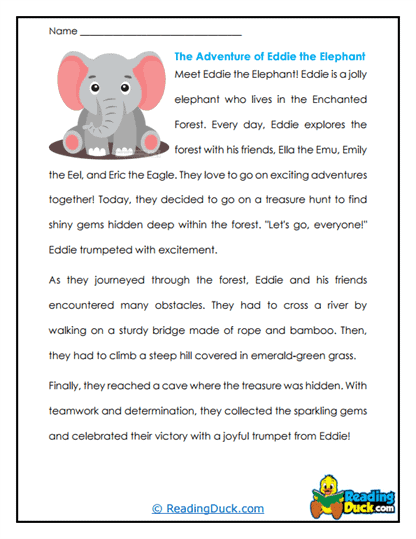
Eddie's Treasure Hunt
Eddie's hunt for treasure may involve map clues, hidden chests, or garden beds, all rich in short e words. Students follow along with excitement as they decode both the story and the sound. Questions likely focus on what Eddie found or what steps he took. Readers can look for and highlight short e words-combining meaning with phonics recognition. The treasure theme adds mystery and engagement. It's a compelling mix of story and sound practice.
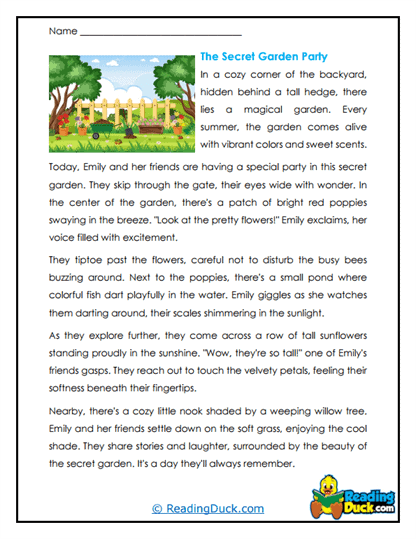
Emily's Secret Garden
In Emily's quiet garden, readers may meet beds of flowers, hidden letters, or a gentle hen-highlighting the short e sound in a calm setting. Comprehension prompts could ask what Emily discovered in her garden or what she did next. Students naturally see the short e pattern and can mark or whisper the words as they go. The gentle tone makes it soothing and skill-building. This worksheet brings both phonics and reading comprehension together in a peaceful vignette.
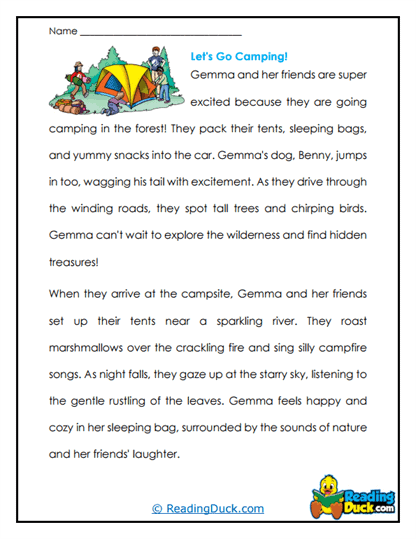
Gemma's Camping Trip
Gemma heads on a camping trip-maybe setting up tents, roasting treats over stews, or resting in reed beds-full of short e words. As the story unfolds, students practice decoding while visualizing the campsite. Comprehension questions might ask what Gemma did around the fire or what she packed. Highlighting short e words reinforces their phonetic recognition. The outdoor setting adds context and excitement. It's perfect for building fluency through story and sound.
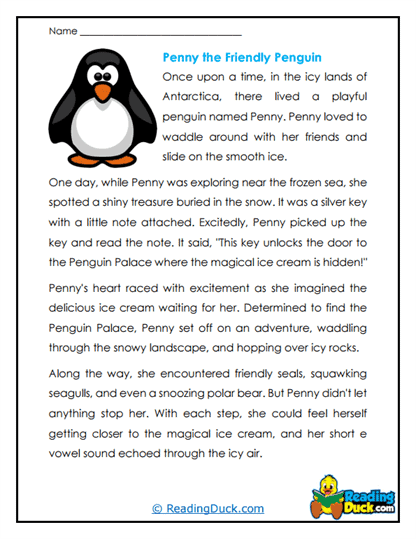
Penny's Ice Key Adventure
Penny embarks on a chilly journey to a frosty cabin or icy hen hut using a magical key. Each step features the short e sound. Comprehension tasks could ask what she unlocked or how she felt along the way. Readers benefit from both the story magic and repeated phonics exposure. Pointing out the short e words as they read strengthens both their decoding and comprehension skills. This one sparks imagination alongside phonics practice.
Petting Zoo Day
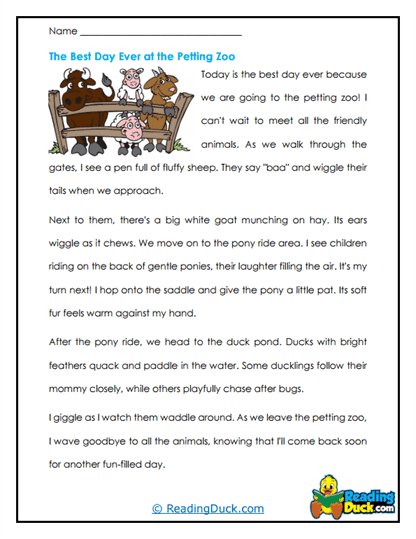
A visit to a petting zoo introduces animals like hens, sheep, or geese (with short e in sheep), plus pens and feeding pecks-keeping the short e sound in the mix. Questions might explore which animals were there or what Penny fed. Students can mark the "e" words and enjoy the zoo walk. The vivid animal scene encourages engagement. It's a great pairing of vocabulary, comprehension, and phonics.
The Magic Garden Party
At a whimsical garden party, guests sip lemonade, nibble cheese, or leave sweet treats on beds of flowers-all showcasing the short e sound. Read-aloud or shared reading is ideal: students can clap at each short e word. Comprehension questions may ask who came or what treats were served. This story makes phonics social and fun. It strengthens both decoding and story understanding through playful imagery.
An Example Short E Reading Passage
Zeke stepped into the pet shed and peered at every pen filled with hens, geese, and even a sleek red deer. He held a red pen and marked each crate that needed fresh feed. Next, he fetched a clean bed and placed it near the red fence. Then, he set the cheese and lemon wedges on the small wooden shelf. Finally, he rest, nestled in the shed's bed, satisfied with his work.
Where Is The Short E Pattern?
You can spot the short e sound in words like Zeke, pen, hens, red, deer, fetch, bed, fence, cheese, wedge, shelf, and rest. These examples help learners notice and internalize the short e pattern throughout different words and contexts.
Make sure to bookmark our website now.
Enjoy all our free reading worksheets.
Our materials adhere to the principles of the Science of Reading.