The short o sound shows up in everyday words like fox, log, pond, and shop, making it a vital pattern for early readers to master. In these worksheets, students meet the short o inside real sentences and kid-friendly stories, not just isolated word lists. Seeing and hearing the sound in context helps children map letters to sounds while following a storyline. This approach turns phonics practice into authentic reading, which keeps motivation high and skills growing.
Each worksheet features a lively passage intentionally packed with short o words so learners can spot the pattern again and again. The sound is highlighted through characters, settings, and actions-think frog on a log, dog at the dock, or robot with a box. Multiple-choice comprehension questions guide students to focus on meaning while they also notice the target vowel sound. The result is a balanced routine: decode, understand, and enjoy.
Practicing reading comprehension with short o passages strengthens decoding accuracy, automaticity, and confidence. Students learn to recognize the vowel sound quickly, then carry that accuracy into fluent reading of connected text. As they answer questions and discuss details, they link the short o pattern to the plot, vocabulary, and sequence of events. Over time, this tight connection between phonics and meaning builds true reading fluency and comprehension.
The Magic of Short O Reading Passages
Every big reader starts small often with the simple joy of sounding out words like dog, log, or pot. These early moments of connection between letters and sounds are the building blocks of literacy, and that's exactly what Short O Reading Passages are designed to strengthen. They're short, meaningful stories packed with words that share the same vowel sound, giving children a chance to practice reading with purpose and confidence.
Instead of memorizing word lists, kids get to see the short O sound come to life in context. Maybe a fox spots a box, or a frog hops onto a log - simple scenarios that turn phonics into storytelling. By weaving target sounds into real sentences, children learn that reading isn't just about decoding letters; it's about discovering meaning. Each passage encourages them to recognize patterns, predict words, and grow more fluent - all while having fun.
Many of these passages also include comprehension questions and playful follow-ups, helping kids think beyond pronunciation. They might circle short O words, answer "what happened next" questions, or retell the story in their own words. This combination of decoding and understanding builds the foundation for confident, curious readers who don't just read the words - they get them.
An Example Short O Reading Passage
Tom the dog trotted to the dock with a box and set it on a flat rock by the pond. A fox got a drop of water on its nose and shook it off with a quick hop. Tom took the box, got a mop, and dabbed the top spot so it would not drip. Then he sat on a log to stop and watch the frogs plop and bob.
Where Is The Short O Pattern?
Look for short o in words like dog and rock-both show the sound clearly in the middle of the word. You can also spot it in action words such as hop and stop, which repeat the same vowel sound while you follow what happens in the scene.
Looking At Each Worksheet
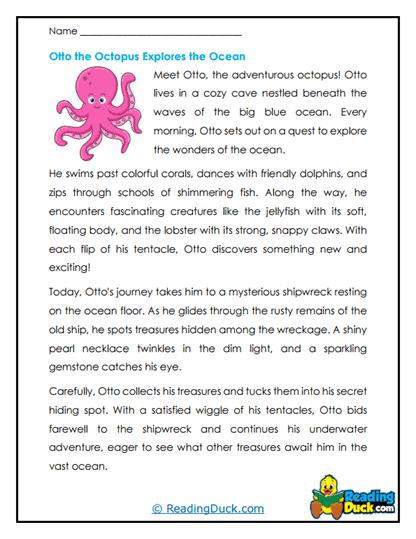
Ocean Explorer
This adventurous story follows a kid who spots rocks, docks, and a bobbing box while sailing along the coast. Short o words like dock, rock, box, and toss thread through every step of the trip. The comprehension focus asks readers to trace the route and explain what the explorer found first, next, and last. Students practice scanning sentences for short o while confirming details from the text. They learn to circle or underline target words without losing the flow of the story. It's a strong blend of sound recognition, sequencing, and visualization.
Pond Dive
Set at a rippling pond, this passage shows frogs on logs, ducks that plop, and a kid who drops a small prop. The text repeats short o in words like pond, frog, log, and drop. Comprehension tasks prompt students to describe who was at the pond and what each creature did. Readers practice noticing the pattern while explaining actions and cause-and-effect. The calm, nature-based setting invites careful observation of both plot and phonics. It's ideal for building vocabulary and targeted decoding at the same time.
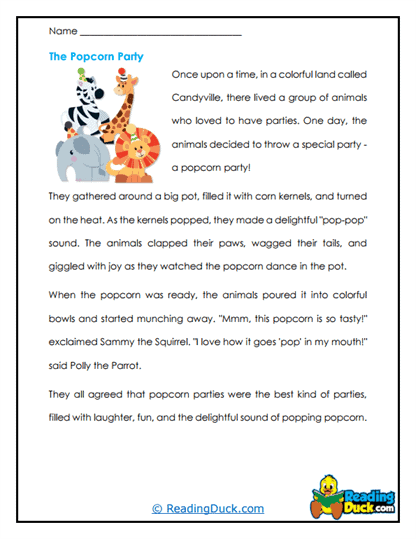
Popcorn Celebration
A class hosts a hot popcorn fest where kernels pop, kids hop to help, and a pot sits on top of the stove. Short o appears constantly in pop, hot, pot, and shop for snacks. Questions ask readers to identify key event details and why the celebration mattered to the class. Students track short o words as they follow directions, steps, and outcomes. The scene's rhythm makes spotting the pattern feel automatic. It's perfect for connecting procedural understanding with sound practice.
Popcorn Party
This companion story spotlights a party plan with a short shopping list, a big pot, and nonstop pops. Repeated short o in pop, pot, stop, and chop (for toppings) helps the sound stand out. Comprehension items center on problem-solving-what to do when the pot gets too hot or the pops won't stop. Students learn to scan for target words while explaining solutions from the text. The playful, social setting makes the phonics work memorable. It builds flexible decoding as well as step-by-step reasoning.
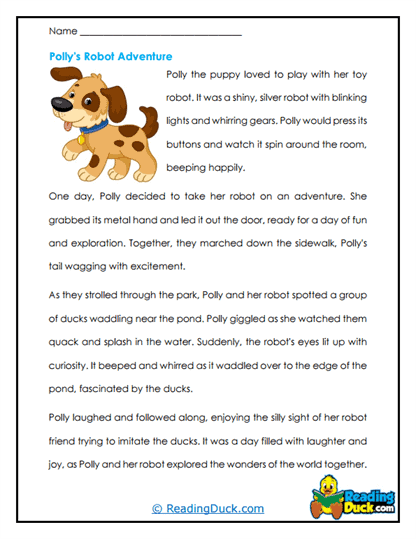
Puppy's Robot
A pup meets a small robot with a box of bots that can hop, stop, and mop a spot. Short o pulses through robot, box, bot, spot, and stop. Questions guide students to compare what the pup and robot can do and where they go. Readers mark short o words as they track traits, actions, and setting. The friendly duo keeps the focus on meaning even as the sound repeats. It's a charming way to link character details to phonics practice.
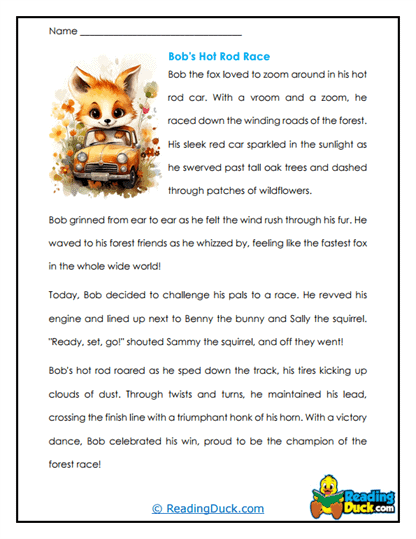
Race Day
On a looping track, kids jog, hop, and stop at a spot marked with a big dot. The passage uses short o in jog, stop, spot, and lot of laps. Comprehension prompts target sequence and stamina-who set the pace, who won, and why. Students underline short o while citing text evidence for their answers. The swift pace encourages phrasing and expressive rereads. It pairs fluency, decoding, and text-based responses in one read.
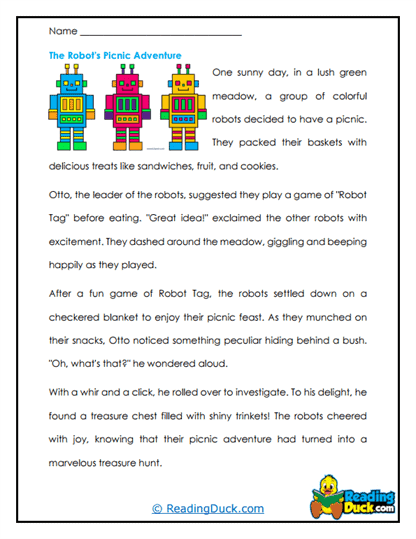
Robot Picnic
Robots pack a small box of snacks, find a soft spot, and drop a cloth on the sod for lunch. Short o shows up in box, spot, drop, and sod. Questions ask readers to list items packed and explain how the group chose the picnic spot. Students scan for vowel patterns while summarizing key details. The gentle plot invites careful rereading to catch all the short o words. It's a friendly context for decoding with purpose.
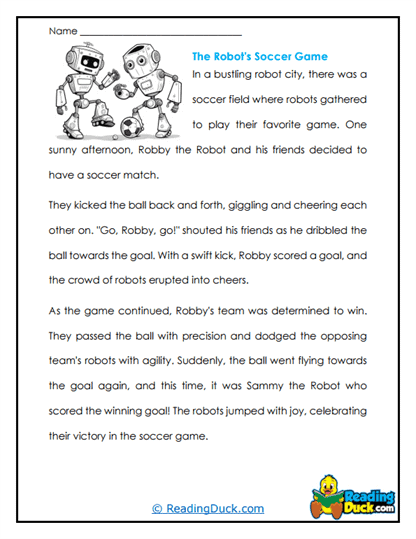
Robot Soccer
Metal friends trot onto a lot to play a brisk match, tapping the ball across rocks and rods. The text repeats short o in trot, lot, cross, and rod. Comprehension work spotlights goals, teamwork, and sports vocabulary in context. Students highlight target words while describing how one play led to the next. The action helps short o stick through movement and repetition. It supports fluency, sequence language, and precise decoding.
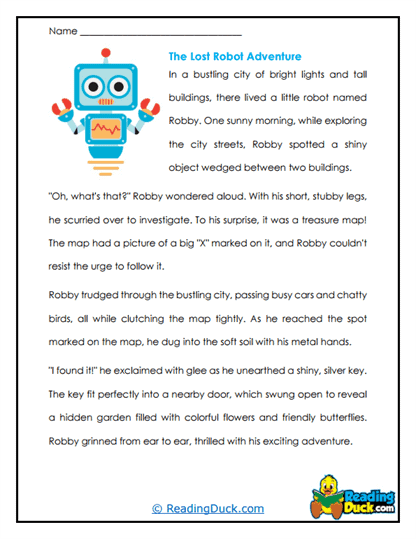
Robot Treasure
A map leads bots to a rocky cove and a locked box under a mossy log. Short o threads through rock, box, locked, and log. Questions focus on clues, locations, and how the team solved the final lock. Readers mark short o examples while inferring steps from hints in the text. The puzzle-quest structure motivates close reading for both meaning and sound. It's great practice for evidence gathering and pattern spotting.
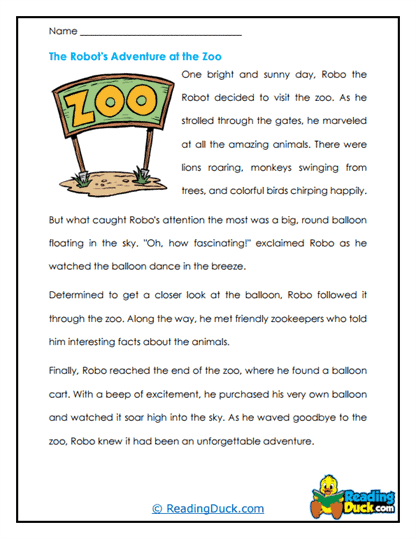
Zoo Excitement
A trip to the zoo brings stops at the fox pen, the otter pool, and the big rock den. Short o appears in fox, otter, rock, stop, and shop at the end. Comprehension asks which exhibits were most exciting and why. Students search for short o as they compare animals and recall details. The vivid setting supports vocabulary growth alongside decoding. It's an engaging way to connect animal facts, memory, and phonics.
Make sure to bookmark our website now.
Enjoy all our free reading worksheets.
Our materials adhere to the principles of the Science of Reading.