About Our Silent Letters in Double Consonants Reading Comprehension Worksheets
Silent letters in double consonants appear when two identical letters are written but only one sound is heard, as in letter, butter, kitten, address, and hassle. In connected text, this pattern shows up in names, actions, and setting words-often right where readers rely on sound-by-sound decoding. These worksheets help students notice that the second consonant doesn't add a new sound; instead, the pair works together to mark the vowel or the word's structure.
The collection features short, high-interest passages with the double-consonant pattern built into the narrative and vocabulary. Students are prompted to underline or highlight target words, read for meaning, and then answer comprehension questions that bring them back to the text. Hints, callouts, or word boxes cue readers to look closely at the doubled letters while still following the story.
Regular practice with these passages improves decoding accuracy (recognizing that tt/ll/nn/ss/zz are heard once), and it also strengthens comprehension because students spend less effort wrestling with tricky spellings. Over time, learners read more smoothly, spell with greater confidence, and connect the pattern to real words in context.
Looking At Each Worksheet
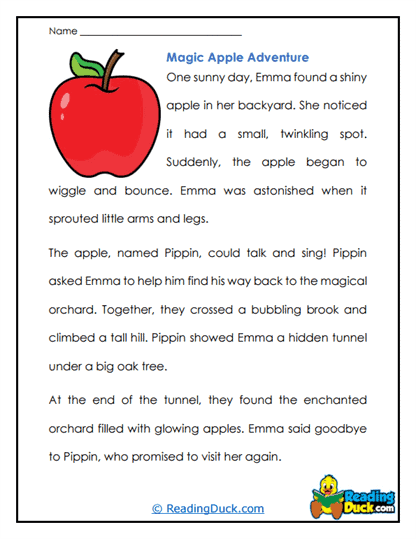
Apple Magic
A curious kid visits an orchard where a little note on a barrel promises a surprising, apple-themed trick. The passage sprinkles in words like apple, letter, and hassle so students meet the double-consonant pattern naturally in context. Comprehension questions focus on sequence (what happened first/next/last) and cause-and-effect within the orchard scene. Readers are guided to notice that the doubled letters do not create an extra sound-pp and tt are pronounced once. While scanning for those spellings, students still track details that matter to the plot. This worksheet is great for tying phonics attention to careful, meaning-focused reading.
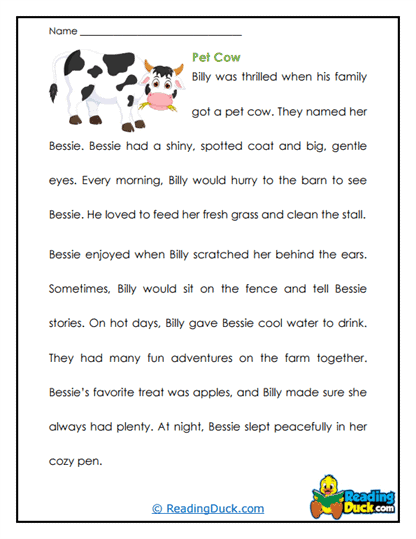
Barnyard Bond
Two friends huddle by the fence to help a bunny and a puppy settle in for the night. The story uses words like bunny, puppy, and cattle so students see double consonants across names and nouns they already know. Questions center on setting details and character choices, prompting text evidence. The phonics note reminds readers that the second consonant is "silent" in terms of sound-nn, pp, and tt are heard once. Students practice scanning for doubled letters while summarizing what the helpers did. It's a warm, supportive context for decoding and comprehension together.
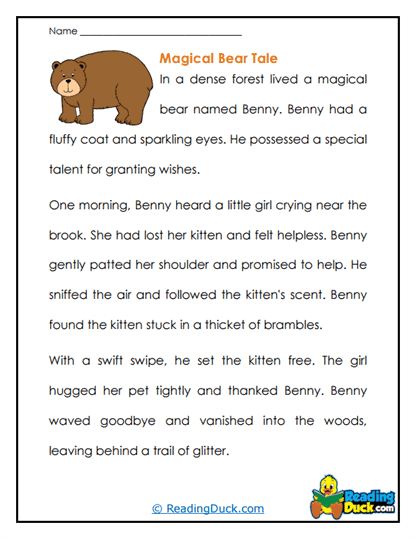
Bear Wish
A camper whispers a little wish to a carved bear at a trail stop and leaves a ribbon on a hollow stump. Target words like little, hollow, and ribbon spotlight how double consonants look big but sound small. Comprehension items ask about mood, setting clues, and the character's goal. The passage nudges students to match sound to spelling: ll, bb, and tt show up in print but blend to a single consonant sound. Readers practice flagging the pattern without losing the thread of the story. It's perfect for guided reading with a quick phonics check-in.
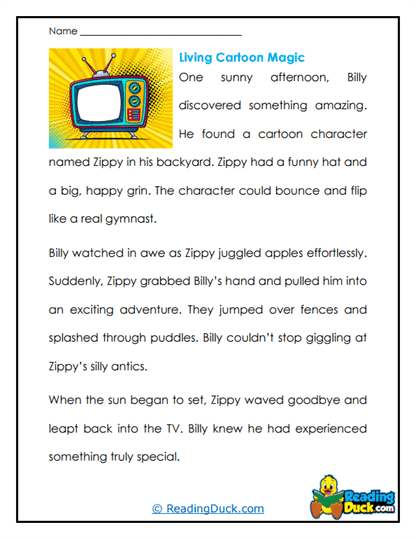
Cartoon Caper
During a school puppet show, a missing prop leads to a silly backstage hassle. Words like puppet, fuzzy, and letter fold the double-consonant pattern into lively dialogue. Questions highlight problem/solution and key details from the caper. Students look for pp, zz, and tt spellings and confirm that each pair represents one heard consonant. The hunt for the prop becomes a hunt for patterns, keeping attention on meaning and print at the same time. This sheet builds flexible decoding in a funny, fast-moving scene.
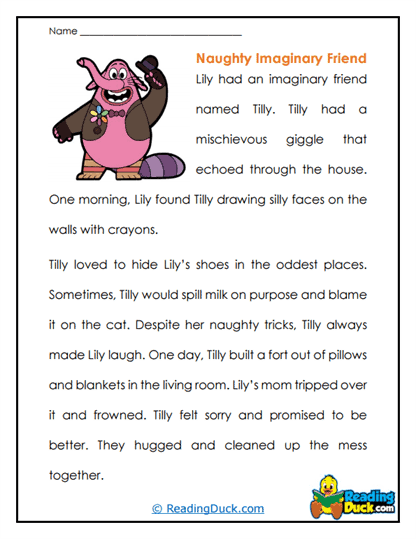
Mischief Friend
A prankster leaves a little trail of sticky notes that say "address me if you can!" around the classroom. Target words such as address, kitty (in a clue), and summer appear in directions and signposts. Comprehension questions ask readers to infer who the prankster might be and how the clues connect. The phonics focus reminds students that the doubled letters-dd, tt, mm-don't double the sound. Learners underline each instance while tracking the riddle's steps. It's a playful way to strengthen attention to print and logical reasoning.
Mystery Kitty
A kitten vanishes during library time, leaving behind a letter bookmark with cryptic hints. The passage threads in kitten, letter, and coffee (on a poster) to reinforce multiple double-consonant spellings. Questions focus on gathering evidence and identifying the best clue. Students practice hearing only one t in kitten and one t in letter while reading for meaning. The combined search-for the cat and for the pattern-keeps engagement high. This worksheet emphasizes scanning, decoding, and inference in equal measure.
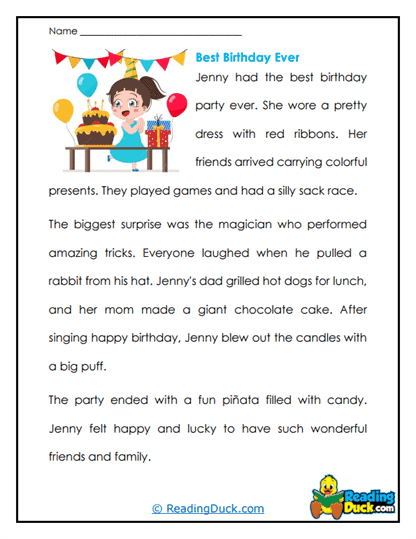
Party Surprise
Streamers, ribbon, and banner set the stage as friends plan a secret party after finding a little to-do list. Vocabulary like ribbon, banner, and address brings the double-consonant focus into real party prep. Questions check sequence, details, and who did what job. Students mark the doubled letters and note that only one consonant sound is heard in speech. While identifying print patterns, they must still track the plan's steps to understand the surprise. The activity ties phonics precision to following directions in text.
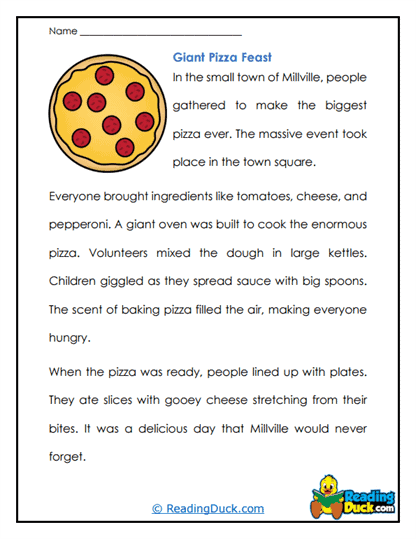
Pizza Party
A group negotiates toppings for a pizza and shares a fizzy drink while a buzz of chatter fills the room. The text spotlights zz in pizza, fizzy, and buzz, reminding readers that the pair stands for a single heard consonant. Comprehension items ask about opinions, reasons, and the final choice. Students circle the doubled letters, then read the sentence aloud to feel the single sound. This reinforces the idea that spelling can look bigger than it sounds. It's a tasty way to blend pattern recognition with opinion-based reading.
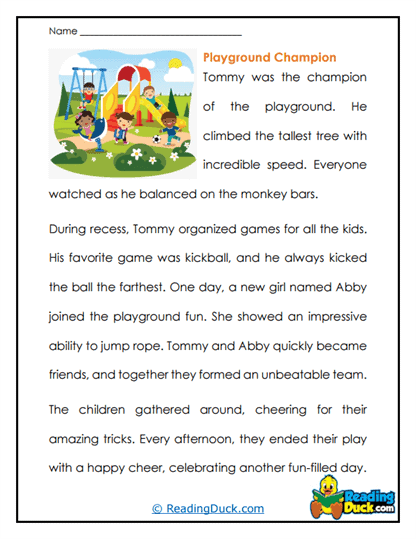
Playground Pals
During recess, kids hustle to the swings, take a little break at the bench, and write a friendly letter. Words like little, letter, and hustle give repeated practice with tt and tt/ll. Questions target main idea and supporting details from the recess routine. The phonics prompt reminds students that the double letters are not pronounced twice. Readers scan, underline, and then paraphrase what happened in their own words. This sheet pairs movement-filled content with steady decoding practice.
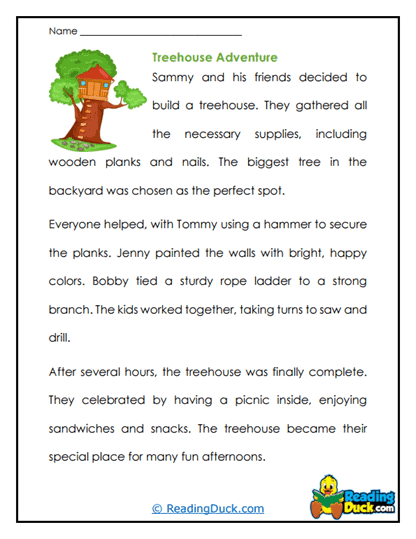
Treehouse Builders
Siblings sketch plans, carry a ladder, and spread butter on sandwiches as they draft an address plate for their fort. The passage embeds ladder, butter, and address to spotlight common double-consonant spellings. Questions emphasize steps in a procedure and tools the builders used. Students listen for just one consonant sound even when two letters appear. As they notice the pattern, they also check instructions and outcomes in the text. It's a hands-on theme that cements phonics and procedural comprehension together.
An Example Silent Letters in Double Consonants Reading Passage
Molly tucked a letter into her kitten's collar, tied it with a blue ribbon, and met her little brother by the ladder to the treehouse; they planned to paint the address sign before lunch and share a butter sandwich when the job was done.
Where Is The Silent Letters in Double Consonants Pattern?
Look for doubled letters that make just one consonant sound. In "letter," the tt is written twice but you only hear one /t/; in "ribbon," the bb appears as a pair but is pronounced once. These patterns repeat across the passage, helping readers connect spelling to sound without losing the story's flow.
Make sure to bookmark our website now.
Enjoy all our free reading worksheets.
Our materials adhere to the principles of the Science of Reading.