About Our Silent P Reading Comprehension Worksheets
Our Silent P Reading Passages Worksheets provide students with an engaging way to explore a tricky phonics pattern: the silent P. This letter appears in words like psychology, pneumonia, receipt, and pterodactyl, where it is written but not pronounced. For many learners, silent letters can feel confusing, but by weaving them into meaningful stories, these worksheets help students decode and comprehend more confidently.
Each passage is paired with a colorful illustration and followed by comprehension questions that encourage readers to think deeply about the text. The questions not only focus on story details but also guide learners to recognize and understand silent P words in context. By blending phonics and comprehension in this way, students practice two essential literacy skills at once.
Using these worksheets regularly helps children gain confidence with silent letters, improve their fluency, and strengthen spelling awareness. The silent P may not make a sound, but in these passages, it makes a big impact on how students read, think, and learn.
Looking At Each Worksheet
Butterfly Quest
In this lively passage, readers join a group of explorers searching for a rare butterfly deep in the forest. Along the way, words like psychology and pterodactyl appear in their notes, making the silent P an important part of the reading. The story challenges students to track events carefully, focusing on how characters use knowledge and tools to achieve their goal. Comprehension questions push readers to recall details and identify the role of silent P words within the adventure. As they read, students can underline each silent P word, noticing how the letter is written but not spoken. This worksheet makes phonics practice part of an exciting nature quest.
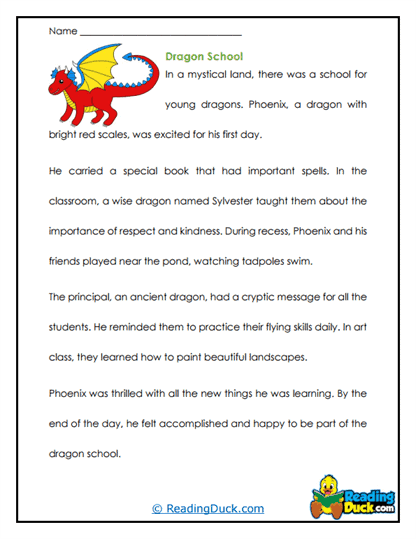
Dragon School
A group of young dragons attend a magical school where they learn unusual subjects, including silent P words in their spell books. Words like psychology and pneumonia appear in the curriculum, reminding students that some letters stay quiet even in fantastical settings. The narrative keeps readers engaged with its humor and creative details, while also encouraging close observation. Comprehension questions guide students to recall what each dragon learns and how the silent P words fit into the story. Learners can circle the silent P examples and think about how spelling sometimes looks different than it sounds. This worksheet makes phonics both magical and memorable.
Enchanted Picnic
During a whimsical picnic in a meadow, children meet fairies who share foods, recipes, and stories filled with silent P words. Words like receipt and pterodactyl are sprinkled naturally into the dialogue, connecting phonics to an enchanting setting. The passage emphasizes friendship and imagination, which makes silent letter practice feel lighthearted and fun. Comprehension tasks encourage students to recall events, interpret characters' actions, and notice the phonics pattern. While reading, students can highlight silent P words and discuss why the P is silent in each case. This activity blends literacy practice with playful storytelling.
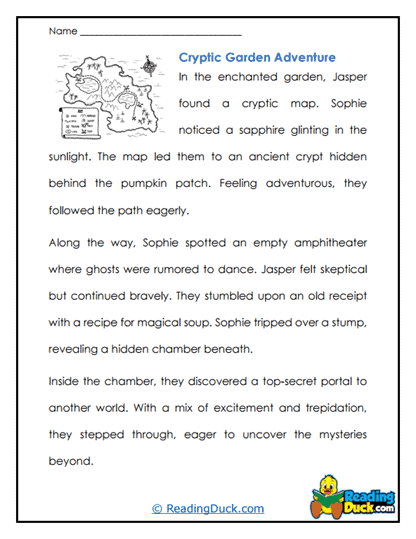
Garden Cryptic
A hidden garden reveals secret inscriptions that contain silent P words like psychology and receipt. Students follow characters as they decode these clues, making phonics recognition part of the mystery. The story keeps readers invested with its puzzle-like quality, giving purpose to spotting unusual words. Comprehension questions focus on sequencing clues and drawing inferences about what the characters discover. Readers are encouraged to mark silent P words and reflect on how spelling patterns affect reading. This worksheet turns phonics into a decoding adventure.
Jungle Quest
Explorers trek through dense jungle terrain, guided by ancient carvings and maps featuring silent P words. Words like pterodactyl and receipt appear in surprising ways, reinforcing the lesson. The passage creates a strong sense of atmosphere, which supports comprehension while integrating phonics seamlessly. Comprehension questions highlight setting, detail, and vocabulary, ensuring a balanced approach to learning. Students can underline silent P words as part of their "exploration clues." This worksheet makes the silent P part of a thrilling adventure.
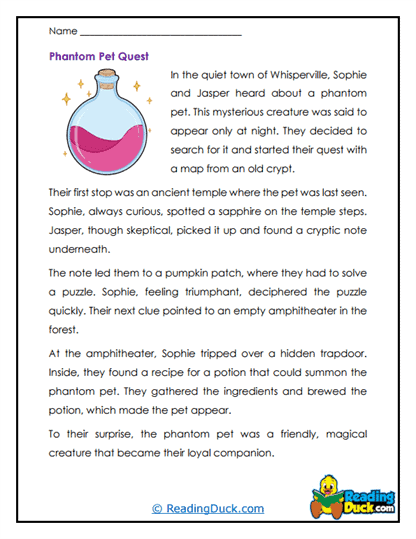
Pet Potion
In a lighthearted tale, children mix magical potions for their pets using recipes that include silent P words. Words such as receipt and pneumonia pop up in the potion instructions, reminding readers to look carefully at spelling. The playful tone keeps students engaged while offering repeated exposure to the silent P. Comprehension questions test understanding of both steps in the potion process and the role of silent P words. Readers can circle each example and connect it to the story's theme of creativity. This worksheet makes silent letters part of imaginative fun.
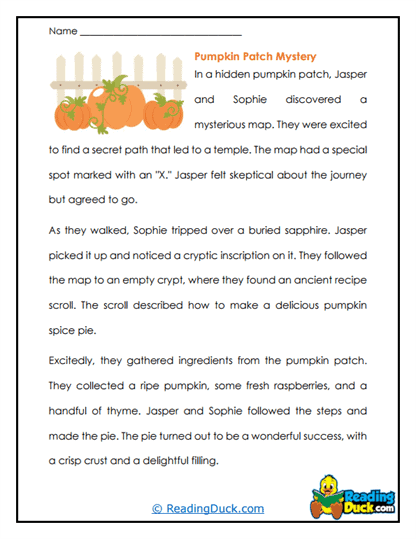
Pumpkin Path
Set on a crisp autumn day, this story takes students down a pumpkin-lined path where hidden clues involve silent P words. Words like psychology and receipt fit naturally into the narrative, weaving phonics into seasonal imagery. The setting's cozy and mysterious tone draws readers in while keeping the focus on literacy. Comprehension tasks highlight sequence, vocabulary, and mood, helping students deepen understanding. Learners can underline or list silent P words as they go, making the lesson interactive. This worksheet combines fall fun with phonics discovery.
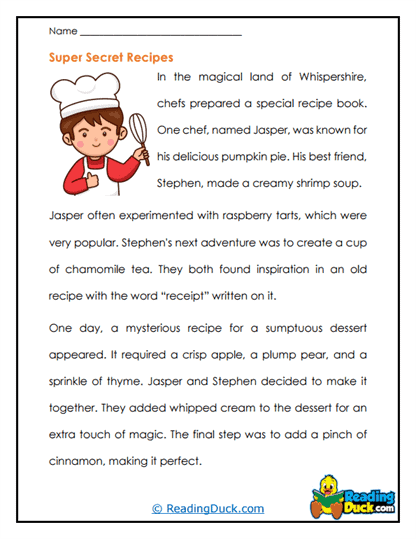
Recipe Mystique
A cooking mystery unfolds as characters follow a recipe written with unusual instructions that contain silent P words. Words like receipt and pneumonia appear in surprising places, creating both humor and curiosity. The story teaches students that silent letters can occur even in everyday settings like a kitchen. Comprehension questions direct attention to detail and meaning, while reinforcing the phonics lesson. Students can highlight silent P words and discuss why the P is not pronounced. This worksheet blends everyday life with a spelling challenge.
Seaside Secrets
At the ocean's edge, characters uncover secrets etched into rocks and shells-many of which contain silent P words. Words like pterodactyl and psychology make their way into the story naturally, supporting phonics recognition. The seaside setting offers descriptive imagery that supports comprehension as well. Questions ask readers to recall details and identify silent P words, blending skills seamlessly. Students can underline these words and share them aloud to practice the pattern. This worksheet makes phonics feel like a seaside discovery.
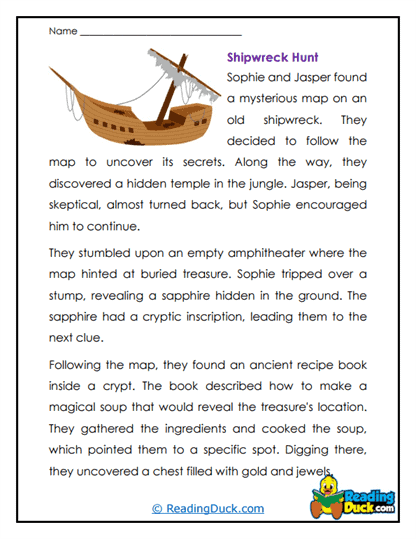
Shipwreck Search
In this adventurous tale, students join a shipwreck exploration where silent P words are written in old maps and logbooks. Words such as pneumonia and receipt show up as part of the mystery. The narrative invites readers to think critically about what the characters uncover. Comprehension questions test inference, sequencing, and phonics recognition. As they read, students can circle or list the silent P words to reinforce spelling awareness. This worksheet combines adventure, history, and literacy in one.
An Example Silent P Reading Passage
Sam unfolded an old receipt he had found tucked inside a library book, the paper crinkling in his hands. At the top was a strange note about psychology, and at the bottom, a faded drawing of a flying pterodactyl. He wondered if the clue might point to a hidden treasure, though the silent P made the words look more puzzling than they sounded. The mystery deepened when his friend mentioned pneumonia, reminding Sam that some letters appear on paper but disappear in speech. Even though the "P" stayed silent, the words carried weight, guiding Sam to uncover the story's secret.
Where Is The Silent P Pattern?
You can spot the silent P in words like receipt, pterodactyl, and pneumonia. In each case, the "P" is written but not pronounced, showing students how spelling and sound sometimes play by different rules.
Make sure to bookmark our website now.
Enjoy all our free reading worksheets.
Our materials adhere to the principles of the Science of Reading.