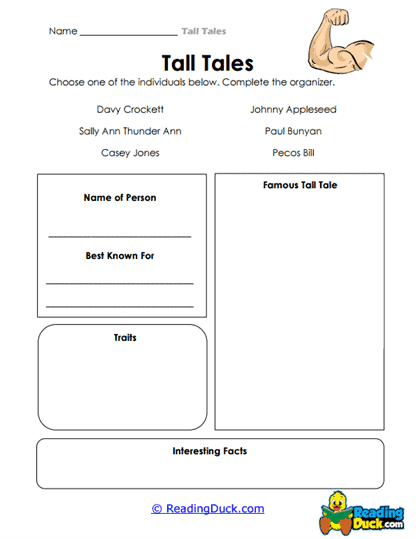
Tall Tales are the campfire showstoppers-full of swagger, spectacle, and stories so exaggerated you can't help but grin. They take a simple idea-catching a fish, planting a tree, crossing a river-and stretch it into an unforgettable, outrageous adventure. With heroes who lasso tornadoes and animals that leap into the stars, Tall Tales make the impossible not only possible, but downright legendary.
Why it matters? These stories are more than just fun-they're rooted in cultural tradition, oral history, and the human love for "bigger and better" storytelling. They teach voice, hyperbole, and comic timing, while giving readers a playful way to explore themes like determination, ingenuity, and pride. And they remind us that every culture, community, or family has its own legends worth telling-no matter how stretched they become.
Our Tall Tales Worksheets bring that larger-than-life energy straight into the classroom. Each PDF pairs a wildly entertaining passage with multiple-choice, short-answer, and open-ended prompts to help students unpack tone, humor, and the art of exaggeration. With answer keys ready to go, teachers can focus on sparking creativity instead of wrangling red pens.
A Look At Each Worksheet
Big Ben's Boot
So big you could build a barn inside it, this boot makes even the tallest cowboy look small. Students examine how sheer scale turns an object into legend. They analyze tone, hyperbole, and descriptive rhythm that makes the ridiculous feel real. Could a shoe really reshape the land it walks on?
Blizzard Bill
A frontiersman who wrestles snowstorms into submission. Learners explore how weather itself becomes a character in tall tales. Prompts guide them to examine pacing, exaggeration, and personification. What would you do if you could grab winter by the collar?
Colossal Catch
The fish wasn't just big-it was practically its own continent. Students trace how sensory detail and action turn a fishing trip into epic history. They unpack the mechanics of building suspense toward an absurd reveal. Could your backyard pond hide a legend?
Coyote Cal
A cowboy whose whistle could summon coyotes from miles away-and convince them to help herd cattle. Learners dissect how unlikely friendships add charm and humor to tall tales. They analyze voice, tone, and surprise in character development. What wild ally would star in your story?
Dusty Dan
A miner who could clear a gold field before breakfast. Students explore exaggeration in speed, skill, and the sheer volume of success. They reflect on how repetition and rhythm make larger-than-life feats stick. How much could you dig before the sun came up?
Hometown Hero
He jumped the county in one bound and built the town hall with his bare hands. Learners study how community pride and narrative flair create enduring legends. Prompts focus on symbolism, hyperbole, and voice. Could your street have a hero this bold?
Lightning Lucy
A rider so fast she could race a bolt-and win. Students analyze how motion and pacing fuel comedic exaggeration. They explore imagery and sentence structure that make speed a sensory experience. What would you do if you outran the weather?
Mighty Oak
This tree grows a mile a year and holds the moon on its highest branch. Learners unpack how nature becomes legendary in frontier storytelling. They examine tone, personification, and symbolic growth. Could your backyard grow to touch the stars?
Mountain Max
A logger whose axe swings could level mountains in a morning. Students explore how physical exaggeration builds grandeur in tall tales. They analyze setting, metaphor, and comic escalation. How would you move a mountain in a single day?
Prairie Pearl
A farm girl who could wrangle a stampede with just her singing voice. Learners examine sound imagery and character charisma. They explore the relationship between talent and myth-making. Could your voice move a hundred wild hearts at once?
River Racer
A canoe so quick it made the current feel slow. Students analyze pacing, word choice, and how action drives tall tale humor. They reflect on how motion becomes identity in these stories. What race would you dare to enter with a craft like that?
Rocket-High Ram
A goat whose leap could land on the moon. Learners explore absurdity, animal characterization, and how the impossible becomes delightfully inevitable. They examine rhythm and descriptive playfulness. What animal in your world deserves its own tall tale?
Sky-Swing Sally
A pioneer who could swing so high she touched the clouds. Students unpack movement, imagery, and the mix of domestic and cosmic. Prompts guide them to explore scale and humor. Could your swing take you somewhere magical?
Storm-Chaser Sam
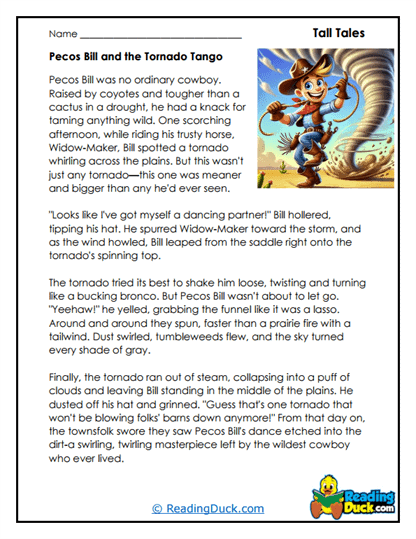
A daredevil who roped tornadoes and tied them in the barn. Learners examine how weather, danger, and comedy combine in tall tale structure. They analyze exaggeration as both spectacle and punchline. Would you ride into a storm just for the story?
Ten-Gallon Gus
A cowboy whose hat could shade a whole town at high noon. Students explore how a simple object can define character in a tall tale. They dissect humor, hyperbole, and visual imagery. What's your oversized trademark?
What Are Tall Tales?
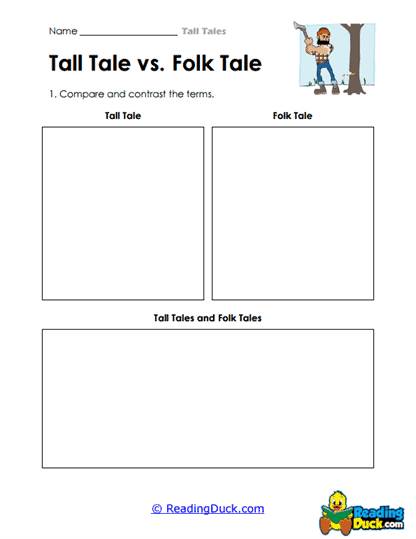
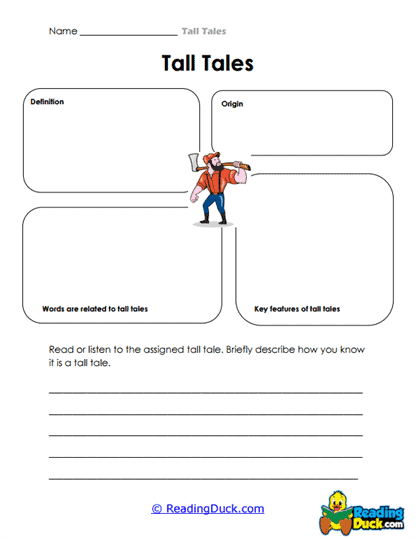
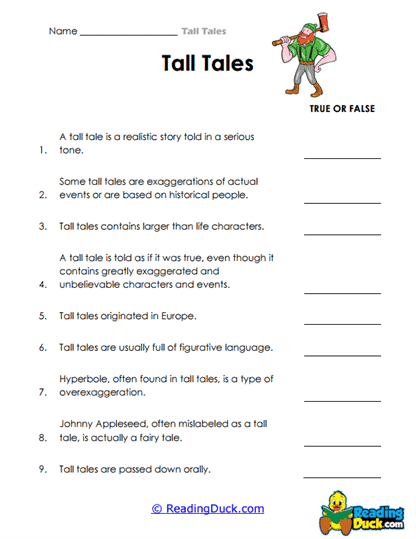
They are a thought-provoking genre of storytelling that captivates readers and listeners with its blend of humor, exaggeration, and larger-than-life characters. These stories often revolve around extraordinary individuals who achieve seemingly impossible feats through their superhuman abilities or wit. They are not meant to be taken literally but instead celebrate the power of creativity and storytelling. The humor and whimsy found in tall tales make them accessible and enjoyable for audiences of all ages. By engaging with these stories, readers are transported into a world where the impossible becomes entertainingly possible.
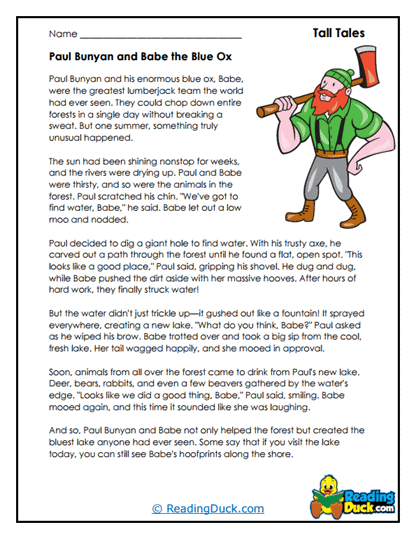
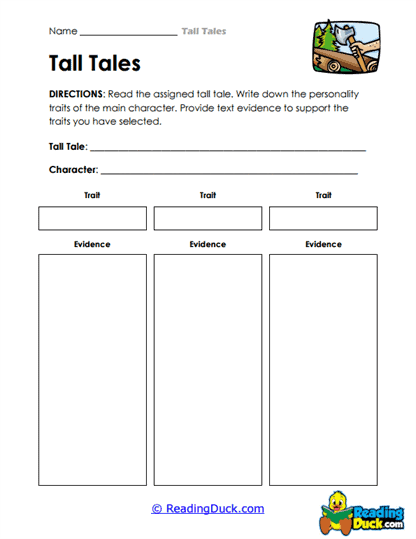
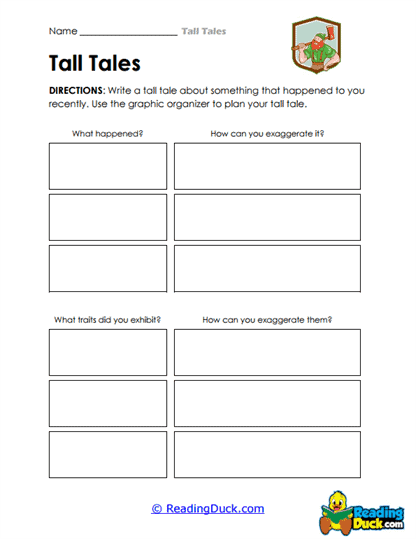
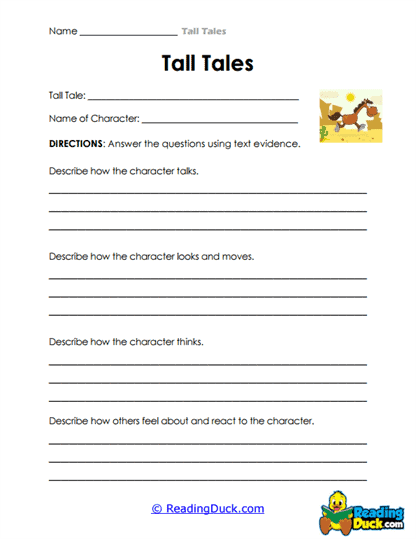
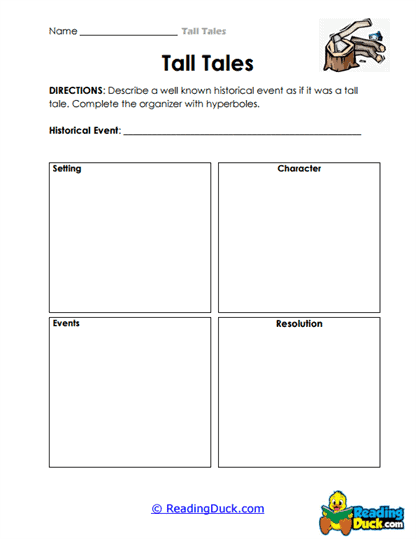
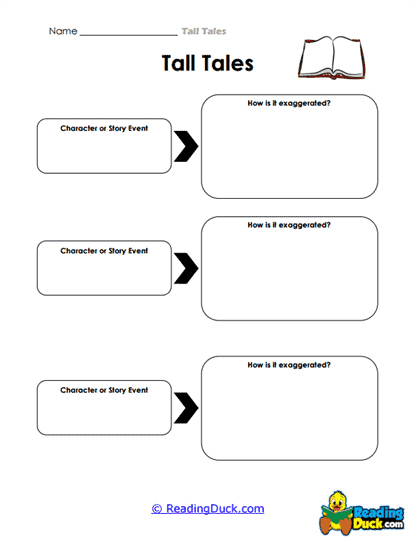
One of the defining elements of this style is their reliance on exaggeration. Over-the-top descriptions are used to stretch reality and create fantastical scenarios, such as Paul Bunyan carving out the Grand Canyon with his axe or Pecos Bill lassoing a tornado. These hyperbolic elements are not just for entertainment but also serve to emphasize the remarkable qualities of the protagonists. Alongside exaggeration, tall tales feature heroes with extraordinary traits or abilities that set them apart from ordinary people. These characters often represent idealized qualities like strength, courage, or cleverness, making them both relatable and inspiring despite their exaggerated nature.
They often carry moral lessons or cultural values woven into their narratives. Beneath the humor and larger-than-life storytelling lies a deeper purpose: to impart wisdom or teach important values to the audience. For instance, the resilience and resourcefulness of these characters often reflect the pioneering spirit of the era in which many tall tales originated. Additionally, these stories highlight themes such as hard work, perseverance, and ingenuity, which resonate with audiences and provide timeless lessons. The ability of tall tales to teach values in a lighthearted and engaging way contributes to their enduring popularity.
These types of narratives have their roots in American folklore and were traditionally shared orally, often around campfires or at community gatherings. These stories were crafted to entertain listeners while also preserving the history, values, and humor of the people who told them. The oral tradition allowed storytellers to adapt and embellish tales, making each retelling unique and tailored to their audience. This dynamic form of storytelling helped to build a sense of community and cultural identity. Over time, these tales transitioned into written literature, ensuring their preservation and allowing new generations to enjoy and learn from their whimsical and exaggerated narratives.
Make sure to bookmark our website now.
Enjoy all our free reading worksheets.
Our materials adhere to the principles of the Science of Reading.