In 11th grade, students are stepping into college-level expectations, and our 11th Grade Writing Worksheets are crafted to support that journey with depth and clarity. These prompts invite learners to analyze, argue, reflect, and express ideas with precision-sharpening their writing for essays, research papers, and exams. Each worksheet challenges students to organize essays with strong structure, integrate evidence effectively, and refine their language to be both concise and impactful. These writing prompts are more than practice-they're sparks for creativity and building blocks for confident, academic writing.
At this stage, students must develop well-reasoned arguments, synthesize disparate viewpoints, and communicate with clarity and focus. The prompts are designed to help them practice essential skills: crafting thesis-driven essays, weaving in research, honing sophisticated syntax, and maintaining grammatical excellence. The result is writing that prepares them not just for school, but for college and beyond.
Every prompt comes in an easy-to-download PDF format, complete with answer keys that model strong organization, persuasive structure, and polished expression. This dual format-creative challenge plus scholarly scaffolding-empowers both students and educators to write, review, and revise with direction and insight.
These prompts walk the line between critical thinking and creative freedom, encouraging students to reflect on complex issues, form original perspectives, and argue with authority. Regular engagement builds fluency, confidence, and readiness for the writing demands of higher education and future opportunities.
Looking At Each Worksheet
Climate Crusaders
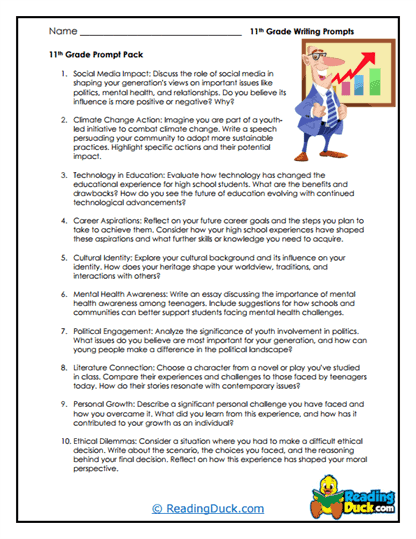
Students explore pressing environmental issues and argue for real-world solutions that can make a difference. This prompt strengthens persuasive reasoning and evidence-based argument. It invites them to think critically about the planet's future while developing a clear and compelling writing structure.
Cultural Ties
Students reflect on their heritage, traditions, or stories that shape their identity. It encourages depth, descriptive clarity, and narrative insight-perfect for thoughtful personal essays that connect the self with culture.
Ethical Decisions
Students grapple with a moral dilemma-imagining the scenario, weighing consequences, and explaining their reasoning. This builds analytical thinking, ethical lens, and argument structure, enriching writing that feels both introspective and relevant.
Future Focus
Students project themselves into the future-explaining goals, challenges, and the path they envision. It develops reflective structure, confident tone, and forward-thinking narrative, like drafting a personal mission statement through writing.
Literary Connections
Students analyze themes or characters from literature and connect them to modern-day issues or personal experiences. This enriches critical analysis, textual evidence use, and analytical voice-a nice bridge between literary study and reflective synthesis.
Media Influence
Students examine how news, social media, or advertising shape perception, behavior, or culture. It builds investigative tone, evidence-supported argument, and critical writing-ideal for cultivating awareness of media's role and impact.
Mental Health Awareness
Students write about mental well-being-its significance, challenges, and ways to support themselves or others. This prompt nurtures emotional insight, compassionate language, and structured reflection.
Political Participation
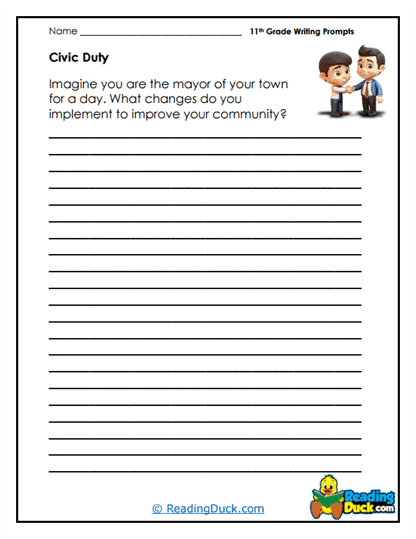
Students explore civic engagement-voting, advocacy, or community voice-and explain why it matters. This supports persuasive planning, civic awareness, and structured argument and is useful for preparing students for active citizenship.
Social-Free Day
Students reflect on life without social media or their phones-what it would feel like, what they'd notice, and how it would affect them. This builds self-awareness, descriptive reflection, and conversational voice in writing, while sparking real-world insight.
Tech Education
Students evaluate the role of technology in learning-its benefits, drawbacks, and future possibilities. This encourages balanced analysis, informative structure, and clarity-melding educational themes with thoughtful writing.
Make sure to bookmark our website now.
Enjoy all our free reading worksheets.
Our materials adhere to the principles of the Science of Reading.