Our Creative Writing Prompts are designed to unleash imagination while strengthening the building blocks of good writing. Each prompt places students in a lively "what if" scenario that sparks curiosity and adventure-whether it's finding a hidden passage, meeting a weather wizard, or discovering magic in a classroom. These prompts give young writers permission to stretch their ideas as far as they'll go, while still practicing the skills that make writing strong and clear. They're perfect for turning writing time into a chance for exploration, creativity, and fun.
At the same time, these prompts guide students in mastering key language arts skills. Each activity encourages organization of ideas, paragraph development, and the use of vivid details to make writing come alive. By following these imaginative leads, students learn how to structure their thoughts while expressing them in original and playful ways.
This collection of worksheets is carefully designed to inspire students step by step. Each prompt starts with a creative spark, adds a layer of guidance through thoughtful questions, and leaves space for students to craft their own unique stories. The structure balances support with freedom-helping every student feel like they're capable of creating something amazing.
Most importantly, these creative prompts help learners strengthen their command of grammar, sentence structure, and word choice. By practicing these fundamentals in imaginative contexts, students discover that writing can be both disciplined and fun. The result is not only stronger academic writing, but also the confidence to see themselves as storytellers with something worth sharing.
Looking At Each Worksheet
Alien Encounters
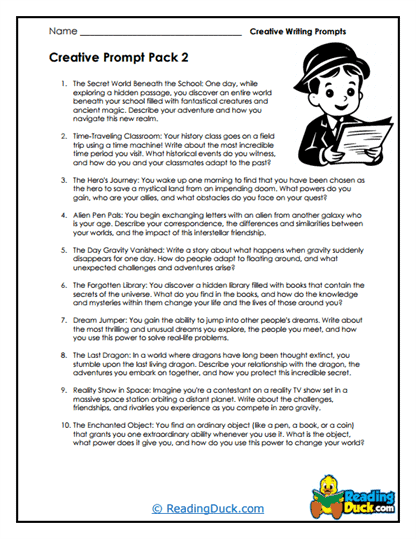
In this prompt, students imagine what happens when aliens suddenly show up in their neighborhood-are they friendly visitors, or do they have mischief in mind? It's a perfect chance to practice dialogue, setting, and conflict while weaving in plenty of imagination. Picture little green visitors asking where the nearest pizza place is. The quirky setup helps students practice story structure in a way that feels light and playful. For fun, challenge them to invent an "alien word" glossary at the end of their story.
Classroom Quest
This worksheet transforms the classroom into a place of adventure, where students might hunt for treasure, uncover secret maps, or complete challenges. It builds sequencing and organization while giving learners the thrill of writing themselves into the story. Imagine the math teacher's desk turning into a dragon's lair! The humor makes sentence writing memorable, while also keeping paragraphs on track. A fun extension is to have students draw their classroom quest map alongside their writing.
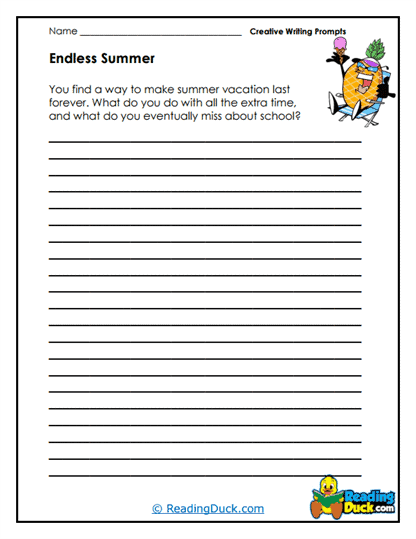
Endless Vacation
Students dream up a vacation that never ends-filled with exotic places, wild activities, or even magical transportation. This prompt strengthens descriptive writing and encourages strong word choice. Imagine a beach where the sand giggles every time you step on it. The silly detail makes their writing pop while practicing sensory imagery. For a twist, have them describe the moment they realize an "endless" vacation might not be as easy as it sounds.
Future Days
Here, writers leap ahead in time to imagine life many years from now-filled with futuristic gadgets, societies, and adventures. This prompt encourages cause-and-effect thinking while boosting creativity and voice. Imagine a future where homework does itself... but only sometimes gets the answers right! The fun "what if" thinking helps students build out multi-paragraph stories with purpose. For added engagement, invite them to write a "future news report" as part of their narrative.
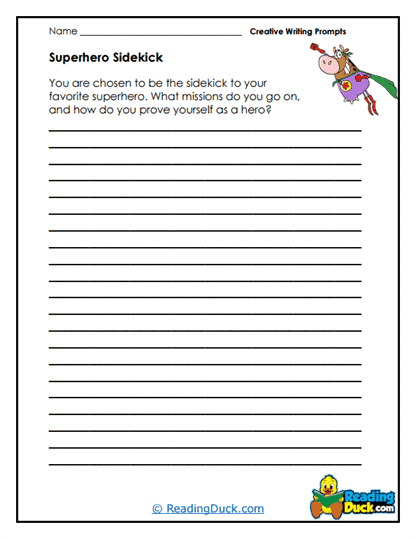
Hero's Helper
Students become the sidekick to a superhero, writing about their adventures together and the role they play. This prompt supports character development and narrative sequencing, while giving kids the fun of imagining special powers. Picture a hero who saves the city while the helper makes sure capes don't get stuck in doors. The silly partnership encourages humor in writing while still teaching story balance. As an extra twist, students can invent their own quirky superpower for the helper.
Hidden Passage
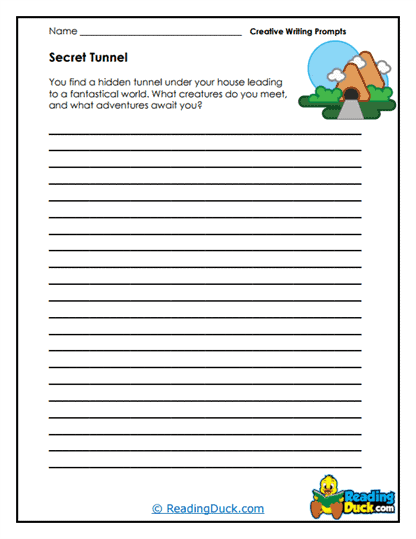
This adventure begins when a secret passage is discovered-behind a wall, under a desk, or in the school library. Students practice suspense, descriptive detail, and logical sequencing as they narrate what happens next. Imagine opening a locker to find a stairway that leads to a whole other world! The mystery element keeps writing lively and focused. For a fun finish, ask students to end with a cliffhanger that leaves readers guessing.
Mystic Mirror
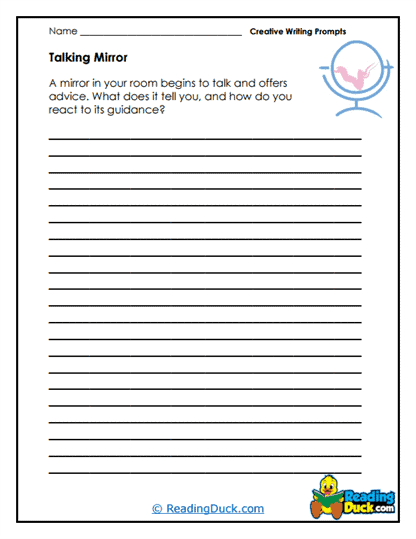
Students discover a magical mirror that doesn't just reflect-it reveals secrets or transports them elsewhere. This prompt builds strong imagery and encourages students to explore theme and perspective. Imagine looking in the mirror and seeing your dog giving you homework advice. The humor makes the fantastical idea stick while students practice structured storytelling. For enrichment, they can describe what the mirror shows to three different people.
Phone Magic
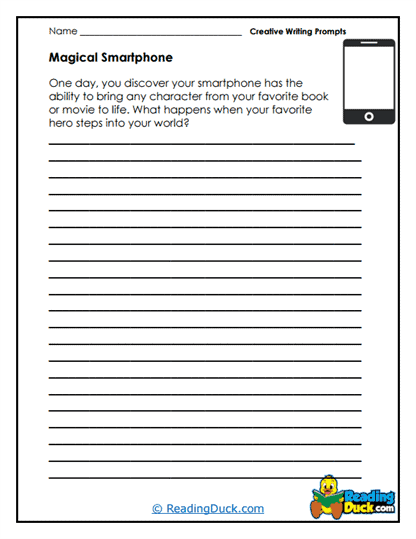
In this prompt, an ordinary phone suddenly develops magical powers-maybe it predicts the future, answers in riddles, or calls characters from stories. Students practice mixing everyday details with imaginative twists. Imagine texting your favorite book character for homework help. The modern angle keeps students engaged while practicing dialogue and tone. To wrap up, they can design a funny "app" that only works inside their story.
Spellbound Library
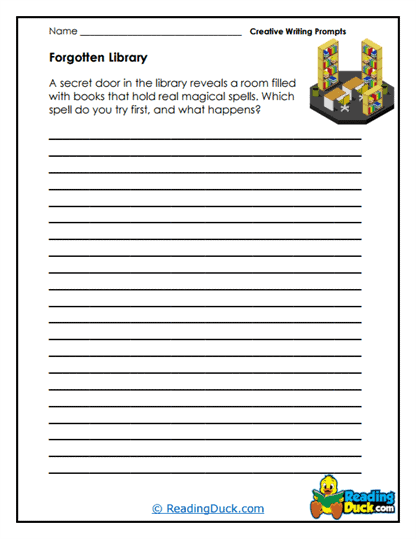
Here, the library itself becomes magical-books might whisper, shelves might rearrange, or characters might step off the page. Students practice setting description, mood, and narrative detail. Imagine chasing a runaway dictionary that keeps changing its own words. The playful energy turns practice in sentence building into pure fun. As a twist, let students end their story with a brand-new magical book title of their own creation.
Weather Wizard
Students meet a wizard who can control the weather-and must decide how that power is used. This prompt teaches cause-and-effect, descriptive imagery, and conflict resolution. Imagine a wizard who accidentally makes it snow every time someone sneezes. The quirky image makes the story fun to write while strengthening organization. As a playful ending, students can invent a new, silly kind of weather to include in their story.
Make sure to bookmark our website now.
Enjoy all our free reading worksheets.
Our materials adhere to the principles of the Science of Reading.