Eighth grade is a pivotal moment-students are poised to transition into high school, and our 8th Grade Writing Prompts are designed to support that leap with both structure and creativity. These prompts present immersive, thoughtful scenarios-from jungle explorations to technological perspectives-encouraging students to refine their voice, develop clear arguments or narratives, and think analytically. Each prompt is deliberately crafted to enhance critical thinking, imaginative expression, and logical reasoning. These writing prompts are more than practice-they're sparks for creativity and building blocks for confident writing.
At this stage, students are expected to write with increased depth-creating structured essays, supporting their ideas with evidence, and using transitions and tone with purpose. These worksheets strengthen essential skills like advanced essay organization, persuasive and expository techniques, research integration, voice adaptation, and grammar accuracy.
All worksheets are provided in PDF format for easy classroom or at-home use and include downloadable answer keys to support self-evaluation and guided feedback. This makes them versatile tools for educators and students alike.
Above all, the prompts balance creative exploration with analytical challenge-helping students evolve into thoughtful, articulate writers ready for high school and beyond.
Looking At Each Worksheet
Camp Discovery
Students imagine life at a unique camp-describing activities, friends, challenges, and discoveries. This prompt encourages narrative structure, vivid sensory detail, and personal voice. Think summer adventure with purposeful reflection. Great for journals or creative storytelling assignments. You could end with a camp "campfire reflection," where students write what they've learned about themselves.
Future Letter
Students write a letter to their future selves, reflecting on their current life, hopes, and advice. It develops reflective tone, structure of formal letters, and emotional awareness. It's like sending a time capsule through words. Great as an intro-to-year activity or future revisit. Encourage them to seal it and schedule a date to open it-perhaps at graduation.
Hidden Door
Imagine discovering a secret door-what's behind it? Students describe what they find, how they feel, and what it changes. This develops suspense, setting detail, and imaginative narrative. Think magical realism meets mystery. Excellent for free-writing or creative fiction prompts. Add a "secret rule" for entering the space for an extra imaginative twist.
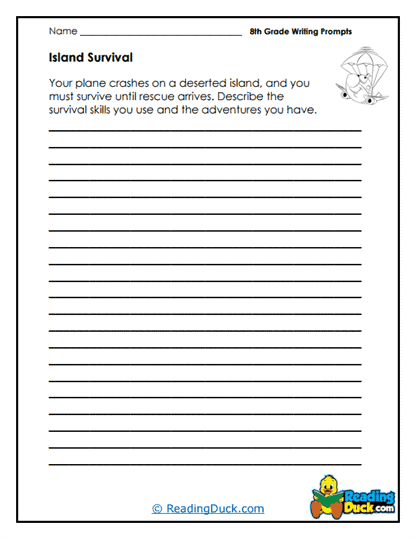
Island Adventure
Students are stranded on or exploring an island-detailing the environment, survival plans, and unexpected friends (or foes). This builds descriptive language, problem-solving storytelling, and perspective. It's storytelling meets survival strategy. Great for blending narrative with planning or research. Suggest they include a survival checklist or makeshift map.
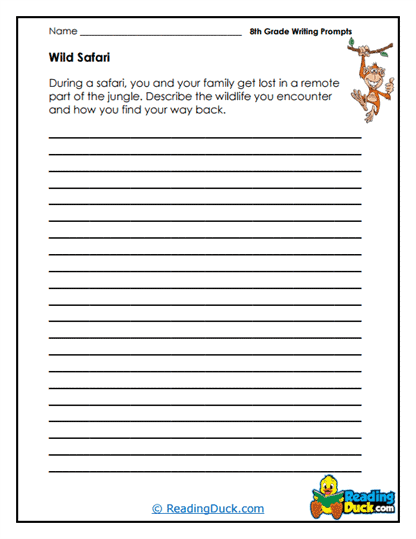
Jungle Trek
Writers map out an expedition through the dense jungle-describing wild sights, sounds, and obstacles along the way. This prompt promotes rich imagery, sequencing, and exploratory tone. Like moving through a vivid dream powered by words. Perfect for sensory detail practice or fiction/story starters. Add a requirement to include a native plant or animal with a descriptive fact.
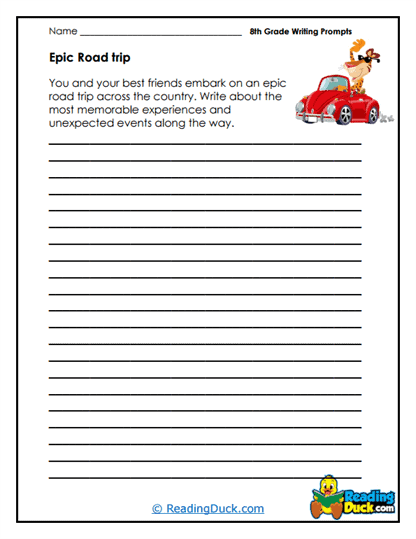
Road Trip
Students craft a road trip journey-narrating destinations, detours, characters met along the way, and personal growth through the trip. Promotes organization, dialogue, and reflective insights. It's a road-movie in words. Perfect for narrative essays or creative memoirs. Encourage them to end with a "mileage memory" detail-like a roadside snack that became a highlight.
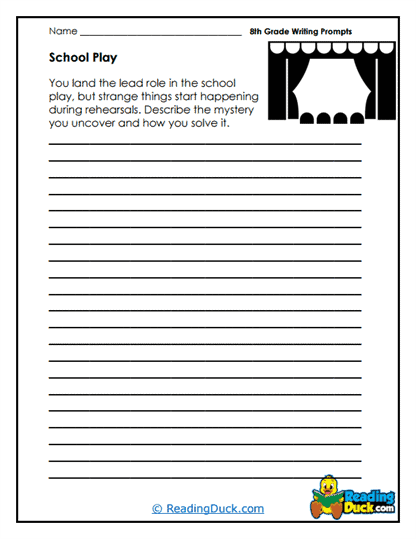
Stage Mystery
Set in a theater, students write a mystery set backstage-missing props, hidden messages, or dramatic reveals. This builds suspense, character perspective, and structured mystery plotting. Like a play within a mystery within writing. Great for integrating theater and narrative writing. Include a prop with a secret written on it for students to reveal.
Stage Star
Imagine becoming the star of a play-describe rehearsal, performance nerve, audience response, and backstage emotions. Focuses on inner voice, descriptive detail, and emotional tone. Think "theater diary with impact." Excellent for narrative insight or character exploration. For fun, have them write a short "curtain call" reflection.
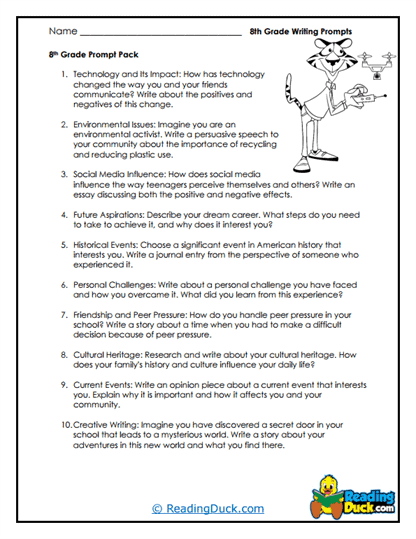
Tech Impact
Students explore how technology has shaped their world-past, present, and future-through narratives or argumentative writing. This develops argumentative structure, analytical tone, and real-world relevance. It's like a tech editorial with personal insight. Ideal for persuasive or expository essays connected to current events. They could propose an invention or reform to end the piece creatively.
Time Traveler
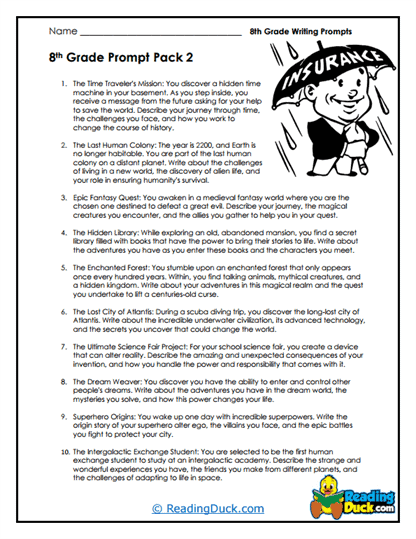
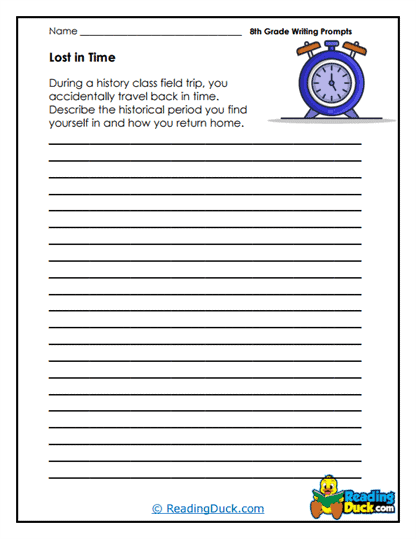
Travel through time to write about a landmark event, futuristic world, or personal moment-exploring context, consequences, and emotions. Focuses on historical or futuristic imagination, cause-effect thinking, and narrative coherence. It's like writing a travel log from another era or dimension. Perfect for history tie-ins or speculative fiction. Encourage adding a "time receipt" detail-like the date stamped in the corner of their entry.
Make sure to bookmark our website now.
Enjoy all our free reading worksheets.
Our materials adhere to the principles of the Science of Reading.