About Our -able Suffix Reading Comprehension Worksheets
The -able suffix means "capable of" or "worthy of," and it turns many verbs into adjectives you see in real reading, like reliable, adjustable, comfortable, and readable. In connected text, these words often describe objects, people, or situations (a drinkable stream, a portable lamp, a remarkable idea). Students quickly notice that the -able pattern usually follows a base word (like rely → reliable or value → valuable), which helps them decode and derive meaning at the same time. As learners meet clusters of -able words inside a story, they begin to generalize the pattern, recognize the base words, and predict meanings with growing confidence.
This collection offers short, kid-friendly passages with clear plots and concrete settings so the -able words feel natural and useful. Each worksheet draws attention to the target pattern through purposeful word choice and prompts that guide students to spot, underline, and analyze -able words in context. Comprehension questions focus on main idea, sequence, character actions, cause/effect, and inference-so students must use meaning to answer, not just find isolated words. The result is a reading experience where phonics and comprehension support one another from sentence to sentence.
Practicing with -able passages strengthens decoding accuracy (seeing the base word and the suffix) and meaning-making (using the suffix to confirm or refine a definition). When students can say, "If it's portable, it can be carried," they're using morphology to monitor and repair understanding as they read. Over time, this boosts fluency and vocabulary because learners no longer treat each word as brand new-they see the pattern and apply it. That flexible word-solving strategy is transferable across subjects and texts.
Looking At Each Worksheet
Brave Quest
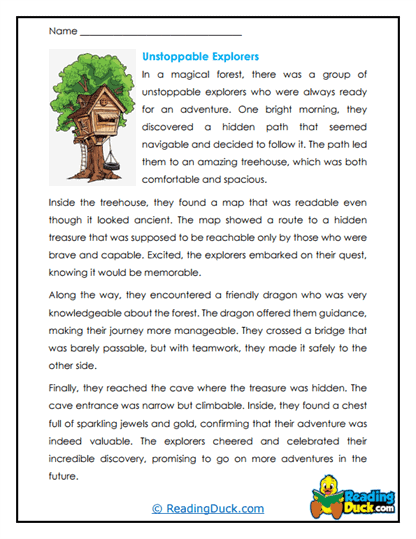
In this adventurous tale, a team follows a reliable map through a navigable trail to reach a hidden base camp. The author sprinkles -able words like drinkable, valuable, and reachable to describe obstacles and discoveries. Comprehension centers on sequence and problem/solution, asking readers to track how the explorers plan, adjust, and succeed. The -able pattern links directly to meaning: if a bridge becomes unstable, the plan must change. Students can scan for the -able ending as they annotate, then confirm the base word to check meaning in the sentence. Use this worksheet to pair word study (spot, sort, and define -able words) with retelling the key events using academic vocabulary.
Creative Inventions
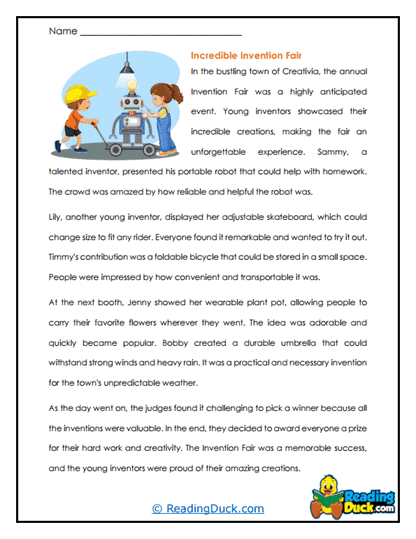
At a community fair, kids reveal adjustable gadgets, portable tools, and reusable materials that solve everyday problems. The passage embeds -able words to label functions, making morphology essential to understanding what each device can do. The comprehension focus is main idea and supporting details, nudging students to group inventions by purpose. As learners notice the base + -able structure, they infer functions (e.g., fold → foldable means it can fold). Encourage a two-pass read: first for the storyline of the fair, second to underline -able words and connect them to each invention's use. This strengthens morphological reasoning alongside explanatory writing or summarizing.
Explorer's Quest
Two friends chart a route using reliable landmarks and a workable plan to reach an overlook before sunset. -able words such as climbable, passable, and measurable describe terrain and timing, fusing vocabulary with the setting. The comprehension target is setting and text evidence-how the landscape influences choices. Because -able adjectives describe possibility, students link vocabulary to action (if a path is impassable, what then?). Readers mark -able words, name the base words (climb, pass, measure), and state what each tells about the journey. Combine this with a quick map sketch to consolidate both phonics and spatial reasoning.
Island Treasure
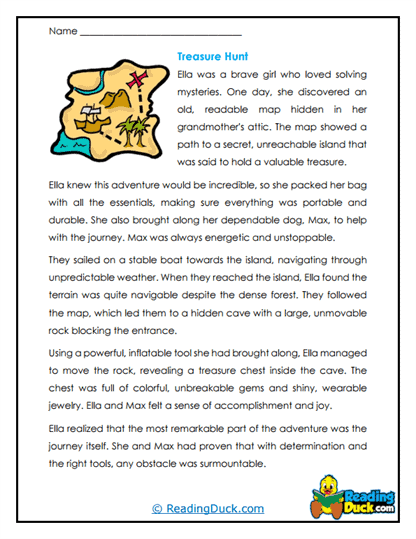
A beach day turns into a hunt when siblings find readable clues inside a breakable bottle washed ashore. Each step requires agreeable teamwork and a manageable plan to reach a tidepool cavern. Questions highlight cause/effect-how each clue leads to the next discovery. The -able pattern cues function and safety (a slippery, non-grippable ledge is risky; a grippable rope helps). Students circle -able words and tell how each affects a decision the characters make. Use this to blend context-clue work with decision mapping that cites the -able vocabulary explicitly.
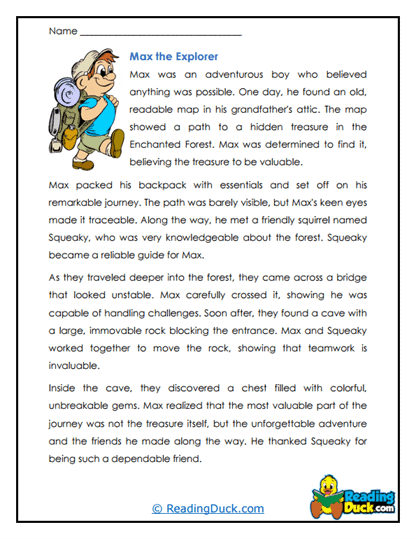
Max's Adventure
Max assembles a kit of portable supplies and a rechargeable flashlight for a neighborhood night hike. The narrative uses -able descriptors-detectable, movable, countable-as Max observes wildlife signs and tracks progress. Comprehension emphasizes monitoring and self-correction, showing how Max revises plans when conditions are less predictable. The -able suffix ties to metacognition: words show what is possible and what needs adapting. Have students highlight -able words, name the base, and paraphrase the sentence to confirm meaning. This builds morphological decoding while modeling flexible problem-solving in reading.
Pet Show Parade
During a friendly contest, pets show trainable tricks and wear washable costumes, while judges note admirable behavior. The text weaves -able terms to signal criteria and fairness. The comprehension goal is compare/contrast, asking readers to group pets by similar abilities and qualities. The -able pattern supports precise language (a sociable pup versus a teachable kitten) that readers use in their comparisons. Students list the -able words, identify bases, and explain how each supports a judging decision. Pair with a T-chart to merge sorting morphology with text-based comparisons.
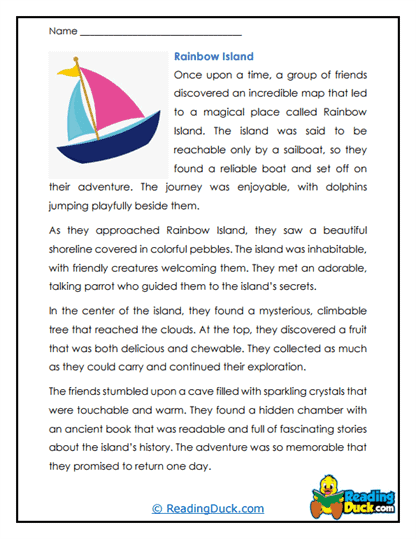
Rainbow Adventure
Friends plan a doable hike to a lookout where a viewable rainbow often appears after rain. Along the way, they rely on reliable forecasts and a comfortable pace to reach the ridge. Comprehension centers on prediction and inference, using textual hints about weather and time. The -able words function as clues: if skies are changeable, success is uncertain. Readers underline -able words, say the base, and predict the next step using that meaning. This integrates morphology with evidence-based predictions.
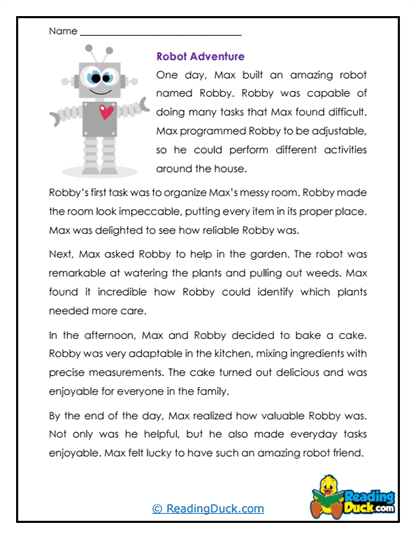
Robot Helper
A classroom builds a programmable robot with replaceable parts and a chargeable power cell. The story thread explains tasks the bot makes more manageable and how students troubleshoot when a joint becomes unreliable. The comprehension focus is problem/solution with attention to steps and outcomes. -able adjectives clarify what the robot can or cannot do, guiding readers through the fix. Have students box -able words, map base words, and label each as "can do," "not yet," or "needs repair." This unites word analysis with procedural comprehension.
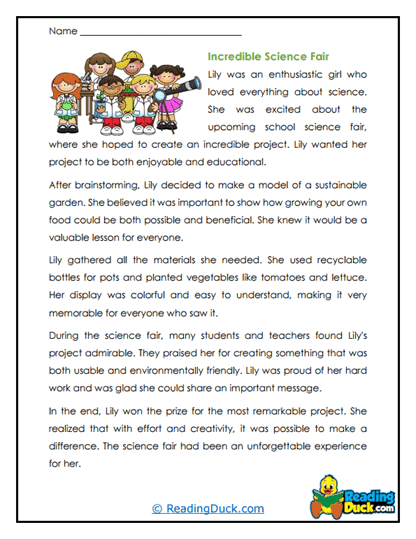
Science Fair Wonder
Two partners test a measurable hypothesis using reusable materials and a repeatable method. The narrative uses -able words to mark criteria of good science-observable results, reliable data, and explainable conclusions. Comprehension targets main idea and evidence, asking students to connect methods to findings. The -able suffix makes abstract ideas concrete; if something is replicable/replicable, it can be done again the same way. Students highlight -able words and match each to a step in the investigation. It's a natural bridge between morphology and academic science language.
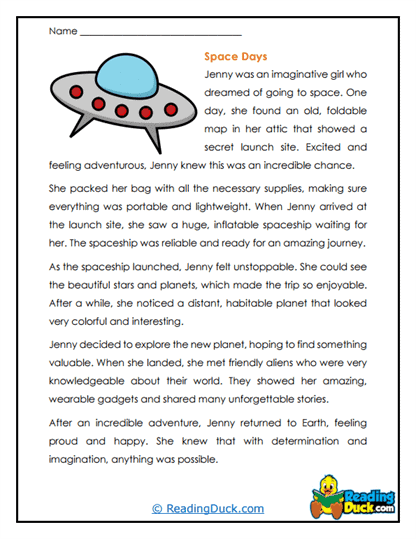
Space Journey
A crew completes a sustainable, habitable orbit with adjustable panels and reliable navigation. The author threads -able words to describe systems and constraints-what is workable in space and what is not. Comprehension emphasizes cause/effect and constraints, guiding readers to see how each system supports survival. The -able pattern encodes capability; if oxygen levels aren't measurable, risk increases. Students catalog the -able words, identify bases, and state how each feature keeps the mission safe. This ties precision vocabulary to logical explanation in the text.
An Example -able Suffix Reading Passage
Our club planned a doable service project with a manageable timeline and reliable partners, collecting donatable books to create a readable corner in the library. We organized stackable bins, made a printable flyer, and set up a movable cart so sorting stayed comfortable. Even when the weather turned changeable, the schedule stayed flexible and the tasks remained shareable. By the end, our impact felt truly measurable and the joy clearly noticeable to everyone who visited.
Where Is The -able Pattern?
Look for words that end in -able and check the base word to confirm meaning (e.g., print → printable means "able to be printed"). Two quick examples from the passage are readable (from read), describing books that are easy to enjoy, and movable (from move), describing a cart that can be pushed wherever it's needed.
Make sure to bookmark our website now.
Enjoy all our free reading worksheets.
Our materials adhere to the principles of the Science of Reading.