About Our -ly Suffix Reading Comprehension Worksheets
Our -ly Suffix Reading Passages worksheets center on the suffix -ly, a common phonics pattern that transforms base words into adverbs or adjectives. This suffix helps convey how something is done or adds descriptive nuance, such as turning "happy" into "happily" or "lively" into an adjective meaning full of energy. It's a key building block for understanding how words change form and function.
In this collection, each worksheet features an engaging reading passage-titled with fun, story-driven names like Bella's Necklace, Sparky's Quest, and Tommy's Museum Trip-that incorporates multiple -ly words in meaningful contexts. These passages come with colorful illustrations to support student engagement and comprehension. After reading, students answer multiple-choice questions that assess both their understanding of the story and their ability to identify and interpret -ly words. The worksheets also include downloadable answer keys and come in easy-to-print PDF format, making them ideal for classroom, homeschool, or tutoring use.
Accessing these materials supports students in both decoding and comprehension. By working through texts rich in -ly words, students practice recognizing how suffixes modify words, enhancing their vocabulary and grammatical awareness. This practice promotes more precise language use and improves reading fluency and writing clarity-key skills in early literacy development.
Looking At Each Worksheet
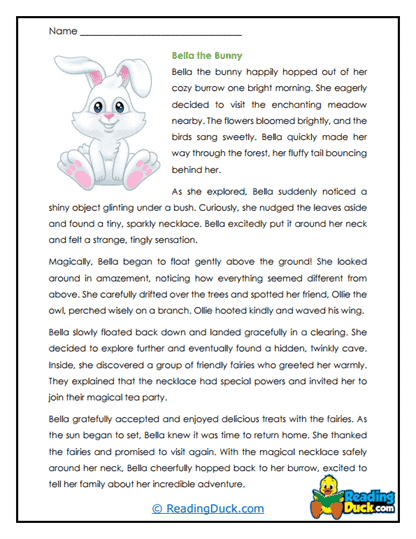
Bella's Necklace
A charming story about Bella and her precious necklace invites students into a vivid narrative. The passage includes several -ly words-perhaps "sparkly," "lovely," or "gently"-woven into the scene as Bella admires and cares for her jewelry. The comprehension questions focus on understanding character actions and emotions, encouraging readers to pay attention to how -ly words enhance detail. By spotting these words in context, students connect phonics awareness ("-ly" suffix as adverb/adjective) with meaning. The passage can be used as a read-aloud or independent activity, reinforcing both decoding and comprehension.
Benny's Balloon Adventure
This adventurous tale follows Benny as he floats away in a balloon, encountering unexpected challenges. Colorful descriptors like "slowly drifting," "nervously glancing," or "cheerfully smiling" appear throughout, helping students recognize how -ly works. Comprehension questions ask students to recall story events and interpret how these adverbs shape the action. The repeated exposure to -ly enhances students' ability to decode the suffix while understanding its impact on narrative mood. Working in pairs to discuss these words can further reinforce phonics and comprehension skills.
Island Mystery
A suspenseful, island-set mystery captures student attention from the start. Words such as "quietly," "mystically," or "curiously" might appear as clues or descriptions of the environment. The comprehension tasks likely focus on inference and identifying story elements, encouraging students to notice how -ly words deepen the mysterious atmosphere. Noting -ly words helps students link the phonics element with setting and tone. This worksheet can be used to introduce discussions around word choice and meaning connections in a narrative.
Ladybug's Feast
A sweet and lively depiction of a ladybug enjoying a feast in a garden, this passage might include fun -ly vocabulary like "hungrily nibbling," "brightly colored," or "gracefully fluttering." Reading comprehension questions likely center on sequencing or detail identification. Spotting -ly words helps students decode and also visualize the scene more clearly. It strengthens both phonics understanding and comprehension by tying word form to vivid imagery.
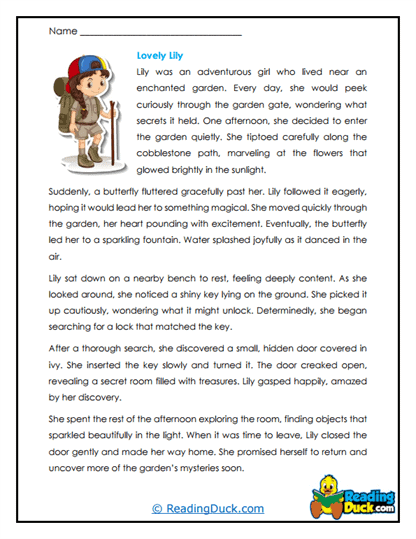
Lily's Garden
In this peaceful and visually rich scene of Lily tending to her plants, words like "lovingly watering," "softly humming," or "brightly blossoming" offer excellent examples of the -ly suffix in action. Questions may invite readers to infer Lily's feelings and actions. Recognizing -ly words supports phonics awareness, while discussing their effect on the text aids comprehension. This worksheet is ideal for drawing connections between suffix usageand descriptive writing.
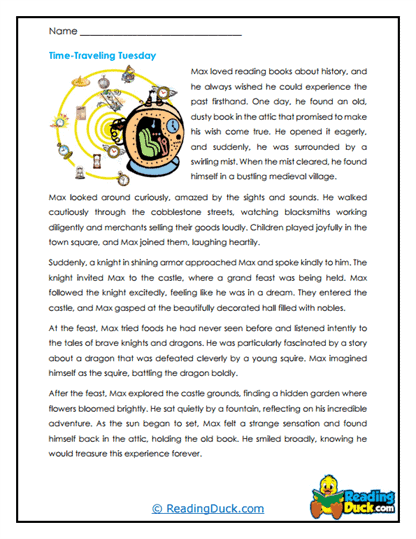
Medieval Adventure
A story set in medieval times with knights and castles could include words like "bravely," "royally," or "quietly plotting." Comprehension prompts may explore character motivations or problem-solving. Noticing -ly words helps students decode and appreciate the dramatic tone of the narrative. This worksheet supports a deeper understanding of how suffixes contribute to vivid storytelling.
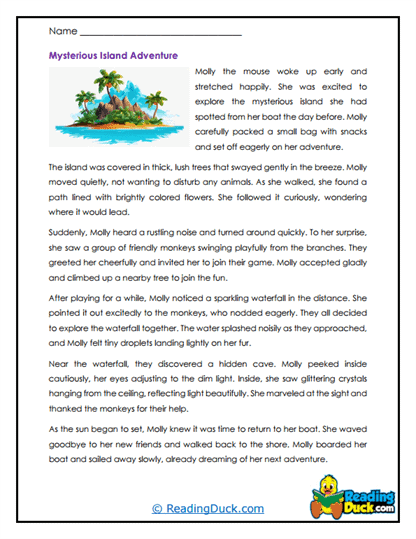
Molly's Exploration
Molly's journey through a new and curious place might be described with -ly words such as "curiously," "eagerly," or "carefully observing." Students answer questions about the setting, sequence of events, or Molly's feelings. Spotting -ly words helps readers decode and connect the suffix to Molly's internal experience. The activity strengthens phonics and comprehension through context-rich vocabulary.
Sparky's Quest
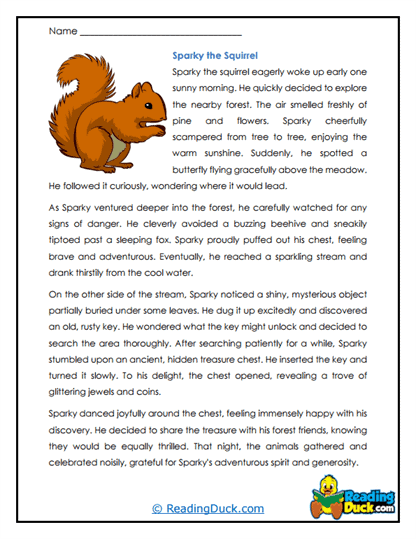
A thrilling quest story centered on Sparky-perhaps a talking animal or adventurous friend-features action-rich adverbs like "swiftly," "boldly," or "bravely." Students may be asked to identify main ideas, details, or predict what happens next. Recognizing -ly words aids decoding and highlights how word endings add excitement and clarity to action. Working through this worksheet boosts both fluency and comprehension through engaging adventure.
Timmy's Journey
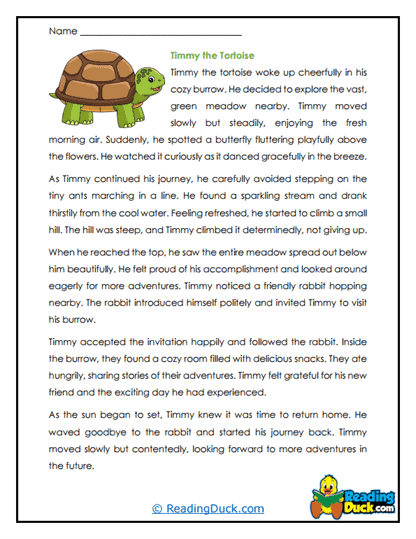
Timmy's travels, maybe through a forest or unfamiliar place, include -ly words such as "carefully," "excitedly," or "eagerly." Comprehension questions encourage students to track events or interpret Timmy's feelings. The -ly words help tie phonics focus to emotional understanding. This passage supports students in using suffix knowledge to reinforce comprehension and narrative flow.
Tommy's Museum Trip
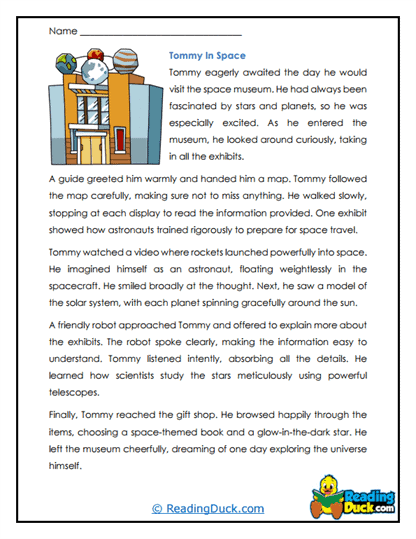
On a field trip to a museum, Tommy might admire artifacts "curiously," "quietly," or "thoughtfully." The worksheet likely prompts observation and inference about what Tommy sees or how he feels. Recognizing -ly words links suffix decoding with understanding tone and setting. This context-rich activity enhances phonics mastery and reading comprehension in a meaningful real-world setting.
An Example -ly Reading Passage
Once upon a time, Rosie woke up early and tiptoed quietly into the kitchen. She looked happily at the freshly baked muffins cooling on the windowsill. Breezes softly whispered through the open window, and she gently touched the petals of the daisy vase nearby. Excitedly, she carried a muffin outside to the garden, where birds chirped lively songs. Rosie sat under the shade and sighed contentedly as she munch-ily (fun made-up word!) enjoyed her treat.
Where Is The -ly Pattern?
You can spot the -ly suffix in words like happily and gently, which tell how Rosie felt or acted. Both show how adding -ly creates adverbs that describe manner or emotion.
Make sure to bookmark our website now.
Enjoy all our free reading worksheets.
Our materials adhere to the principles of the Science of Reading.